
Catalogue Search | MBRL


Are you sure you want to remove the book from the shelf?

{{itemTitle}}
257
result(s) for
"Mechanical engineering Textbooks."
Sort by:

Applied machine learning
\"This comprehensive textbook explores the theoretical underpinnings of learning and equips readers with the knowledge needed to apply powerful machine learning techniques to solve challenging real-world problems. Applied Machine Learning shows, step by step, how to conceptualize problems, acurately represent data, select and tune algorithms, interpret and analyze results, and make informed strategic decisions. Presented in a non-rigorous mathematical syle, the book covers a broad array of machine learning ropics with special emphasis on methods that have been profitably employed.\" -- back cover.
Book

Fundamentals of Liquid Crystal Devices
Liquid Crystal Devices are crucial and ubiquitous components of an ever-increasing number of technologies. They are used in everything from cellular phones, eBook readers, GPS devices, computer monitors and automotive displays to projectors and TVs, to name but a few. This second edition continues to serve as an introductory guide to the fundamental properties of liquid crystals and their technical application, while explicating the recent advancements within LCD technology. This edition includes important new chapters on blue-phase display technology, advancements in LCD research significantly contributed to by the authors themselves. This title is of particular interest to engineers and researchers involved in display technology and graduate students involved in display technology research. * Key features: Updated throughout to reflect the latest technical state-of-the-art in LCD research and development, including new chapters and material on topics such as the properties of blue-phase liquid crystal displays and 3D liquid crystal displays; * Explains the link between the fundamental scientific principles behind liquid crystal technology and their application to photonic devices and displays, providing a thorough understanding of the physics, optics, electro-optics and material aspects of Liquid Crystal Devices; * Revised material reflecting developments in LCD technology, including updates on optical modelling methods, transmissive LCDs and tunable liquid crystal photonic devices; * Chapters conclude with detailed homework problems to further cement an understanding of the topic.
eBook
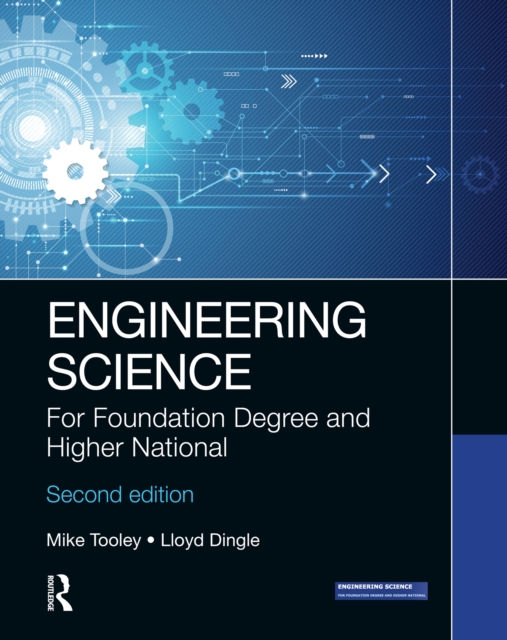
Engineering Science
Focusing primarily on core topics in mechanical and electrical science, students enrolled on a wide range of higher education engineering courses at undergraduate level will find Engineering Science, second edition, an invaluable aid to their learning.
With updated and expanded content, this new edition covers sections on the mechanics of materials, dynamics, thermodynamics, electrostatics and electromagnetic principles, and a.c./d.c. circuit theory. Entirely new sections are devoted to the study of gyroscopes and the effect of applied torques on their behaviour, and the use of Laplace transformation as a tool for modelling complex networks of inductance, capacitance and resistance. In addition, a new overview of the decibel (dB) introduces a handy technique for expressing logarithmic ratios.
Knowledge-check and review questions, along with activities, are included throughout the book, and the necessary background mathematics is integrated alongside the appropriate areas of engineering. The result is a clear and easily accessible textbook that encourages independent study and covers the essential scientific principles that students will meet at this level.
The book is supported with a companion website for students and lecturers at www.key2engineeringscience.com, and it includes:
Solutions to the Test Your Knowledge and Review Questions in the book
Further guidance on Essential Mathematics with introductions to vectors, vector operations, the calculus and differential equations, etc.
An extra chapter on steam properties, cycles and plant
Downloadable SCILAB scripts that help simplify some of the advanced mathematical content
Selected illustrations from the book
eBook

Introduction to Heterostructured Materials: A Fast Emerging Field
Strong and tough materials are desired for lightweight, energy efficient applications such as electric cars and aerospace applications. Recently, heterostructures are found to produce unprecedented strength and ductility that are considered impossible based on the materials science in our textbooks. Such superior mechanical properties are enabled by a new scientific principle: hetero-deformation-induced (HDI) strengthening and work hardening. Heterostructured (HS) materials consist of heterogeneous zones with dramatic difference (> 100 pct) in flow stresses. The inter-zone interaction produces back stress in the soft zones and forward stress in the hard zones, which collectively produces the HDI stress. HS materials possess a significant synergistic effect where the integrated property exceeds the prediction by the rule of mixtures. Importantly, HS materials can be produced by current industrial facilities at large scale and low cost. The new materials sciences and promising applications are driving the fast development of the HS materials as an emerging field. There are many fundamental issues that need to be probed so as to effectively design HS materials for superior properties. To solve these issues, it requires collaborative efforts by the communities of experimental materials science and computational material science and mechanics.
Journal Article

Selection of parameters in cost-tolerance functions: review and approach
The paper deals with the cost-tolerance functions used in minimum-cost tolerance allocation on mechanical assemblies. The consistency of the cost-tolerance functions associated with different dimensions of a tolerance chain is a necessary condition for a correct optimization of tolerance values. This requires a careful selection of function parameters, in order to take into account all the variables influencing the cost, and thus to compare the costs of the different dimensions in a common scale. The cost-tolerance functions proposed in the literature are reviewed, revealing that the parameters are often selected without explicit reference to empirical data or objective rules. The development of procedures for parameter selection has been addressed in several studies, which are also reviewed along with the needed cost data published in textbooks and reports. Finally, an original approach is proposed to build cost-tolerance functions for combined processes, for which fewer results or methods are available. The parameters of a reciprocal power function, chosen for the favorable balance between accuracy and ease of use, are expressed through an empirical relationship with some design variables; these include the nominal dimensions and the type and size of the part features involved in the allocation problem. An application example shows that the proposed procedure results in optimal tolerance values consistent with common design criteria.
Journal Article

X-ray Diffraction for the Determination of Residual Stress of Crystalline Material: An Overview
Though there are a variety of experimental techniques available for residual stress measurements, diffraction-based measurements have the unique advantage of estimating the individual components of the residual strain matrix in a crystalline material. This is then converted to residual stresses with appropriate continuum elasticity model(s) and X-ray elastic constants. In particular, measurements based on electron or neutron diffractions have their complexities or availability issues. The laboratory X-ray diffraction, on the other hand, may provide an easy resource and an effective tool. Such measurements range from two tilt methods to more extended d-sin2ψ measurements and multiple hkil grazing incident X-ray diffraction. Measurements can even be conducted on single crystals with micro-Laue diffraction and extended to stress ODF (orientation distribution function) calculations. These techniques are unquestionably extremely specialized, where measurement uncertainty plays an important role in the effectiveness plus reproducibility of the data. Unfortunately, standard textbooks or review articles typically describe some, but not all, of the techniques. In this overview, different techniques of X-ray diffraction for the determination of residual stresses in crystalline material have been summarized. It is hoped that potential users may benefit from the deliberations.
Journal Article

E-Textbooks as a Teaching Aid at a University of Technology in South Africa: A Cultural-Historical Activity Theory Analysis
The past two years saw a rapid proliferation of information and communication technologies (ICTs) in higher education. Digital technologies and environments offer many affordances. New digital literacy practices in universities have implications for teaching and learning. E-textbooks, in particular, act as mediating tools that can facilitate teaching and learning through developing students’ understandings of scientific concepts. This paper positions e-textbooks as mediators of learning, rather than merely objects of learning. There is thus a need to understand the mediating role of e-textbooks that lecturers draw on in their teaching. While much research was conducted on students’ use of e-textbooks, relatively little was conducted on lecturers’ use of e-textbooks in engineering education. The current study aimed to answer the following research question: What are lecturers’ perspectives on the use of e-textbooks to facilitate learning in engineering? To address this question, data were collected through five individual interviews conducted with engineering lecturers working in the Extended Curriculum Programme (ECP) of first-year students from three engineering departments (chemical engineering, mechanical engineering, and nautical science) at a university of technology in South Africa. The data were analysed using thematic content analysis with the help of ATLAS.ti. Data analysis was guided by a theoretical framework that drew on the cultural-historical activity theory (CHAT). In this study, the focus was on e-textbooks as pedagogical tools within engineering teaching and learning. The findings provide insight into how lecturers incorporate e-textbooks into their teaching, but also reveal the extent to which new digital literacy reading practices remain unfamiliar to engineering lecturers. CHAT enabled the identification of a critical insight, namely, the tension between mediation and division of labour. This highlights important aspects of the discourse surrounding seamless technology integration in higher education. The discussion points to the need for an expansive transformation regarding the use of e-textbooks as important mediating tools for teaching and learning.
Journal Article
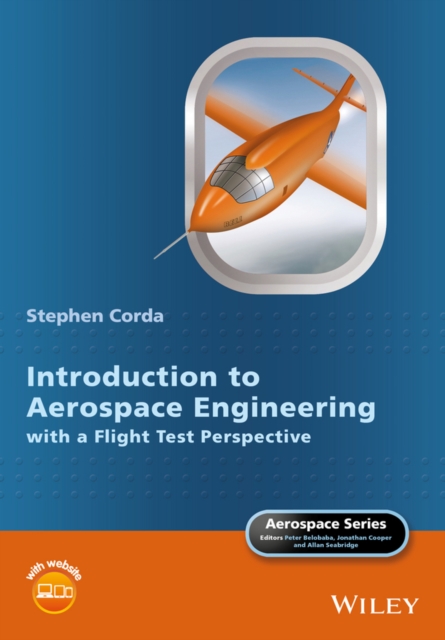
Introduction to aerospace engineering with a flight test perspective
Comprehensive textbook which introduces the fundamentals of aerospace engineering with a flight test perspective Introduction to Aerospace Engineering with a Flight Test Perspective is an introductory level text in aerospace engineering with a unique flight test perspective. Flight test, where dreams of aircraft and space vehicles actually take to the sky, is the bottom line in the application of aerospace engineering theories and principles. Designing and flying the real machines are often the reasons that these theories and principles were developed. This book provides a solid foundation in many of the fundamentals of aerospace engineering, while illuminating many aspects of real-world flight. Fundamental aerospace engineering subjects that are covered include aerodynamics, propulsion, performance, and stability and control.
eBook

Alterations with age in the biomechanical behavior of human ureteral wall: Microstructure-based modeling
The human ureters have not been thoroughly explored from the biomechanics perspective, despite the wealth of such data for other soft-tissue types. This study was motivated by the need to use relevant biomechanical data from human ureters and microstructure-based material formulations for simulations of ureteral peristalsis and stenting. Our starting choice was the four-fiber family model that has proven its validity as a descriptor of the multiaxial response of cardiovascular tissues. The degree of model complexity, required for rigorous fits to passive quasi-static pressure-diameter-force data at several axial stretches, was systematically investigated. Ureteral segments from sixteen human autopsy subjects were evaluated. A diagonal and axial family model allowed equally-good fits as the full model for all age groups and ureteral regions; considerably better than those allowed by the phenomenological Fung-type model whose root-mean-square error of fitting was three-fold greater. This reduced model mimicked the structure seen in histologic sections, namely plentiful diagonal collagen fibers in the lamina propria and axial fibers in the muscle and adventitia. The paucity of elastin fibers and mixed muscle orientation justified the use of isotropic muscle-dominated matrix with small neo-Hookean parameter values. The significantly thicker lamina propria in the lower than the upper ureter of young subjects (312 ± 27 vs. 232 ± 26 μm; mean ± standard error) corroborated the significant regional differences in diagonal-fiber family parameter values. The significant muscle thickening with age (upper ureter: 373 ± 48 vs. 527 ± 67 μm; middle: 388 ± 29 vs. 575 ± 69 μm; lower: 440 ± 21 vs. 602 ± 71 μm) corroborated the significant age-related increase in axial-fiber family parameter values.
Journal Article
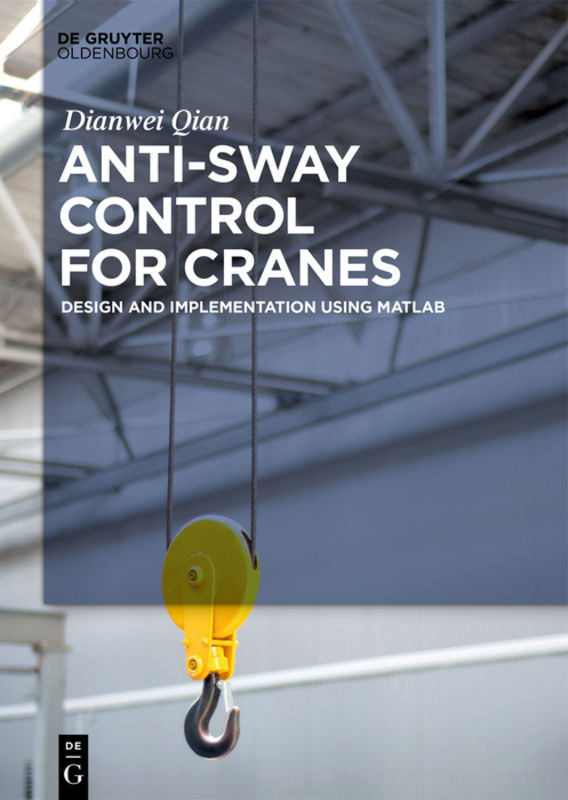
Anti-sway Control for Cranes
The book introduces anti-sway control approaches for double-pendulum overhead cranes, including control methods, theoretical analyses, simulation results and source codes of each control design. All methods are analyzed and verified by MATLAB. Passivity-based, sliding-mode-based and Fuzzy-logic-based control methods are massively discussed. This book is suitable for both academic researchers and industrial R&D engineers.
eBook