
Catalogue Search | MBRL


Are you sure you want to remove the book from the shelf?

{{itemTitle}}
243
result(s) for
"Media Lab"
Sort by:

Diseño gráfico ‘expandido’ por medio de métodos de media labs aplicados a un proyecto colaborativo de videomapping
El documento defiende que el diseño gráfico es una actividad ‘expandida’; esto es, que trastoca otras áreas del diseño, las artes y las ciencias. Se implementan nuevos métodos de abordajes a problemas de diseño gráfico, particularmente con ‘métodos media lab’. Bajo este entendido se presenta un caso de aprendizaje profesional del diseño gráfico, en el que estudiantes universitarios elaboraron un video mapping para una empresa privada. A partir de la elaboración de bitácoras de trabajo, se evidenció que situaciones emergentes como las ocasionadas por la pandemia es posible generar innovación a problemas de diseño gráfico con tiempos cortos de entrega. Defensa que el disseny gràfic és una activitat 'expandida' que trastoca altres àrees humanes. En aquest sentit, s'implementen mètodes de medialab per abordar problemes de disseny gràfic. Amb aquesta entesa, es presenta un cas d'aprenentatge professional del disseny gràfic, on estudiants universitaris van desenvolupar un videomapping per a una empresa privada. A partir de l'elaboració de bitàcoles de treball, es va evidenciar que en situacions emergents com les provocades per la pandèmia és possible generar innovació en problemes de disseny gràfic amb temps de lliurament curts; per exemple, fent objectes audiovisuals que afegeixin valor cultural al sector comercial The document argues that graphic design is an 'expanded' activity; that is, it intersects with other areas of design, arts, and sciences. In this sense, new approaches are implemented to address graphic design problems, particularly through 'media lab methods'. Within this understanding, a case of professional learning in graphic design is presented, where university students created a video mapping project for a private company. Through the development of work logs and participatory ethnography, it was evidenced that in emerging situations such as those caused by the pandemic, it's possible to generate innovation in graphic design problems with short delivery times.
Journal Article

The Antidisciplinary Approach
The Internet, machine learning, advances in manufacturing, and biotechnology have shifted substantial portions of our research and development to startups and labs that do not fit neatly within traditional disciplines. In this new \"antidisciplinary,\" agile, and networked environment, governments, commercial ventures, and academic institutions are all being challenged to adapt. Some thrive while others struggle. For more than 30 years, the MIT Media Lab has set an example of how, by following a core set of principles, organizations can adjust to and take advantage of evolving trends and transformations.
Journal Article

Journalism Innovation: How Media Labs Are Shaping the Future of Media and Journalism
This paper discusses journalism innovation through experimental units known as “media labs”, addressing motivations, processes and outputs related to them. It is based on collaborative four-year research projects that mapped 123 labs within industry, civic society, and academia globally, with a focus on Latin America, North America and Europe. The data spans 45 interviews and 54 survey answers from lab leaders across 17 countries and covers 60 innovation outputs, with 30 closely related to media and journalism. The paper’s main theoretical frames incorporate open innovation and constructs from media innovation and media management. The results indicate that media labs are either within organisations or alongside them, producing projects systematically and experimentally as a reaction to digital disruption. Within an environment of scarcity, they catalyse innovation and combine technical and creative skills, unveiling solutions beyond new narratives or content-related innovations.Este artigo discute inovação em jornalismo através de laboratórios experimentais denominados media labs, abordando motivações, processos e resultados relacionados a eles. A investigação é baseada em quatro anos de projetos de pesquisa colaborativos que mapearam 123 laboratórios na indústria, sociedade civil e academia em âmbito global, especialmente na América Latina, América do Norte e Europa. Os dados abrangem 45 entrevistas e 54 questionários com líderes de laboratório de 17 países, assim como 60 resultados de inovação, 30 deles mais estreitamente relacionados à mídia e ao jornalismo. Os principais quadros teóricos incorporam inovação aberta e constructos da pesquisa em inovação e gerenciamento de mídia. Os resultados indicam que media labs estão dentro ou próximo de organizações, produzindo projetos de forma sistemática e experimental como uma reação à disrupção digital. Em um contexto de escassez, eles catalisam a inovação combinando habilidades técnicas e criativas, desenvolvendo soluções além da inovação em narrativas.Este artículo analiza la Innovación en Periodismo a través de laboratorios experimentales denominados media labs, abordando motivaciones, procesos y resultados relacionados con ellos. La investigación se basa en cuatro años de proyectos de investigación colaborativa que mapearon 123 laboratorios en la industria, la sociedad civil y la academia a nivel mundial, especialmente en América Latina, América del Norte y Europa. Los datos comprenden 45 entrevistas y 54 cuestionarios con líderes de laboratorio de 17 países, así como 60 resultados de innovación, con especial atención a 30 de los cuales están más estrechamente relacionados con los medios y el periodismo. Los principales marcos teóricos incorporan la innovación abierta y los constructos de investigación en innovación y gestión de medios. Los resultados indican que los media labs están dentro o cerca de las organizaciones, produciendo proyectos de forma sistemática y experimental como reacción a la disrupción digital. En un contexto de escasez, catalizan la innovación combinando habilidades técnicas y creativas, desarrollando soluciones más allá de la innovación narrativa.
Journal Article

The role of innovation labs in advancing the relevance of Public Service Media: the cases of BBC News Labs and RTVE Lab
As part of their social function, Public Service Media (PSM) organizations are devoted to innovation. In this context, a number of European PSM outlets have created laboratories based on the implementation of products, services and formats for multiplatform audiences. Our research focused on two case studies: a) BBC News Labs (UK) and b) RTVE Lab (Spain). We applied both quantitative and qualitative methodologies. We used content analysis techniques to examine products generated by the two laboratories between 2013 and 2017, quantifying and classifying each one according to categories related to the type and nature of the innovation. We carried out ethnographic research using participant observation over five days in each laboratory, both in London and Madrid. We also conducted open-ended interviews with five professionals at the BBC and three at RTVE, as well as with the head of EBU's Media Strategy & Development department. Our results show that BBC News Labs implements a global innovation strategy through the design and engineering of products that facilitate journalists' work. Projects include speech-to-text software, prototypes for voice recognition and text analysis, chatbots and object-based media. On the other hand, RTVE Lab focuses on designing and producing interactive formats, multimedia narratives and social media content, with an emphasis on experimentation. The findings reveal the main barriers and incentives to innovation within each lab and show how the transfer of innovation could increase the diversity, universality and quality of their overall output.
Journal Article

Media labs: journalistic innovation, evolution and future according to experts
At the current crossroads at which both the media and journalism find themselves, innovation emerges not as a “nice to have” but as an absolute, urgent, and pressing necessity. In this context, labs are presented as a structured and –in a certain way– privileged space to do so. However, since there are also voices that are critical of these spaces, we ask to what extent they contribute to journalistic innovation and also what future these spaces may have. To find out, we conducted semistructured interviews with a nonprobabilistic sample of 18 experts in this field, because they are both associated with a lab and are qualified experts in journalistic innovation or they are academic researchers. The results show that labs can bring a media outlet both tangible and intangible benefits, ranging from increased audience, audience loyalty, and revenue to increased prestige and reputation. However, today their future is uncertain owing to a variety of factors, including the funding necessary but also the utopian nature of the idea that the DNA of innovation can permeate the entire media outlet when there is no space specifically dedicated to designing, generating, and disseminating it to the newsroom as a whole.
Journal Article

Social Media Labs in the Social Education Degree: Exploring Digital Competences of University Students
Social media labs, as spaces for experimentation, have recently become one of the main mechanisms for innovation. The role of universities, with degrees focused on subjects linked to social innovation, can be a fundamental factor in social development. It is essential to transform traditional centres into spaces for dialogue, into creative ecosystems, simultaneously dedicated to reflection and debate, research and production, training, and socialisation. Within this framework, we carried out ethnographic research on the implementation of a social media laboratory developed with social education students during the last two academic years at the faculty of education in Palencia. The results provide evidence of the development by university students in some skills related to creativity, reflection, and debate, as well as various digital skills. In line with the existing literature, we show how the social media laboratory enables the acquisition of knowledge situated in the social reality of the environment that is of great use to future social educators, as well as some of its limitations in these processes of experimentation and social innovation.
Journal Article
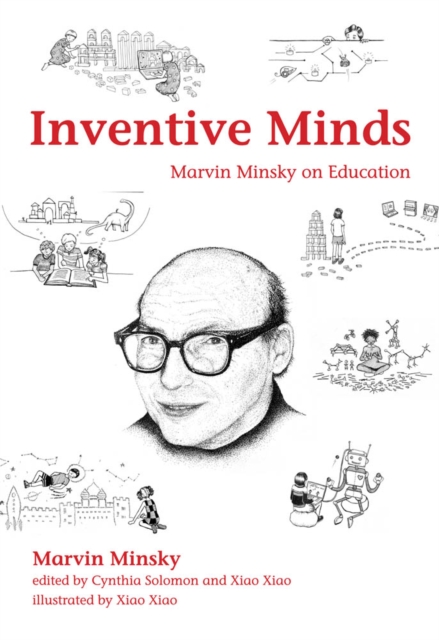
Inventive minds : Marvin Minsky on education
Six essays by artificial intelligence pioneer Marvin Minsky on how education can foster inventiveness, paired with commentary by Minsky's former colleagues and students. Marvin Minsky was a pioneering researcher in artificial intelligence whose work led to both theoretical and practical advances. His work was motivated not only by technological advancement but also by the desire to understand the workings of our own minds. Minsky's insights about the mind provide fresh perspectives on education and how children learn. This book collects for the first time six essays by Minsky on children, learning, and the potential of computers in school to enrich children's development. In these essays Minsky discusses the shortcomings of conventional education (particularly in mathematics) and considers alternative approaches; reflects on the role of mentors; describes higher-level strategies for thinking across domains; and suggests projects for children to pursue. Each essay is paired with commentary by one of Minsky's former colleagues or students, which identifies Minsky's key ideas and connects his writings to current research. Minsky once observed that in traditional teaching, “instead of promoting inventiveness, we focus on preventing mistakes.” These essays offer Minsky's unique insights into how education can foster inventiveness. Commentary by Hal Abelson, Walter Bender, Alan Kay, Margaret Minsky, Brian Silverman, Gary Stager, Mike Travers, Patrick Henry Winston
eBook

Media labs–creative cooperation and mutual learning: Case studies across Europe
The idea of a media lab is not strictly defined. Media labs, in general, are experimental projects combining creative, research and education activities. As some researchers have concluded, “Media lab is not a name, only a tag that you can describe a specific type of place and - as with tags - use freely, according to and contributing to its conceptual meaning.” The study will present the most contemporary, important theoretical issues regarding media labs which, by creating a platform for exchanging experience and knowledge between people representing different professional groups, such as programmers, culture animators and academic researchers, enable work on projects seeking convergence of knowledge, multimedia and technology. The authors will also focus on case studies to indicate the wide range of possibilities for applying this model of creative cooperation.
Journal Article

Social Medialab. Tecnología e ideología en los proyectos de intervención sociocomunitaria en el ámbito universitario
La emergencia de los laboratorios de medios sociales, como espacios para la experimentación y la producción colaborativa, abre la discusión sobre la manera en que nos aproximamos a la complejidad social, sobre todo al abordar la tecnología y su relación con la ideología. En este texto buscamos debatir acerca de sus posibilidades como práctica para repensar la universidad como institución vinculada a la intervención sociocomunitaria. Consideramos necesario un diálogo más profundo con iniciativas relativas a la participación ciudadana, más cercanas a los movimientos sociales que a la cultura académica. Reflexionamos sobre las posibilidades de incorporar la cultura del laboratorio de medios como una oportunidad para la transformación social e institucional.batir
Journal Article

Nebrija MediaLab: un valor añadido a la docencia y al desarrollo de competencias
Como consecuencia de los últimos cambios acontecidos en el panorama de la comunicación y de la educación en la Universidad Nebrija se ha creado un laboratorio de medios, denominado Nebrija MediaLab. Un valor añadido a la docencia que se ha diseñado como un espacio multidisciplinar y de encuentro para los estudiantes, en el que puedan reforzar, fuera del aula, las competencias adquiridas en sus respectivas titulaciones de Comunicación, a través del desarrollo de diversos proyectos. Además de convertirse en un escaparate en el que los alumnos puedan mostrar sus trabajos al mundo profesional.
Journal Article