
Catalogue Search | MBRL


Are you sure you want to remove the book from the shelf?

{{itemTitle}}
173,987
result(s) for
"Medical History"
Sort by:


Tuberculosis and the Politics of Exclusion
Though notorious for its polluted air today, the city of Los Angeles once touted itself as a health resort. After the arrival of the transcontinental railroad in 1876, publicists launched a campaign to portray the city as the promised land, circulating countless stories of miraculous cures for the sick and debilitated. As more and more migrants poured in, however, a gap emerged between the city's glittering image and its dark reality.
Emily K. Abel shows how the association of the disease with \"tramps\" during the 1880s and 1890s and Dust Bowl refugees during the 1930s provoked exclusionary measures against both groups. In addition, public health officials sought not only to restrict the entry of Mexicans (the majority of immigrants) during the 1920s but also to expel them during the 1930s.
Abel's revealing account provides a critical lens through which to view both the contemporary debate about immigration and the U.S. response to the emergent global tuberculosis epidemic.
eBook


The Chief Concern of Medicine
Unlike any existing studies of the medical humanities,The Chief Concern of Medicinebrings to the examination of medical practices a thorough---and clearly articulated---exposition of the nature of narrative. The book builds on the work of linguistics, semiotics, narratology, and discourse theory and examines numerous literary works and narrative \"vignettes\" of medical problems, situations, and encounters. Throughout, the book presents usable expositions of the ways storytelling organizes itself to allow physicians and other healthcare workers (and even patients themselves) to be more attentive to and self-conscious about the information---the \"narrative knowledge\"---of the patient's story.
eBook
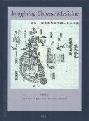

Philosophy and Dietetics in the Hippocratic on Regimen
This book offers the first extended study published in English on the Hippocratic treatise On Regimen, one of the most important pre-Platonic documents of the discussion of human nature and other topics at the intersection of ancient medicine and philosophy.
eBook

Medical inventions : the best of health
\"Innovations in the medical field save countless lives daily. In this fascinating title, a timeline of breakthrough medical inventions is explored through dynamic photographs and interesting fact boxes. Fleming's advances with penicillin and the invention of the X-ray machine are some of the featured inventions that keep us in \"the best of health!\"-- Provided by publisher.
Book

Fit to Be Citizens?
Meticulously researched and beautifully written, Fit to Be Citizens? demonstrates how both science and public health shaped the meaning of race in the early twentieth century. Through a careful examination of the experiences of Mexican, Japanese, and Chinese immigrants in Los Angeles, Natalia Molina illustrates the many ways local health officials used complexly constructed concerns about public health to demean, diminish, discipline, and ultimately define racial groups. She shows how the racialization of Mexican Americans was not simply a matter of legal exclusion or labor exploitation, but rather that scientific discourses and public health practices played a key role in assigning negative racial characteristics to the group. The book skillfully moves beyond the binary oppositions that usually structure works in ethnic studies by deploying comparative and relational approaches that reveal the racialization of Mexican Americans as intimately associated with the relative historical and social positions of Asian Americans, African Americans, and whites. Its rich archival grounding provides a valuable history of public health in Los Angeles, living conditions among Mexican immigrants, and the ways in which regional racial categories influence national laws and practices. Molina's compelling study advances our understanding of the complexity of racial politics, attesting that racism is not static and that different groups can occupy different places in the racial order at different times.
eBook

A history of lung cancer : the recalcitrant disease
\"This is the first comprehensive history of lung cancer, once considered a rare condition and today the leading cause of cancer deaths world-wide. We are used to associating cancer treatment with scientific progress, but a patient diagnosed with lung cancer in 2013 is no more likely to survive the disease for five or more years than a patient undergoing lung cancer surgery in the 1950s. A breakthrough has remained elusive for this condition, now firmly associated with the smoking of cigarettes. Drawing on many unpublished and little-used sources, this book tells the history of lung cancer, of doctors and patients, hopes and fears, expectations and frustrations over the past 200 years, as a rare chest affliction transformed into a major killer. Suggesting that lung cancer is not the only recalcitrant disease, Timmermann asks what happens when medical progress does not seem to make much difference\"-- Provided by publisher.
Book

Inescapable Ecologies
Among the most far-reaching effects of the modern environmental movement was the widespread acknowledgment that human beings were inescapably part of a larger ecosystem. With this book, Linda Nash gives us a wholly original and much longer history of \"ecological\" ideas of the body as that history unfolded in California's Central Valley. Taking us from nineteenth-century fears of miasmas and faith in wilderness cures to the recent era of chemical pollution and cancer clusters, Nash charts how Americans have connected their diseases to race and place as well as dirt and germs. In this account, the rise of germ theory and the pushing aside of an earlier environmental approach to illness constituted not a clear triumph of modern biomedicine but rather a brief period of modern amnesia. As Nash shows us, place-based accounts of illness re-emerged in the postwar decades, galvanizing environmental protest against smog and toxic chemicals. Carefully researched and richly conceptual, Inescapable Ecologies brings critically important insights to the histories of environment, culture, and public health, while offering a provocative commentary on the human relationship to the larger world.
eBook