
Catalogue Search | MBRL


Are you sure you want to remove the book from the shelf?

{{itemTitle}}
200,699
result(s) for
"Medical Law"
Sort by:


Commonsense Consent
Consent is a bedrock principle in democratic society and a primary means through which our law expresses its commitment to individual liberty. While there seems to be broad consensus that consent is important, little is known about what people think consent is. This Article undertakes an empirical investigation of people's ordinary intuitions about when consent has been granted. Using techniques from moral psychology and experimental philosophy, it advances the core claim that most laypeople think consent is compatible with fraud, contradicting prevailing normative theories of consent. This empirical phenomenon is observed across over two dozen scenarios spanning numerous contexts in which consent is legally salient, including sex, surgery, participation in medical research, warrantless searches by police, and contracts. Armed with this empirical finding, this Article revisits a longstanding legal puzzle about why the law refuses to treat fraudulently procured consent to sexual intercourse as rape. It exposes how prevailing explanations for this puzzle have focused too narrowly on sex. It suggests instead that the law may be influenced by the commonsense understanding of consent in all sorts of domains, including and beyond sexual consent. Meanwhile, the discovery of \"commonsense consent\" allows us to see that the problem is much deeper and more pervasive than previous commentators have realized. The findings expose a large—and largely unrecognized—disconnect between commonsense intuition and the dominant philosophical conception of consent. The Article thus grapples with the relationship between folk morality, normative theory, and the law.
Journal Article

Continuous sedation at the end of life : ethical, clinical, and legal perspectives
\"Continuous sedation until death (sometimes referred to as terminal sedation or palliative sedation) is an increasingly common practice in end-of-life care. However, it raises numerous medical, ethical, emotional and legal concerns, such as the reducing or removing of consciousness (and thus potentially causing 'subjective death'), the withholding of artificial nutrition and hydration, the proportionality of the sedation to the symptoms, its adequacy in actually relieving symptoms rather than simply giving onlookers the impression that the patient is undergoing a painless 'natural' death, and the perception that it may be functionally equivalent to euthanasia. This book brings together contributions from clinicians, ethicists, lawyers and social scientists, and discusses guidelines as well as clinical, emotional and legal aspects of the practice. The chapters shine a critical spotlight on areas of concern and on the validity of the justifications given for the practice, including in particular the doctrine of double effect\"-- Provided by publisher.
Book

Genetic Data and the Law
Research using genetic data raises various concerns relating to privacy protection. Many of these concerns can also apply to research that uses other personal data, but not with the same implications for failure. The norms of exclusivity associated with a private life go beyond the current legal concept of personal data to include genetic data that relates to multiple identifiable individuals simultaneously and anonymous data that could be associated with any number of individuals in different, but reasonably foreseeable, contexts. It is the possibilities and implications of association that are significant, and these possibilities can only be assessed if one considers the interpretive potential of data. They are missed if one fixates upon its interpretive pedigree or misunderstands the meaning and significance of identification. This book demonstrates how the public interest in research using genetic data might be reconciled with the public interest in proper privacy protection.
eBook

The best interests assessor practice handbook
The first textbook to consider the Best Interests Assessor (BIA) role in depth, offering practical guidance and exploring its particular challenges in the context of the Mental Capacity Act and Deprivation of Liberty Safeguards legal framework.
Book
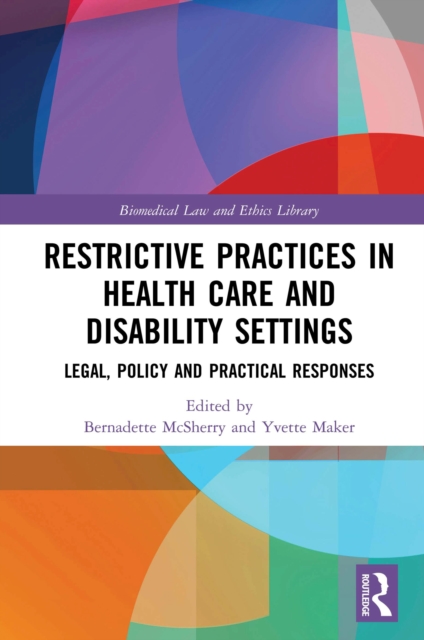
Restrictive Practices in Health Care and Disability Settings
This volume explores different models of regulating the use of restrictive practices in health care and disability settings.
The authors examine the legislation, policies, inspection, enforcement and accreditation of the use of practices such as physical, mechanical and chemical restraint. They also explore the importance of factors such as organisational culture and staff training to the effective implementation of regulatory regimes. In doing so, the collection provides a solid evidence base for both the development and implementation of effective approaches to restrictive practices that focus on their reduction and, ultimately, their elimination across health care sectors. Divided into five parts, the volume covers new ground in multiple respects. First, it addresses the use of restrictive practices across mental health, disability and aged care settings, creating opportunities for new insights and interdisciplinary conversations across traditionally siloed sectors. Second, it includes contributions from research academics, clinicians, regulators and mental health consumers, offering a rich and comprehensive picture of existing regulatory regimes and options for designing and implementing regulatory approaches that address the failings of current systems. Finally, it incorporates comparative perspectives from Australia, New Zealand, the Netherlands, Germany and England.
The book is an invaluable resource for regulators, policymakers, lawyers, clinicians, consumer advocates and academics grappling with the use and regulation of restrictive practices in mental health, disability and aged care contexts.
eBook

Medical tourism and transnational health care
\"Medicine and tourism have become separated in contemporary popular consciousness. The former implies anything but a pleasurable experience and the latter presumes a healthy disposition for participation. We argue that this popular conception of the separation of tourism and medicine ignores an historical continuity of lineage from the 18th century pursuit of a 'cure' at resorts and spas, to 20th century notions of holidays as worker welfare through to global patient mobility in the quest for cutting-edge medical interventions in so-called 'untreatable' conditions. Disciplinary divisions within the academy have reinforced the separation between medicine and tourism in popular culture, but there is now an emergent challenge to re-think the medicine/tourism nexus. Under the influence of transnational health care consumption, two very contrasting traditions of Western thought are now confronting one another. This book provides a comprehensive landscape of diverse research communities' attempts to capture its implications for existing bodies of knowledge in selected aspects of medicine, medical ethics, health policy and management, and tourism studies\"-- Provided by publisher.
Book
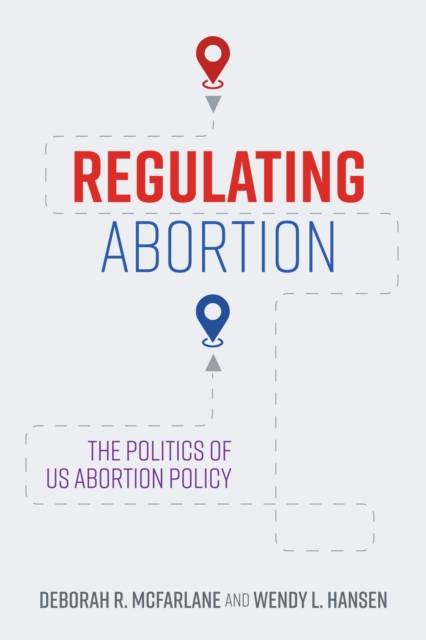
Regulating abortion : the politics of US abortion policy
Explores the historical development and severe ramifications of America's strict abortion regulations. Nearly one in four women in the United States undergoes an abortion during their life. In Regulating Abortion, Deborah R. McFarlane and Wendy L. Hansen uncover the history of the complex web of regulations surrounding abortion in the United States and shed light on the stark reality of this heavily regulated and politically divisive health care service. McFarlane and Hansen delve into the historical development of abortion regulations since Roe v. Wade. They explore the underlying reasons for the extensive regulation of what they assert is a routine and safe medical procedure. The authors examine the multitude of factors that influence state-level abortion policies, including party affiliation, religion, the representation of women in legislatures, and political contributions. By demonstrating how these factors shape the landscape of abortion regulation across different states, they reveal the varying methods and justifications used to either restrict or protect abortion access, with a particular focus on the disproportionate impacts on women of color. The recent landmark US Supreme Court decision in Dobbs v. Jackson Women's Health Organization overturned long-standing precedents. McFarlane and Hansen provide timely insights into the implications of this ruling and how it further amplifies the disparities among states in regulating abortion. An essential resource for understanding the influences driving this divide, Regulating Abortion offers a comprehensive analysis of US abortion policy contextualized by relevant Supreme Court decisions and a comparative exploration of abortion regulation in Western Europe.
eBook

The absence of mercy : a novel
\"When a brutally murdered teenager is discovered in the woods surrounding a small Ohio town, Dr. Ben Stevenson- the town's medical examiner- must decide if he's willing to put his family's life in danger to uncover the truth. Finding himself pulled deeper into an investigation with devastating consequences, he discovers shocking information that will shatter his quiet community, and force him to confnt a haunting truth.\"--Amazon.com
Book
Autonomy, Informed Consent and Medical Law
Alasdair Maclean analyses the ethical basis for consent to medical treatment, providing both an extensive reconsideration of the ethical issues and a detailed examination of English law. Importantly, the analysis is given a context by situating consent at the centre of the healthcare professional-patient relationship. This allows the development of a relational model that balances the agency of the two parties with their obligations that arise from that relationship. That relational model is then used to critique the current legal regulation of consent. To conclude, Alasdair Maclean considers the future development of the law and contrasts the model of relational consent with Neil Manson and Onora O'Neill's recent proposal for a model of genuine consent.
eBook