
Catalogue Search | MBRL


Are you sure you want to remove the book from the shelf?

{{itemTitle}}
53
result(s) for
"Medical anthropology Ethiopia."
Sort by:

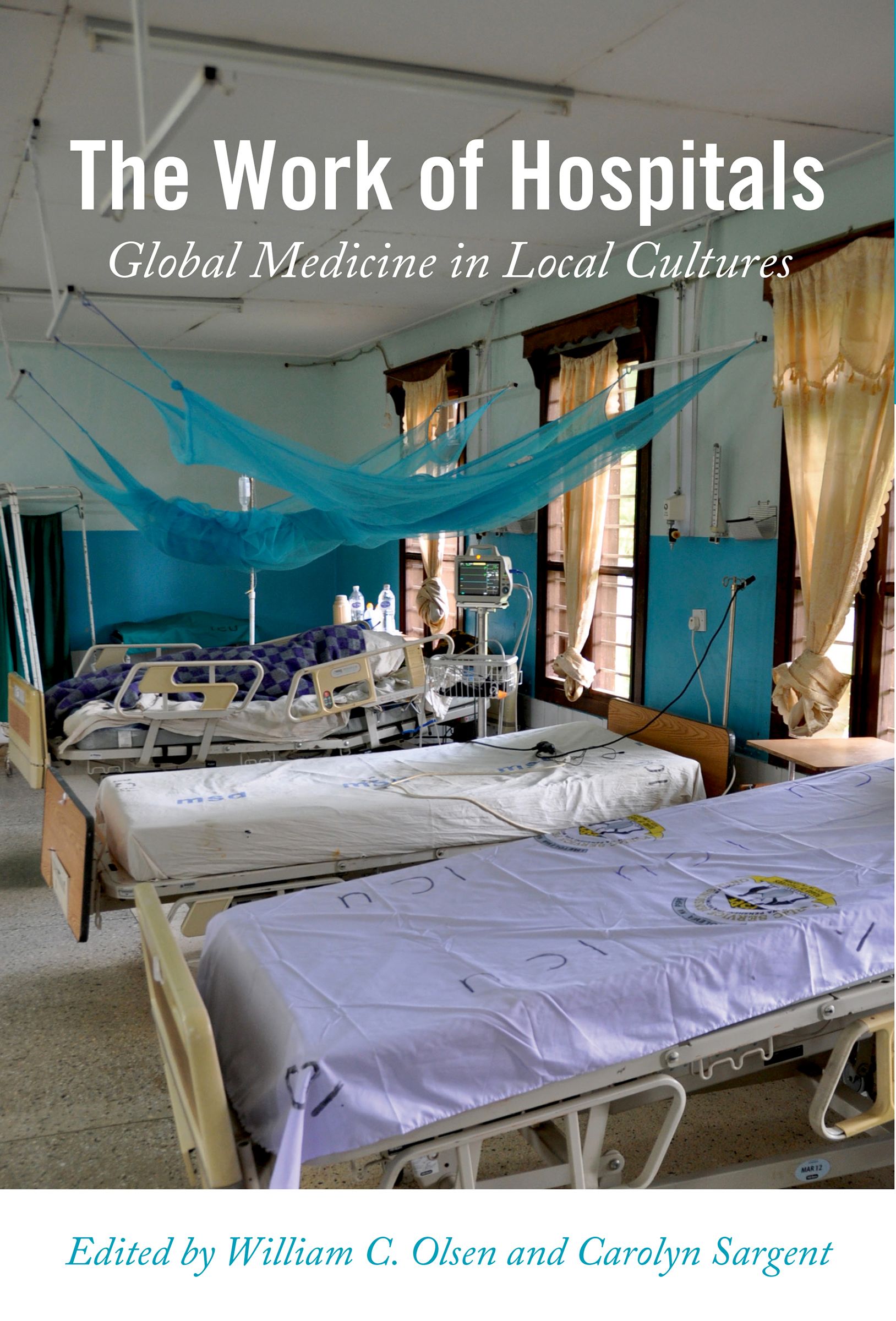
The Work of Hospitals
In the context of neoliberalism and global austerity measures, health care institutions around the world confront numerous challenges in attempting to meet the needs of local populations. Examples from Africa (including, Ethiopia, Ghana, and Congo), Latin America (Peru, Mexico, Guatemala), Western Europe (France, Greece), and the United States illustrate how hospitals play a significant role in the social production of health and disease in the communities where they are. Many low-resource countries have experienced increasing privatization and dysfunction of public sector institutions such as hospitals, and growing withdrawal of funding for non-profit organizations. Underlying the chapters in The Work of Hospitals is a fundamental question: how do hospitals function lacking the medications, equipment and technologies, and personnel normally assumed to be necessary? This collection of ethnographies demonstrates how hospital administrators, clinicians, and other staff in hospitals around the world confront innumerable risks in their commitment to deliver health care, including civil unrest, widespread poverty, endemic and epidemic disease, and supply chain instability. Ultimately, The Work of Hospitals documents a vast gulf between the idealized mission of the hospital and the implementation of this mission in everyday practice. Hospitals thus become \"contested space\" between policy and practice.
eBook

‘Maternal deaths should simply be 0’: politicization of maternal death reporting and review processes in Ethiopia
The Maternal Death Surveillance and Response system (MDSR) was implemented in Ethiopia in 2013 to record and review maternal deaths. The overall aim of the system is to identify and address gaps in order to prevent future death but, to date, around 10% of the expected number of deaths are reported. This article examines practices and reasoning involved in maternal death reporting and review practices in Ethiopia, building on the concept of ‘practical norms’. The study is based on multi-sited fieldwork at different levels of the Ethiopian health system including interviews, document analysis and observations, and has documented the politicized nature of MDSR implementation. Death reporting and review are challenged by the fact that maternal mortality is a main indicator of health system performance. Health workers and bureaucrats strive to balance conflicting demands when implementing the MDSR system: to report all deaths; to deliver perceived success in maternal mortality reduction by reporting as few deaths as possible; and to avoid personalized accountability for deaths. Fear of personal and political accountability for maternal deaths strongly influences not only reporting practices but also the care given in the study sites. Health workers report maternal deaths in ways that minimize their number and deflect responsibility for adverse outcomes. They attribute deaths to community and infrastructural factors, which are often beyond their control. The practical norms of how health workers report deaths perpetuate a skewed way of seeing problems and solutions in maternal health. On the basis of our findings, we argue that closer attention to the broader political context is needed to understand the implementation of MDSR and other surveillance systems.
Journal Article

Healing hands: a traditional bone-setting practice in South Wollo, Kelala Woreda Ethiopia
In many rural regions of Ethiopia, traditional bone-setting remains a key form of healthcare, especially where formal medical services are scarce or inaccessible. Although deeply rooted in cultural practice, it is often dismissed in biomedical discourse due to its informal and non-scientific methods. This study investigates the lived experiences, knowledge systems, and treatment practices of traditional bone setters in Kelala Woreda, South Wollo Zone, within the Amhara Regional State. Using ethnographic methods, including participant observation and semi-structured interviews, the research captures how traditional knowledge is passed down through generations and explores the motivations behind patients’ continued reliance on bone setters over modern medical alternatives. The findings indicate that this form of healing is more than a medical intervention; it is a socially and spiritually grounded practice that fosters community trust and cohesion. Furthermore, the research highlights a lack of scholarly and policy attention to the anthropological significance of these practices. By offering a nuanced understanding of traditional bone-setting from a cultural perspective, this study calls for a more integrated approach to health systems that recognizes and respects indigenous healing methods.
Journal Article

The Unknown Oldowan: ~1.7-Million-Year-Old Standardized Obsidian Small Tools from Garba IV, Melka Kunture, Ethiopia
The Oldowan Industrial Complex has long been thought to have been static, with limited internal variability, embracing techno-complexes essentially focused on small-to-medium flake production. The flakes were rarely modified by retouch to produce small tools, which do not show any standardized pattern. Usually, the manufacture of small standardized tools has been interpreted as a more complex behavior emerging with the Acheulean technology. Here we report on the ~1.7 Ma Oldowan assemblages from Garba IVE-F at Melka Kunture in the Ethiopian highland. This industry is structured by technical criteria shared by the other East African Oldowan assemblages. However, there is also evidence of a specific technical process never recorded before, i.e. the systematic production of standardized small pointed tools strictly linked to the obsidian exploitation. Standardization and raw material selection in the manufacture of small tools disappear at Melka Kunture during the Lower Pleistocene Acheulean. This proves that 1) the emergence of a certain degree of standardization in tool-kits does not reflect in itself a major step in cultural evolution; and that 2) the Oldowan knappers, when driven by functional needs and supported by a highly suitable raw material, were occasionally able to develop specific technical solutions. The small tool production at ~1.7 Ma, at a time when the Acheulean was already emerging elsewhere in East Africa, adds to the growing amount of evidence of Oldowan techno-economic variability and flexibility, further challenging the view that early stone knapping was static over hundreds of thousands of years.
Journal Article

\Volunteers Are Not Paid Because They Are Priceless\: Community Health Worker Capacities and Values in an AIDS Treatment Intervention in Urban Ethiopia
This article analyzes community health workers' (CHW) capacities for empathic service within an AIDS treatment program in Addis Ababa. I show how CHWs' capacities to build relationships with stigmatized people, reconcile family disputes, and confront death draw on a constellation of values, desires, and emotions encouraged by CHWs' families and religious teachings. I then examine the ways in which the capacities of CHWs were valued by the institutions that deployed them. NGO and government officials recognized that empathic care was crucial to both saving and improving the quality of people's lives. These institutional actors also defended a policy of not financially remunerating CHWs, partly by constructing their capacities as so valuable that they become \"priceless\" and therefore only remunerable with immaterial satisfaction. Positive change within CHW programs requires ethnographic analysis of how CHWs exercise capacities for empathic care as well as consideration of how global health institutions value these capacities.
Journal Article

I Want Variety!
It has long been observed that people all over the world prefer to increase the variety of their diets whenever that option is available. We know very little, however, about why people might seek greater dietary variety. This basic question has implications for how we conceive of and measure food insecurity because food insecurity assessments usually include the measurement of access to dietary variety. In this paper, we use qualitative data from rural and peri-urban sites in Brazil and Ethiopia to explore several hypotheses about why people consistently seek variety in their diets. Our results tentatively suggest that people value dietary variety because it is aesthetically pleasing; because it facilitates social integration and serves as a status marker; and, to a lesser extent, because it is nutritious. Methodological innovations, future research priorities, and policy implications are discussed.
Journal Article

Feeding Ecology of Omo River Guerezas (Colobus guereza guereza) in Natural Versus Plantation Forests in the Central Highlands of Ethiopia
Understanding the impacts of habitat modification on primate feeding ecology is essential to design effective conservation management strategies. The dietary guild (e.g., frugivore, folivore, insectivore, and omnivore) of primates and their degree of ecological flexibility impacts their ability to cope with human-modified habitats. The Omo River guereza (Colobus guereza guereza) is a subspecies of eastern black-and-white colobus monkey endemic to the western Rift Valley forests of Ethiopia, where it faces increasing anthropogenic change. While there is some understanding of how this subspecies copes with anthropogenic pressures, we compared the feeding ecology of Omo River guerezas in natural and human-modified habitats. Specifically, we collected data on two neighbouring guereza groups that inhabit adjacent plantation and natural forest habitats over 12 months in Wof-Washa Natural State Forest in the central highlands of Ethiopia. Furthermore, we conducted vegetation surveys on the botanical composition and vertical structure of both habitat types. The monthly food availability index of young leaves was higher in the natural forest than in plantation forest habitat. We observed guerezas feeding on 30 plant species in the natural forest but only 18 species in the plantation forest. Guerezas in both forest types consumed mostly young leaves, but the natural forest group relied more on mature leaves and shoots, and less on fruits and stems, than the plantation forest group. Maesa lanceolata leaves contributed a greater proportion of the overall diet for the plantation forest group, whereas Vernonia leopoldi accounted for the largest proportion of the guereza diet for the natural forest group. The top five species consumed comprised 83% of the diet in the plantation forest group and 70% in the natural forest group, indicating that relatively few plant species dominate guereza diets in these habitats. Conservation of both natural and plantation forests, especially the plant species most intensively exploited by guerezas, should be prioritized to assist in Omo River guereza conservation efforts.
Journal Article

Clapping with Two Hands: Transforming Gender Relations and Zoonotic Disease Risks through Community Conversations in Rural Ethiopia
Gender inequalities and zoonoses are major concerns in livestock production systems worldwide. Livestock producers are at high risk of zoonotic diseases due to direct and indirect contact with their livestock and livestock products. Gender differences and inequalities in roles, access to and control over resources, decision-making, and cultural norms influence exposure to, perceptions, and management practices for zoonotic disease risks. Using participatory action research, we tested the effectiveness of community conversations in changing gender relations and practices that expose livestock keepers to zoonoses in three districts of rural Ethiopia. Our findings show that community conversations change mindsets and practices regarding gender roles, access to and control over resources, decision-making in households, handling livestock, and consumption of animal-source foods. Behavioral change happens when women and men diagnose and understand the problem, reflect on the beliefs/norms that determine their practices, make shifts in cognitive and emotional mental models, commit, and take actions. This has practical and policy implications for interventions that aim to change behavior. The process requires nurturing collaborative relations, trust-building, community-driven social learning, enhancing local capacities, breaking belief traps, and complementarity to existing interventions.
Journal Article

Performance of newly developed body mass index cut-off for diagnosing obesity among Ethiopian adults
Background
Obesity is defined as unhealthy excess body fat, which increases the risk of premature mortality from noncommunicable diseases. Early screening and prevention of obesity is critical for averting associated morbidity, disability, and mortality. Ethiopia has been using the international (WHO’s) BMI cut-off for diagnosing obesity even though its validity among Ethiopian population was questioned. To address this problem, a new body mass index cut-off was developed for Ethiopian adults using population-specific data. However, its performance in diagnosing obesity has not been validated. Therefore, this study determined the performance of the newly developed Ethiopian and World Health Organization (WHO) BMI cut-offs in detecting obesity among Ethiopian adults.
Methods
A cross-sectional study was carried out among 704 employees of Jimma University from February to April 2015. The study participants were selected using simple random sampling technique based on their payroll. Data on sociodemographic variables were collected using an interviewer-administered structured questionnaire. Anthropometric parameters including body weight and height were measured according to WHO recommendation. Body fat percentage (BF%) was measured using the air displacement plethysmography (ADP) after calibration of the machine. The diagnostic accuracy of the WHO BMI cut-off (≥ 30 kg/m
2
) for obesity in both sexes and Ethiopian BMI cut-off (> 22.2 kg/m
2
for males and > 24.5 kg/m
2
for females) were compared to obesity diagnosed using ADP measured body fat percentage (> 35% for females and > 25% for males). Sensitivity, specificity, predictive values, and kappa agreements were determined to validate the performance of the BMI cut-offs.
Results
In males, WHO BMI cut-off has a sensitivity of 5.3% and specificity of 99.4% (Kappa = 0.047) indicating a slight agreement. However, the Ethiopian cut-off showed a sensitivity of 87.5% and specificity of 87.7% (Kappa = 0.752) indicating a substantial agreement.
Similarly, in females, the WHO BMI cut-off showed a sensitivity of 46.9%, while its specificity was 100% (Kappa = 0.219) showing a fair agreement. The Ethiopian BMI cut-off demonstrated a sensitivity 80.0% and a specificity 95.6% (Kappa = 0.701) showing a substantial agreement. The WHO BMI cut-off underestimated the prevalence of obesity by a maximum of 73.7% and by a minimum of 28.3% among males, while the values for underestimation ranged from 31.4–54.1% in females. The misclassification was minimal using the newly developed Ethiopian BMI cut-off. The prevalence of obesity was underestimated by a maximum of 9.2% and overestimated by a maximum of 6.2%. The WHO BMI cut-off failed to identify nearly half (46.6%) of Ethiopian adults who met the criteria for obesity using BF% in the overall sample.
Conclusions
The findings suggest that WHO BMI cut-off (≥ 30 kg/m
2
) is not appropriate for screening obesity among Ethiopian adults. The newly developed Ethiopian BMI cut-off showed a better performance with excellent sensitivity, specificity, predictive values, and agreement indicating the diagnostic significance of it use as a simple, cost-effective, and valid indicator in clinical and community setups.
Journal Article