
Catalogue Search | MBRL


Are you sure you want to remove the book from the shelf?

{{itemTitle}}
125,697
result(s) for
"Medical decision making"
Sort by:

Applications of management science
'Applications of Management Science' focuses on the application of management science to multiple criteria decision making, data envelopment analysis, and managerial applications.
Book

Communicatively constructing resilience: Exploring family resilience in the experience of hereditary cancer
Objective The goal was to explore how families communicate to cope with hereditary cancer conditions and identify factors that may enhance resilience and recommended decision‐making. Background Families with Hereditary Breast and Ovarian Cancer syndrome (HBOC), Lynch syndrome (LS), and Li‐Fraumeni syndrome (LFS) have an increased lifetime risk of developing cancer. We use the communication theory of resilience (CTR) to examine how families engage in resilience and make health decisions about hereditary cancer risks over time. Method We conducted 42 dyadic interviews with families with HBOC, LS, and LFS. Themes emerged through qualitative analysis for each of the resilience processes outlined by CTR (crafting normalcy, communication networks, identity anchors, alternative logics, and foregrounding productive action while legitimizing negative feelings), illustrating how family members manage stressors associated with hereditary cancer over time. Results Participants described enacting each of the five CTR processes to manage the acute and chronic stressors associated with hereditary cancer. We described themes that emerged within each of the five resilience processes. Conclusion Findings demonstrate the ways in which families managing hereditary cancer risks enact resilience processes and how these processes may have a complex relationship to coping and medical decision‐making. Implications Findings demonstrate areas for intervention to support familial resilience.
Journal Article


Information, deliberation, and decisional control preferences for participation in medical decision‐making and its influencing factors among Chinese cancer patients
Background Patient‐centred care should strive to respond to the individual patient's needs and preferences when possible. Yet, preferences of cancer patients for participation in different stages of the medical decision‐making process to increase matching of preferred and actual participation of the patients in decision‐making are not well known. Objective This study aimed to determine the level of information, deliberation and decisional control preferences in decision‐making practices among Chinese cancer patients and to explore their association with the sociodemographic and clinical variables of the patients. Methods A cross‐sectional study was conducted involving a convenience sample of 328 cancer patients from three public hospitals in Guangzhou, China. The Patient Expectation for Participation in Medical Decision‐making Scale (PEPMDS) was used to evaluate information, deliberation and decisional control preferences of the patients. Binary logistic regressions were conducted to determine the association between sociodemographic variables, clinical variables and preferences of the patients. Results Most patients reported a high preference for information (73.2%) and deliberation (73.8%), while a small number (37.2%) reported a high preference for decisional control. Younger patients and patients with higher levels of education were significantly more likely to have a high preference for information, deliberation and decisional control. Patients with low annual family incomes were significantly more likely to have a low preference for decisional control. Conclusion Preferences of patients for involvement in different stages of decision‐making practices could vary. The level of preferences appears to be related to the patient's age, education level, and financial status. Practice Implications Healthcare providers should tailor the participatory approaches of patients considering individual preferences for information, deliberation and decisional control during medical decision‐making. Patient Contribution Patients participated in the survey and filled in the questionnaires.
Journal Article

The best interests assessor practice handbook
The first textbook to consider the Best Interests Assessor (BIA) role in depth, offering practical guidance and exploring its particular challenges in the context of the Mental Capacity Act and Deprivation of Liberty Safeguards legal framework.
Book

Covid-19
Kensey Dishman was unvaccinated when she contracted Covid‐19 at thirteen years old. She also had asthma and is now dead. Her divorced parents disagreed about whether Kensey should be vaccinated, and her father suggested that it was Kensey's own choice to refuse vaccination. This situation is as complicated as it is tragic, and it raises a number of legal and ethical issues regarding medical decision‐making for minors, parental rights, vaccination mandates, and individual freedom versus government interests in protecting minors as well as public health. This commentary explores these issues and highlights potential sources of liability for those involved in Kensey's treatment decisions given her high‐risk for complications from Covid‐19.
Journal Article

Ethics in health administration : a practical approach for decision makers
\"Given the many new advances in technology as well as the uncertainty of the future of health care in a time of change, today's healthcare administrators require a strong foundation in practice-based ethics to confront the challenges of the current healthcare landscape. Ethics in Health Administration, Fourth translates the principles and practice of ethics into usable information for application to the real world of healthcare administration and the critical issues faced by today's healthcare administrators\"--Provided by publisher.
Book

Artificial Intelligence and Patient-Centered Decision-Making
Advanced AI systems are rapidly making their way into medical research and practice, and, arguably, it is only a matter of time before they will surpass human practitioners in terms of accuracy, reliability, and knowledge. If this is true, practitioners will have a prima facie epistemic and professional obligation to align their medical verdicts with those of advanced AI systems. However, in light of their complexity, these AI systems will often function as black boxes: the details of their contents, calculations, and procedures cannot be meaningfully understood by human practitioners. When AI systems reach this level of complexity, we can also speak of black-box medicine. In this paper, we want to argue that black-box medicine conflicts with core ideals of patient-centered medicine. In particular, we claim, black-box medicine is not conducive for supporting informed decision-making based on shared information, shared deliberation, and shared mind between practitioner and patient.
Journal Article

Health analytics : gaining the insights to transform health care
\"A hands-on, analytics road map for health industry leadersThe industry-wide transformation taking place across the health and life sciences ecosystem is mandating that organizations adopt new decision-making capabilities, based on science and real-world information. Analytics will be a required competency for the modern health enterprise; this book is about how to \"cross the chasm.\" The ultimate analytics guide for the health industry leader, this essential book equips business leaders with little-to-no experience in analytics to understand how to incorporate analytics as a cornerstone of their 21st century competitive business strategy. Paints the picture for a new health enterprise, one focused on the patient Explores the financial components of this new operating model, using analytics to optimize the tradeoffs between cost and value Deals with the rising role of the consumer, using analytics to create a completely new health engagement model with individual recipients of care Looks at how analytics can drive innovations in care practice, patient-experienced medical outcomes, and analytically driven novel therapies optimized for the individual patient Presents a variety of text, tables, and graphics illustrating the various concepts being described Within each section and chapter, Health Analytics assesses the current landscape, proposing a new model/concept, sharing real-world stories of how the old and new world come together, and framing a \"how-to\" for the reader in terms of growing that particular set of capabilities in their own enterprises\"-- Provided by publisher.
Book
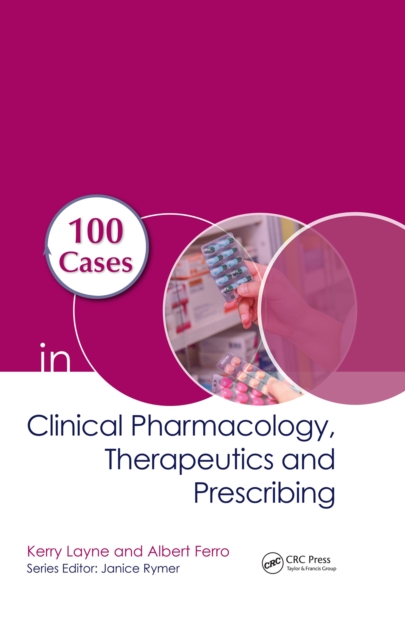
100 Cases in Clinical Pharmacology, Therapeutics and Prescribing
100 Cases in Clinical Pharmacology, Therapeutics and Prescribing explores scenarios commonly seen by medical students and junior doctors in the ward, emergency department, outpatient clinic or in general practice in which an understanding of pharmacology and sound prescribing practice is central to successful clinical management and safe patient care. A succinct summary of the patient's history, examination and any initial investigations is followed by questions on the diagnosis and management of the case. The answer includes a detailed discussion on each topic, providing practical advice on how to deal with the challenges that occur when prescribing, including planning, drug calculations, prescription review and adverse drug reactions. The book will be invaluable during clinical placements and is an ideal companion during preparation for the Prescribing Safety Assessment examination.
Making speedy and appropriate clinical decisions, and choosing the best course of action to take as a result, is one of the most important and challenging parts of training to become a doctor. These true-to-life cases will teach students and junior doctors to prescribe appropriately, and to hone their diagnostic and management skills.
eBook