
Catalogue Search | MBRL


Are you sure you want to remove the book from the shelf?

{{itemTitle}}
1,872
result(s) for
"Medical errors United States Prevention."
Sort by:


Health IT and Patient Safety
IOM's 1999 landmark study To Err is Human estimated that between 44,000 and 98,000 lives are lost every year due to medical errors. This call to action has led to a number of efforts to reduce errors and provide safe and effective health care. Information technology (IT) has been identified as a way to enhance the safety and effectiveness of care. In an effort to catalyze its implementation, the U.S. government has invested billions of dollars toward the development and meaningful use of effective health IT.
Designed and properly applied, health IT can be a positive transformative force for delivering safe health care, particularly with computerized prescribing and medication safety. However, if it is designed and applied inappropriately, health IT can add an additional layer of complexity to the already complex delivery of health care. Poorly designed IT can introduce risks that may lead to unsafe conditions, serious injury, or even death. Poor human-computer interactions could result in wrong dosing decisions and wrong diagnoses. Safe implementation of health IT is a complex, dynamic process that requires a shared responsibility between vendors and health care organizations. Health IT and Patient Safety makes recommendations for developing a framework for patient safety and health IT. This book focuses on finding ways to mitigate the risks of health IT-assisted care and identifies areas of concern so that the nation is in a better position to realize the potential benefits of health IT.
Health IT and Patient Safety is both comprehensive and specific in terms of recommended options and opportunities for public and private interventions that may improve the safety of care that incorporates the use of health IT. This book will be of interest to the health IT industry, the federal government, healthcare providers and other users of health IT, and patient advocacy groups.
eBook
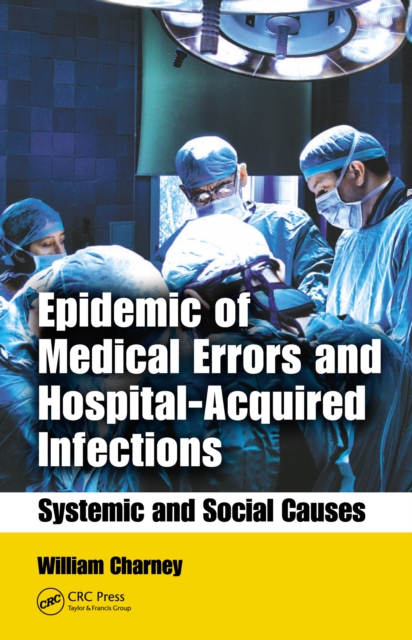
Epidemic of Medical Errors and Hospital-Acquired Infections
This book explores the issues surrounding medical errors and examines the science behind possible solutions. It creates a more efficient dialogue that will produce a more systemic targeting of the causes of medical errors and HAIs. The author elucidates the problems, including the complex issues of money and ethics. He uses statistical data to build the case for systemic change and re-confirms that millions of procedures done without error is as an important measuring figure as are the numbers of mistakes.
eBook

Patient safety
This book provides readers with both a foundation of theoretical knowledge regarding patient safety as well as evidence-based strategies for preventing errors in various clinical settings.The authorsí goal is to help clinicians and administrators gain the skills and knowledge they need to develop safe patient practices in their organizations.
eBook

Patient Safety Informatics
Improving patient safety and the quality of healthcare poses many challenges, and information technology (IT) can support the measures necessary to address these. Unfortunately, the risk of adverse drug events (ADEs) rises alongside the increasing sophistication of the health IT systems incorporated into hospital environments. These pose a risk to the safety of patients and incur considerable extra healthcare costs. Approaches introduced to eliminate ADEs raise a number of concerns, not least that the successful transferability and use of such tools into real clinical settings is only possible by means of a holistic, validated and qualitative approach. This book is a collection of papers presented at the second workshop organized in the context of the EU-funded Patient Safety through Intelligent Procedures in medication (PSIP) project and held in May 2011 in Paris. The workshop provides an opportunity for experts active in the field to share ideas and experiences arising from many different perspectives. The 29 papers address current, novel methods and applications which have achieved concrete results and are relevant to the domain of patient safety as a whole, and are grouped into four main sections: designing IT systems for patient safety; methods and technologies for developing patient safety systems; novel applications to validate patient safety informatics and impact assessment studies for patient safety informatics outcomes.Significant progress has been made in the field, but even greater challenges must still be faced if a successful transfer of research ideas and outcomes into clinical practice is to be accomplished. A new focus in healthcare IT is called for; one which specifically addresses the issue of patient safety.
eBook

Patient Safety
Americans should be able to count on receiving health care that is safe.
To achieve this, a new health care delivery system is needed - a system that both prevents errors from occurring, and learns from them when they do occur. The development of such a system requires a commitment by all stakeholders to a culture of safety and to the development of improved information systems for the delivery of health care. This national health information infrastructure is needed to provide immediate access to complete patient information and decision-support tools for clinicians and their patients. In addition, this infrastructure must capture patient safety information as a by-product of care and use this information to design even safer delivery systems. Health data standards are both a critical and time-sensitive building block of the national health information infrastructure.
Building on the Institute of Medicine reports To Err Is Human and Crossing the Quality Chasm, Patient Safety puts forward a road map for the development and adoption of key health care data standards to support both information exchange and the reporting and analysis of patient safety data.
eBook


Association of Physician Burnout With Suicidal Ideation and Medical Errors
Addressing physician suicide requires understanding its association with possible risk factors such as burnout and depression.
To assess the association between burnout and suicidal ideation after adjusting for depression and the association of burnout and depression with self-reported medical errors.
This cross-sectional study was conducted from November 12, 2018, to February 15, 2019. Attending and postgraduate trainee physicians randomly sampled from the American Medical Association Physician Masterfile were emailed invitations to complete an online survey in waves until a convenience sample of more than 1200 practicing physicians agreed to participate.
The primary outcome was the association of burnout with suicidal ideation after adjustment for depression. The secondary outcome was the association of burnout and depression with self-reported medical errors. Burnout, depression, suicidal ideation, and medical errors were measured using subscales of the Stanford Professional Fulfillment Index, Maslach Burnout Inventory-Human Services Survey for Medical Personnel, and Mini-Z burnout survey and the Patient-Reported Outcomes Measurement Information System depression Short Form. Associations were evaluated using multivariable regression models.
Of the 1354 respondents, 893 (66.0%) were White, 1268 (93.6%) were non-Hispanic, 762 (56.3%) were men, 912 (67.4%) were non-primary care physicians, 934 (69.0%) were attending physicians, and 824 (60.9%) were younger than 45 years. Each SD-unit increase in burnout was associated with 85% increased odds of suicidal ideation (odds ratio [OR], 1.85; 95% CI, 1.47-2.31). After adjusting for depression, there was no longer an association (OR, 0.85; 95% CI, 0.63-1.17). In the adjusted model, each SD-unit increase in depression was associated with 202% increased odds of suicidal ideation (OR, 3.02; 95% CI, 2.30-3.95). In the adjusted model for self-reported medical errors, each SD-unit increase in burnout was associated with an increase in self-reported medical errors (OR, 1.48; 95% CI, 1.28-1.71), whereas depression was not associated with self-reported medical errors (OR, 1.01; 95% CI, 0.88-1.16).
The results of this cross-sectional study suggest that depression but not physician burnout is directly associated with suicidal ideation. Burnout was associated with self-reported medical errors. Future investigation might examine whether burnout represents an upstream intervention target to prevent suicidal ideation by preventing depression.
Journal Article

Improving Diagnosis in Health Care
Getting the right diagnosis is a key aspect of health care - it provides an explanation of a patient's health problem and informs subsequent health care decisions. The diagnostic process is a complex, collaborative activity that involves clinical reasoning and information gathering to determine a patient's health problem. According to Improving Diagnosis in Health Care, diagnostic errors-inaccurate or delayed diagnoses-persist throughout all settings of care and continue to harm an unacceptable number of patients. It is likely that most people will experience at least one diagnostic error in their lifetime, sometimes with devastating consequences. Diagnostic errors may cause harm to patients by preventing or delaying appropriate treatment, providing unnecessary or harmful treatment, or resulting in psychological or financial repercussions. The committee concluded that improving the diagnostic process is not only possible, but also represents a moral, professional, and public health imperative.
Improving Diagnosis in Health Care , a continuation of the landmark Institute of Medicine reports To Err Is Human (2000) and Crossing the Quality Chasm (2001), finds that diagnosis-and, in particular, the occurrence of diagnostic errors-has been largely unappreciated in efforts to improve the quality and safety of health care. Without a dedicated focus on improving diagnosis, diagnostic errors will likely worsen as the delivery of health care and the diagnostic process continue to increase in complexity. Just as the diagnostic process is a collaborative activity, improving diagnosis will require collaboration and a widespread commitment to change among health care professionals, health care organizations, patients and their families, researchers, and policy makers. The recommendations of Improving Diagnosis in Health Care contribute to the growing momentum for change in this crucial area of health care quality and safety.
eBook