
Catalogue Search | MBRL


Are you sure you want to remove the book from the shelf?

{{itemTitle}}
14
result(s) for
"Medicine, Arabic history Egypt."
Sort by:

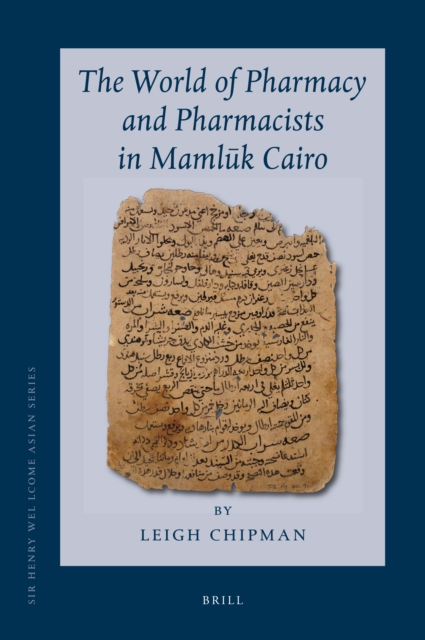
The world of pharmacy and pharmacists in Mamlūk Cairo
A study of the text and context of Minhāj al-dukkān, a thirteenth-century manual for pharmacists, drawing on pharmaco-medical, legal, historical, biographical, and literary sources to provide a full and nuanced view of a usually invisible profession.
eBook

Prevalence and predictors of undiagnosed type 2 diabetes and pre-diabetes among adult Egyptians: a community-based survey
Background
The global prevalence of abnormal glycemic level comprising diabetes mellitus (DM) and pre-diabetes (PDM) is rapidly increasing with special concern for the entity silent or undiagnosed diabetes; those unaware of their condition. Identification of people at risk became much easier with the use of risk charts than the traditional methods. The current study aimed to conduct a community-based screening for T2DM to estimate the prevalence of undiagnosed DM and to assess the AUSDRISK Arabic version as a predictive tool in an Egyptian context.
Methods
A cross-sectional study was conducted among 719 Adults aging 18 years or more and not known to be diabetics through a population-based household survey. Each participant was interviewed to fill demographic and medical data as well as the AUSDRISK Arabic version risk score and undergo testing for fasting plasma glucose (FPG) and oral glucose tolerance test (OGTT).
Results
The prevalence of DM and PDM were 5% and 21.7% respectively. The multivariate analysis revealed that age, being physically inactive, history of previous abnormal glycemic level and waist circumference were the predictors for having abnormal glycemic level among the studied participants. At cut off points ≥ 13 and ≥ 9, the AUSDRISK respectively discriminated DM [sensitivity (86.11%), specificity (73.35%), and area under the curve (AUC): 0.887, 95% CI: 0.824–0.950] and abnormal glycemic level [sensitivity (80.73%), specificity (58.06%), and AUC: 0.767, 95% CI: 0.727–0.807],
p
< 0.001.
Conclusions
Overt DM just occupies the top of an iceberg, its unseen big population have undiagnosed DM, PDM or been at risk of T2DM because of sustained exposure to the influential risk factors. The AUSDRISK Arabic version was proved to be sensitive and specific tool to be used among Egyptians as a screening tool for the detection of DM or abnormal glycemic level. A prominent association has been demonstrated between AUSDRISK Arabic version score and the diabetic status.
Journal Article

Psychoanalysis in Egypt between an ambitious past and an uncertain future
In this essay, translated from French and with an introduction by Robert Beshara, Hussein Abdel Kader traces the history of psychoanalysis in Egypt after touching on the contributions of the Pharaonic and Arab civilizations to psychology. Originally published in 2004, Abdel Kader ends the essay with a critique of the International Psychoanalytic Association and a reflection on the relationship between psychoanalysis and religion, particularly in the Global South.
Journal Article


Medieval Egyptian Judaeo-Arabic Prescriptions (and the edition of three medical prescriptions)
The literature on medicine in medieval Muslim countries
in general and in Egypt in particular is vast and
detailed. Yet study and assessment of the practical
aspects of medicine in the Mediterranean society of
the Middle Ages requires examination of authentic,
practical medical knowledge. At present this can be
extracted mainly from the prescriptions found in the
Cairo Genizah; these supply a different and valuable
dimension. On the importance and the potential of
research into the medical aspects of the Genizah
documents, mainly prescriptions, Goitein wrote in
1971 that “these prescriptions have to be examined
by experts in the history of medicine”.
Journal Article

The balsam of Matariyya: an exploration of a medieval panacea
The products derived from the balsam tree (probably a cultivar of
Commiphora opobalsamum [L.] Engl.) were employed extensively
in medicine during the medieval period. This article presents a preliminary
survey of the Arabic and European texts which discuss the varied medical uses
of balsam. The analysis of the medical applications of balsam is organized
into broad categories according to groups of illnesses and treatments. Although
other sources of medicinal oleo-resin were available in the medieval period,
the balsam gathered from the trees in the walled plantation at Matariyya in
Egypt enjoyed a pre-eminent status. It is argued that the great regard shown
to balsam in medieval medicine must be seen in the wider context of the history
and legends associated with Matariyya and the earlier plantations in Palestine.
Journal Article

Who was Akīlāōs? A Problem in Medical Historiography
In the years before the conquest of Alexandria by the Arabs in 642, Alexandrian scholars produced compendia, summaries, and commentaries on Galen's writings and other works in the Hippocratic medical tradition. This paper concerns the identities of those Alexandrian commentators—two in particular, whose names are reported in Arabic texts, but about whom little else is known—and the routes by which Galenic medicine was transmitted to other parts of the Mediterranean world after Alexandria's fall. We review debates over the identity of \"Akīlāōs\" and \"Anqīlāōs,\" and argue that \"Akīlāōs\" is not merely a scribal duplication, as some have supposed. Instead, we suggest a connection with the city of Aquileia in northern Italy, as a source for the name \"Akīlāōs\" and as a route by which Alexandrian medical texts reached northern Italy (where their Latin versions subsequently were associated with a \"Ravenna school\" of medicine).
Journal Article
