
Catalogue Search | MBRL


Are you sure you want to remove the book from the shelf?

{{itemTitle}}
689
result(s) for
"Medicine, Egyptian."
Sort by:

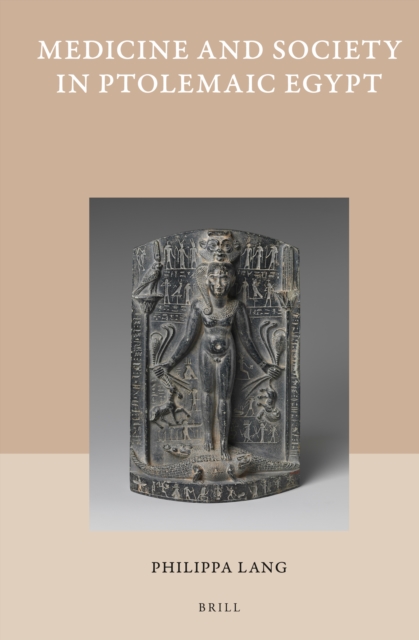
Medicine and Society in Ptolemaic Egypt
Examining all forms of healing within the specific socioeconomic and environmental constraints of the Ptolemies' Egypt, this book explores how linguistic, cultural and ethnic affiliations and interactions were expressed in the medical domain.
eBook

The tablets of light : the teachings of Thoth on unity consciousness
\"Divine transmissions of light codes to activate hidden keys to conscious evolution within your soul\"-- Provided by publisher.
Book
'Greek' and 'Roman' in Latin medical texts : studies in cultural change and exchange in ancient medicine
Latin medical texts transmit medical theories and practices that originated mainly in Greece. 'Greek' and 'Roman' in Latin Medical Texts studies the ways in which this cultural interaction led to innovations in the areas of anatomy, pathology and pharmacology, from the earliest Latin medical texts until well into the medieval world.
eBook

Lost in translation: the history of the Ebers Papyrus and Dr. Carl H. von Klein
While the Ebers Papyrus is understood to be one of the oldest and most complete contemporaneous perspectives on Ancient Egyptian healing practices, nothing has yet been said about the biography of its first English-language translator, Dr. Carl H. von Klein. A German immigrant and surgeon in the American Midwest, von Klein spent twenty-some years meticulously translating and annotating the Papyrus, but ultimately his manuscript was destroyed. In this paper, we examine the societal- and personal-scale forces that thwarted his efforts to transform our understanding of the history of medicine.
Journal Article

The Brooklyn Papyrus Snakebite and Medicinal Treatments’ Magico-Religious Context
This paper investigates the role of magic and religion in the context of the Brooklyn Papyrus (47.218.48 and 47.218.85) snakebite treatments. It examines the extent to which these two factors are involved in the treatments and how they shed light on the importance of treating the mind and body of the patient. Information regarding the methods and ingredients used in snakebite treatments in ancient Egypt is obtained from the author’s doctoral thesis in which the Brooklyn Papyrus (47.218.48 and 47.218.85) is transliterated and then translated into English and offers a commentary on the text. This translation enabled the author to understand that magic and religion form part of the snakebite treatment process. Investigating the relationship between these two factors and medical treatment ingredients and methods enables one to know that magic and religion are inextricably linked in the role of healing. The role played by magic and religion in these treatments resulted in a holistic form of treatment in the process of attempting to heal the ancient Egyptian snakebite victim and patient.
Journal Article
The quick and the dead : biomedical theory in ancient Egypt
A cross-disciplinary approach suggesting that the origin of ancient Egyptian medicine began with the domestication of cattle in Africa and the attempt to control disease. With the sacrifice of these animals, the Egyptians began to understand anatomy and physiology, which they then applied to humans.
eBook
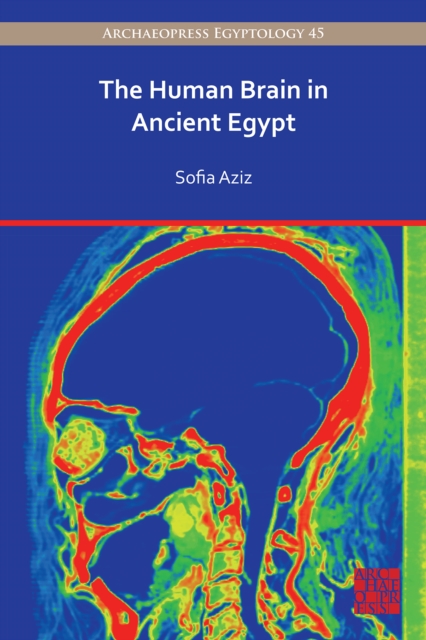
The Human Brain in Ancient Egypt
The Human Brain in Ancient Egypt provides a medical and historical re-evaluation of the function and importance of the human brain in ancient Egypt. The study evaluates whether treatment of the brain during anthropogenic mummification was linked to medical concepts of the brain. The notion that excerebration was carried out to rid the body of the brain continues to dominate the literature, and the assumption that the functions of the brain were assigned to the heart and therefore the brain was not needed in the afterlife persists. To assess the validity of these claims the study combines three investigations: a radiological survey of 33 subjects using the IMPACT mummy database to determine treatment of the cranium; an examination of the medical papyri for references to the human brain; and an inspection of the palaeopathological records to look for evidence of cranial injuries and ensuing medical treatments.The results refute long held claims regarding the importance of the human brain in ancient Egypt. Many accepted facets of mummification can no longer hold up to scrutiny. Mummification served a religious ideology in which the deceased was transformed and preserved for eternity. Treatment of the brain was not determined to be significantly different from the visceral organs, and the notion that the brain was extracted because it served no purpose in the afterlife was found to be unsubstantiated.
eBook

Some Notes on Papyrus Ebers, Ancient Egyptian Treatments of Migraine, and a Crocodile on the Patient's Head
Modern literature about the history of migraine treatments often starts with an ancient Egyptian remedy said to be from Papyrus Ebers that involves crocodiles that should be wrapped around the head. A fresh look on this treatment shows the need for revision on many points, including the source of the remedy, its content and meaning, and further implications for the history of Papyrus Ebers.
Journal Article

Origin and Development of Unani Medicine: An Analytical Study
This study traces the history of the origin and development of Unani medicine in the Islamic world and its later blossoming in Persia. Based mainly on Arabic, Persian, Urdu and English sources, the study focuses on the intellectual legacy of the Muslims in the development of Unani medicine and their interest in the progress of medical sciences, when a number of classical works were produced by great Muslim scholars during this period that provide evidence of organized medical care that provided the basis for modern medicine as it emerged from the 17th century onwards in Europe. The early Muslim scholars' works were focused on the integration or Islamicisation of human knowledge in the areas of medical and health-care sciences as well as those who seek to understand the role of moral values and Maqasid al-Sharl'ah ('objectives of SharTah) in medical and healthcare practices in a more comprehensive framework, exposing the dynamic contribution of Islamic civilization to medical progress that was later obscured in modernity by Western ideologies.
Journal Article