
Catalogue Search | MBRL


Are you sure you want to remove the book from the shelf?

{{itemTitle}}
2,381
result(s) for
"Medicine Humor."
Sort by:

How to win friends and influence fungi : collected quirks of science, tech, engineering, and math from nerd nite
\"In the vein of acclaimed popular-science bestsellers such as Atlas Obscura, Astrophysics for Young People in a Hurry, The Way Things Work, What If?, and Undeniable, the co-founders of the global science organization Nerd Nite bring readers a collection of wacky, yet fascinating STEM topics. For 20 years, Nerd Nite has delivered to live audiences around the world, the most interesting, fun, and informative presentations about science, history, the arts, pop culture, you name it. There hasn't been a rabbit hole that their army of presenters hasn't been afraid to explore. Finally, after countless requests to bring Nerd Nite to more fans across the globe, co-founders and college pals Matt Wasowski and Chris Balakrishnan are bringing readers the quirky and accessible science content that they crave in book form, focused on STEM and paired with detailed illustrations that make the content pop. The resulting range of topics is quirky and vast, from kinky, spring-loaded spiders to the Webb telescope's influence on movie special effects. Hilariously named after Dale Carnegie's iconic book, How to Win Friends and Influence Fungi features narratives, bursts, and infographics on all things STEM from scientists around the world. Chapters are sure to make you laugh-out-loud, with titles such as \"The Science of the Hangover,\" \"What Birds Can Teach Us About the Impending Zombie Apocalypse,\" and \"Lessons from the Oregon Trail.\" With fascinating details, facts, and illustrations, combined with Chris and Matt's incredible connections to organizations such as the Discovery Network and the Smithsonian Institution, How to Win Friends and Influence Fungi is sure to reach joyful STEM enthusiasts of all ages around the world. About Nerd Nite: Started in 2003, Nerd Nite is a monthly event held in 100+ cities worldwide during which folks give 20-minute fun-yet-informative presentations across all disciplines, while the audience drinks along!\"-- Provided by publisher.
BOOK
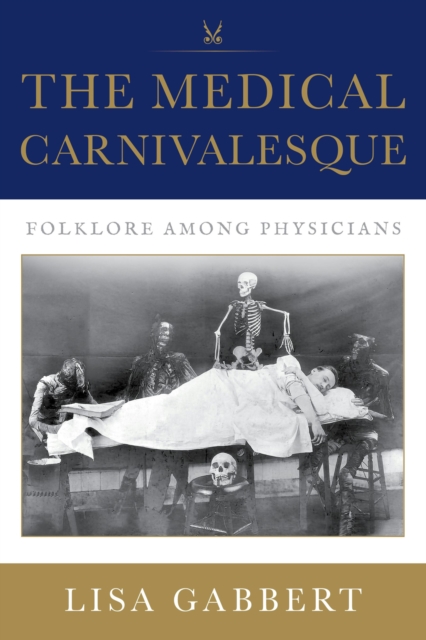
The Medical Carnivalesque
The practice of medicine is immersed in issues of life, death,
and suffering in relation to the mortal body. Because of this, the
medical profession is a fertile arena for folklore that serves to
address these topics among physicians.
In The Medical Carnivalesque , Lisa Gabbert argues that
this extraordinarily difficult work context has led to the
development of an occupational corpus of folklore, backstage talk,
and humor that she calls the medical carnivalesque. Gabbert argues
that suffering is not only something experienced by patients, but
that the organization, practice, and ethos of medicine can induce
suffering in physicians themselves. Featuring topics such as the
institutionalized nature of physician suffering, death-related
humor and talk, stories about patient bodies, and parodies of
medical specialties, The Medical Carnivalesque shows us
how the culture of contemporary medicine uses travesty, humor, and
inversion to address the sometimes painful and often transgressive
aspects of doctoring.
The Medical Carnivalesque connects patient and
physician suffering to laughter; acknowledges suffering as an
essential component of life; and constitutes a way in which some
physicians address the core philosophical and existential issues
with which they regularly engage as they go about their daily
work.
eBook

The mystery of the exploding teeth : and other curiosities from the history of medicine
\"This wryly humorous collection of stories about bizarre medical treatments and cases offers a unique portrait of Victorian medicine in all its grisly weirdness ... Historian Thomas Morris has assembled the stories thematically so readers will witness mysterious illnesses (such as the Rhode Island woman who peed through her nose), horrifying operations (1635: A hungover Dutchman swallows a knife, which is then surgically removed from his stomach), dubious treatments ('take twelve young swallows out of the nest'), unfortunate predicaments (such as that of the boy who honked like a goose after inhaling a bird's larynx), and many other marvels\"--Provided by publisher.
Book

A systematic review of humour‐based strategies for addressing public health priorities
To systematically review research into the use of humour‐based health promotion strategies for addressing public health issues during the past 10 years.
The systematic review was conducted in accordance with the Preferred Reporting Items for Systematic Reviews and Meta‐Analyses (PRISMA) guidelines.
Thirteen studies were included in the review. Mental health, breast and testicular cancer self‐examination, safe sex, skin cancer and binge drinking public health issues were targeted. Humour‐based strategies were used to influence health attitudes and behaviours, encourage interpersonal sharing to indirectly affect health behaviour, and investigate the level of threat and humour associated with positive outcomes. Findings provided some evidence to support the use of humour‐based strategies as determined by the right combination of audience characteristics, level of humour and amusement evoked, and message persuasion and behaviour change methods underpinning strategies.
Methodologies varied limiting comparability, although overall results indicate that humour‐based health promotion strategies may be a useful tool for increasing awareness and help‐seeking behaviour for public health priorities, particularly those associated with stigma.
Humour interventions vary widely because there can never be a standardised approach to evoking humour. Further research examining humour and public health promotion is needed.
Journal Article


Ha!
An entertaining tour of the science of humor and laughter Humor, like pornography, is famously difficult to define. We know it when we see it, but is there any way to figure out what we really find funny? In this fascinating investigation into the science of humor and laughter, neuroscientist Scott Weems uncovers what's happening in our heads when we giggle, guffaw, or double over with laughter. Beginning with the premise that humor arises from inner conflict in the brain, Weems explores such issues as why surprise is so important for humor, why computers are terrible at recognizing what's funny, and why cringe-worthy stereotypes make us laugh the hardest. From the role of insult jokes to the benefit of laughing for our immune system responses, Ha! reveals why humor is so idiosyncratic, and why how-to books alone will never help us become funnier people. Packed with the latest research, amusing anecdotes (and even a few jokes), Ha! is a delightful tour of why humor is so important to our daily lives.
eBook

Ha! : the science of when we laugh and why
\"Humor, like pornography, is famously difficult to define. We know it when we see it, but is there any way to figure out what we really find funny? In this fascinating investigation into the science of humor and laughter, neuroscientist Scott Weems uncovers what's happening in our heads when we giggle, guffaw, or double over with laughter.\" -- Provided by publisher.
Book

The Encultured Brain
Basic concepts and case studies from an emerging field that investigates human capacities and pathologies at the intersection of brain and culture.
The brain and the nervous system are our most cultural organs. Our nervous system is especially immature at birth, our brain disproportionately small in relation to its adult size and open to cultural sculpting at multiple levels. Recognizing this, the new field of neuroanthropology places the brain at the center of discussions about human nature and culture. Anthropology offers brain science more robust accounts of enculturation to explain observable difference in brain function; neuroscience offers anthropology evidence of neuroplasticity's role in social and cultural dynamics. This book provides a foundational text for neuroanthropology, offering basic concepts and case studies at the intersection of brain and culture.
After an overview of the field and background information on recent research in biology, a series of case studies demonstrate neuroanthropology in practice. Contributors first focus on capabilities and skills—including memory in medical practice, skill acquisition in martial arts, and the role of humor in coping with breast cancer treatment and recovery—then report on problems and pathologies that range from post-traumatic stress disorder among veterans to smoking as a part of college social life.
Contributors
Mauro C. Balieiro, Kathryn Bouskill, Rachel S. Brezis, Benjamin Campbell, Greg Downey, José Ernesto dos Santos, William W. Dressler, Erin P. Finley, Agustín Fuentes, M. Cameron Hay, Daniel H. Lende, Katherine C. MacKinnon, Katja Pettinen, Peter G. Stromberg
eBook


Humour: A purposeful and therapeutic tool in surgical nursing practice
Humour builds rapport and establishes relationships. However, nurses need to understand when the use of humour is appropriate, and how it can be beneficial in practice. Greater understanding of humour use within nursing is needed as literature offers contradictory advice. Therefore, nurses may be hesitant to deploy humour, potentially missing opportunities to deliver more effective care. A key driver for this study was the lack of evidence-based guidance about nurse humour use. A qualitative descriptive methodology was used to explore how registered nurses working in a surgical environment determine when and how to use humour with patients. Nine registered nurses working in a surgical ward within a tertiary hospital in Aotearoa New Zealand participated in group or individual semi-structured interviews. Data were analysed thematically with three themes identified: assessing openness; building a connection; and protection against vulnerability. Humour was identified as a significant feature of surgical nursing practice; nurses used humour purposefully and with careful consideration. Decisions to use humour in practice were guided by patient cues and informal nurse-initiated assessment. Nurses used humour to connect quickly with patients to address perceived physical and emotional stressors inherent in the surgical environment. Humour enables nurses to establish therapeutic relationships in the surgical context.
Journal Article