
Catalogue Search | MBRL


Are you sure you want to remove the book from the shelf?

{{itemTitle}}
187
result(s) for
"Medicinsk biokemi"
Sort by:

Lipid Oxidation in Health and Disease
Lipid oxidation has long been regarded as a deleterious process responsible for lipid rancidity, loss of function, and generation of toxic products. However in recent years, research has also focused on the non-detrimental physiological and pathological effects of these chemical reactions. This book provides an up-to-date review of the role of oxidized lipid products in physiological and pathophysiological processes. Topics include the mechanisms of lipid oxidation, antioxidant defenses, lipid oxidation products, cell signaling, and the roles of oxidized lipids in specific diseases. The book also discusses drug targeting and the therapeutic potential of oxidized lipids.
eBook

Metabolomics: The Stethoscope for the Twenty-First Century
Metabolomics encompasses the systematic identification and quantification of all metabolic products in the human body. This field could provide clinicians with novel sets of diagnostic biomarkers for disease states in addition to quantifying treatment response to medications at an individualized level. This literature review aims to highlight the technology underpinning metabolic profiling, identify potential applications of metabolomics in clinical practice, and discuss the translational challenges that the field faces. We searched PubMed, MEDLINE, and EMBASE for primary and secondary research articles regarding clinical applications of metabolomics. Metabolic profiling can be performed using mass spectrometry and nuclear magnetic resonance-based techniques using a variety of biological samples. This is carried out in vivo or in vitro following careful sample collection, preparation, and analysis. The potential clinical applications constitute disruptive innovations in their respective specialities, particularly oncology and metabolic medicine. Outstanding issues currently preventing widespread clinical use are scalability of data interpretation, standardization of sample handling practice, and e-infrastructure. Routine utilization of metabolomics at a patient and population level will constitute an integral part of future healthcare provision.
Journal Article
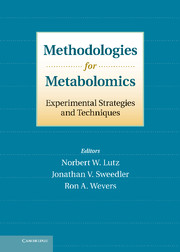
Methodologies for Metabolomics
Metabolomics, the global characterisation of the small molecule complement involved in metabolism, has evolved into a powerful suite of approaches for understanding the global physiological and pathological processes occurring in biological organisms. The diversity of metabolites, the wide range of metabolic pathways and their divergent biological contexts require a range of methodological strategies and techniques. Methodologies for Metabolomics provides a comprehensive description of the newest methodological approaches in metabolomic research. The most important technologies used to identify and quantify metabolites, including nuclear magnetic resonance and mass spectrometry, are highlighted. The integration of these techniques with classical biological methods is also addressed. Furthermore, the book presents statistical and chemometric methods for evaluation of the resultant data. The broad spectrum of topics includes a vast variety of organisms, samples and diseases, ranging from in vivo metabolomics in humans and animals to in vitro analysis of tissue samples, cultured cells and biofluids.
eBook

Identification of motif-based interactions between SARS-CoV-2 protein domains and human peptide ligands pinpoint antiviral targets
The virus life cycle depends on host-virus protein-protein interactions, which often involve a disordered protein region binding to a folded protein domain. Here, we used proteomic peptide phage display (ProP-PD) to identify peptides from the intrinsically disordered regions of the human proteome that bind to folded protein domains encoded by the SARS-CoV-2 genome. Eleven folded domains of SARS-CoV-2 proteins were found to bind 281 peptides from human proteins, and affinities of 31 interactions involving eight SARS-CoV-2 protein domains were determined (
K
D
∼ 7-300 μM). Key specificity residues of the peptides were established for six of the interactions. Two of the peptides, binding Nsp9 and Nsp16, respectively, inhibited viral replication. Our findings demonstrate how high-throughput peptide binding screens simultaneously identify potential host-virus interactions and peptides with antiviral properties. Furthermore, the high number of low-affinity interactions suggest that overexpression of viral proteins during infection may perturb multiple cellular pathways.
In this work, the authors mapped putative interactions between protein domains encoded by the SARS-CoV-2 and intrinsically disordered regions of the human proteome. From the data, peptides with antiviral properties targeting Nsp9 and Nsp16 were identified.
Journal Article
Chemical biology
\"Based on the award winning Wiley Encyclopedia of Chemical Biology, this book provides a fairly general overview of the role of chemical biology in drug discovery and development and in understanding biological mechanisms of common diseases\"--
eBook

Proteomics
Targeted proteomics is a technology for detecting proteins of interest with high sensitivity, quantitative accuracy, and reproducibility. The analysis of a pre-defined group of proteins provides precise, quantitative, and sensitive data to scientists and clinicians and can provide information on a subset of proteins important for their biological function. In this volume, a panel of high-profile contributors provides an overview of targeted proteomics in biomedical science. The book is focused on current state-of-the-art technology and applications, and it will be a valuable source of information for everyone working in this field. The first part of the book provides detailed examples of the application of targeted proteomics in biomarker discovery and pathogenesis. The second part is focused on the various tools used in targeted proteomics, including bioinformatics approaches, while the final section is dedicated to biobanks, a vital aspect of targeted proteomics. The book is highly recommended for anyone interested in proteomics, disease pathogenesis, clinical protein science, and biomarker discovery.
eBook

The E3 Ubiquitin Ligase TRIM21 Regulates Basal Levels of PDGFRβ
Activation of platelet-derived growth factor (PDGF) receptors α and β (PDGFRα and PDGFRβ) at the cell surface by binding of PDGF isoforms leads to internalization of receptors, which affects the amplitude and kinetics of signaling. Ubiquitination of PDGF receptors in response to ligand stimulation is mediated by the Casitas b-lineage lymphoma (Cbl) family of ubiquitin ligases, promoting internalization and serving as a sorting signal for vesicular trafficking of receptors. We report here that another E3 ligase, i.e., tripartite motif-containing protein 21 (TRIM21), contributes to the ubiquitination of PDGFRβ in human primary fibroblasts AG1523 and the osteosarcoma cell line U2OS and regulates basal levels of PDGFRβ. We found that siRNA-mediated depletion of TRIM21 led to decreased ubiquitination of PDGFRβ in response to PDGF-BB stimulation, while internalization from the cell surface and the rate of ligand-induced degradation of the receptor were not affected. Moreover, induction of TRIM21 decreased the levels of PDGFRβ in serum-starved cells, and even more in growing cells, in the absence of PDGF stimulation. Consistently, siRNA knockdown of TRIM21 caused accumulation of the total amount of PDGFRβ, both in the cytoplasm and on the cell surface, without affecting mRNA levels of the receptor. We conclude that TRIM21 acts post-translationally and maintains basal levels of PDGFRβ, thus suggesting that ubiquitination of PDGFRβ by TRIM21 may direct a portion of receptor for degradation in growing cells in a ligand-independent manner.
Journal Article
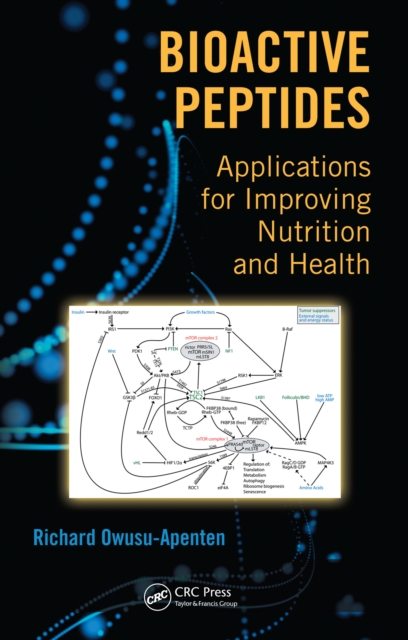
Bioactive Peptides
A summary of the benefits of bioactive peptides used to mitigate major metabolic derangements that result in unwanted weight loss, this book presents data from human studies and trials, along with recent research findings. It covers the background science on the relationship between illness and muscle weight loss, highlighting bioactive peptides' ability to enhance the body's antioxidant status, antisepsis capacity, immune function, anti-inflammatory capacity, growth potential, and appetite. Building on this, the author discusses the use of bioactive peptides to modify aspects of the host response to illness, including inflammation, antimicrobial activity, anabolic dysfunction, and anorexia.
eBook
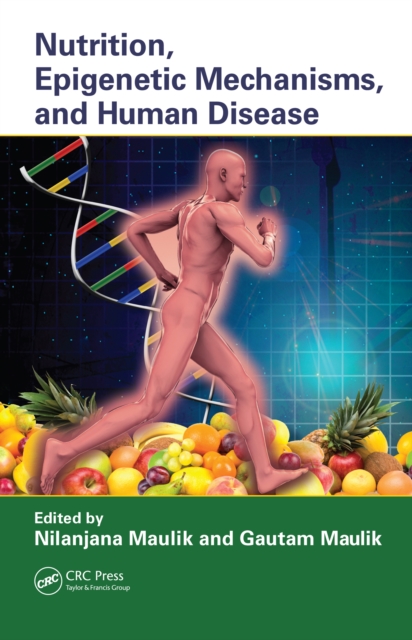
Nutrition, Epigenetic Mechanisms, and Human Disease
Extensive research on nutrigenomics has unveiled numerous epigenetic mechanisms that are influenced by our dietary signature. This book illustrates how nutrition can influence epigenetic inheritance and the mechanisms that underlie modification of an individual's metabolic imprint. The text discusses the basics of nutrigenomics and epigenetic regulation, types of nutrition influencing genetic imprinting, and the role of nutrition in modulating an individual's predisposition to disease. It also covers epigenetic variation, genomic imprinting, maternal nutrition, and neonatal nutrition, as well as epigenetics and nutrition in cancer, heart disease, and obesity.
eBook

Green Tea Polyphenols
Presenting a collection of up-to-date global findings on the health benefits of green tea polyphenols, this book confirms their position as healthy functional ingredients. With chapters contributed by experts in the field and the inclusion of extensive references, it provides an authoritative volume to guide researchers, scientists, and regulatory bodies. The book covers important topics on the processing, chemical composition, and properties of green tea polyphenols as well as their numerous health benefits, from cancer prevention and cardiovascular health to protection of internal organs and gut health.
eBook