
Catalogue Search | MBRL


Are you sure you want to remove the book from the shelf?

{{itemTitle}}
271
result(s) for
"Medieval Mediterranean"
Sort by:

Windows into the Medieval Mediterranean
\"This book reveals the medieval Mediterranean region as a richly nuanced space of places and peoples connected by a body of water, but far from unified - and seeks to challenge what we think we know about the medieval Mediterranean, and the world it influenced. Reflective of the diversity of the Mediterranean region, the contributors are an international body of scholars that bring together topics that are seemingly disparate but are in fact in a vibrant conversation with one another. The volume seeks to shed new light and perspectives on familiar topics. Each chapter begins with secondary commentary for context, and is followed by primary sources comprised of images and texts that invite careful reading, lively discussion, and possibilities for deeper research. Topics that are discussed include: Archaeology and Architecture, Stories of Travel and Encounter, Literature and Poetry, Matters of Faith, Crusades, Monarchies and Conflict, Ties that Bind and Around the Mediterranean World. Windows into the Medieval Mediterranean is simultaneously a scholarly and reader-friendly book intended to engage undergraduate and graduate students, scholars, and anyone interested in the Mediterranean of the Middles Ages\"-- Provided by publisher.
BOOK

Texts in transit in the medieval Mediterranean
This collection of essays studies the movement of texts in the Mediterranean basin in the medieval period from historical and philological perspectives. Rejecting the presumption that texts simply travel without changing, the contributors examine closely the nature of these writings, which are concerned with such topics as science and medicine, and how they changed over the course of their journeys.
Transit and transformation give texts new subtexts and contexts, providing windows through which to study how memory, encryption, oral communication, cultural and religious values, and knowledge traveled and were shared, transformed, and preserved. This volume broadens how we think about texts, communication, and knowledge in the medieval world.
Aside from the editors, the contributors are Mushegh Asatryan, Brian N. Becker, Leonardo Capezzone, Leigh Chipman, Ofer Elior, Zohar Hadromi-Allouche, B. Harun Küçük, Israel M. Sandman, and Tamás Visi.
eBook


Infectious ideas : contagion in premodern Islamic and Christian thought in the Western Mediterranean
Infectious Ideas is a comparative analysis of how Muslim and Christian scholars explained the transmission of disease in the premodern Mediterranean world.
How did religious communities respond to and make sense of epidemic disease? To answer this, historian Justin K. Stearns looks at how Muslim and Christian communities conceived of contagion, focusing especially on the Iberian Peninsula in the aftermath of the Black Death. What Stearns discovers calls into question recent scholarship on Muslim and Christian reactions to the plague and leprosy.
Stearns shows that rather than universally reject the concept of contagion, as most scholars have affirmed, Muslim scholars engaged in creative and rational attempts to understand it. He explores how Christian scholars used the metaphor of contagion to define proper and safe interactions with heretics, Jews, and Muslims, and how contagion itself denoted phenomena as distinct as the evil eye and the effects of corrupted air. Stearns argues that at the heart of the work of both Muslims and Christians, although their approaches differed, was a desire to protect the physical and spiritual health of their respective communities.
Based on Stearns's analysis of Muslim and Christian legal, theological, historical, and medical texts in Arabic, Medieval Castilian, and Latin, Infectious Ideas is the first book to offer a comparative discussion of concepts of contagion in the premodern Mediterranean world.
eBook

Fifty early medieval things : materials of culture in late antiquity and the early Middle Ages
\"An introduction to the material culture of the greater Mediterranean world, including Europe and western Asia, this book connects actual things to the political, economic, cultural, and social forces that shaped the first millennium AD\"-- Provided by publisher.
Book
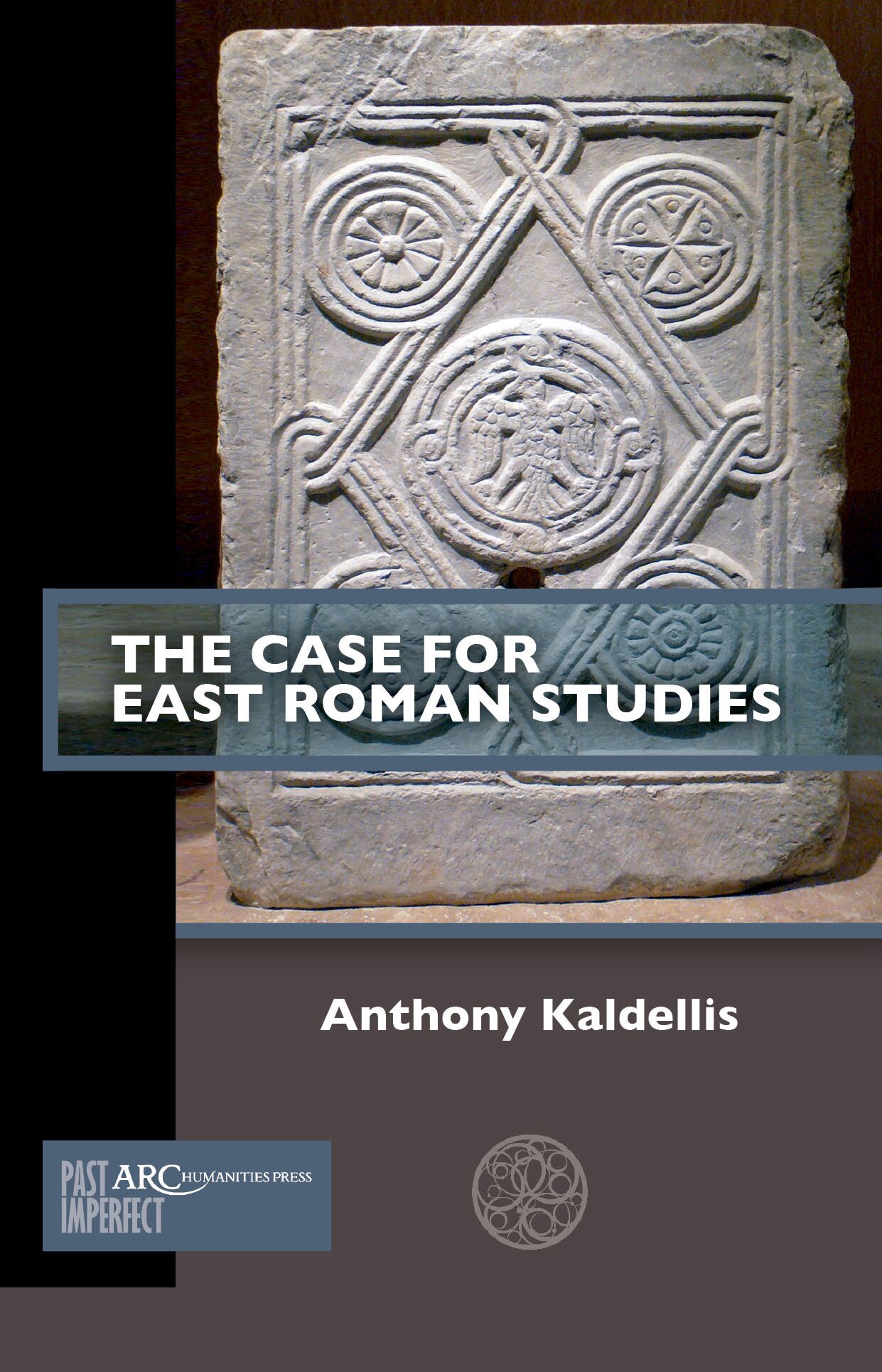
The Case for East Roman Studies
Byzantine Studies has reached a tipping point: a growing number of historians have realized that the terms “Byzantium” and “the Byzantines” distort the reality and identity of the society that we study, and encode a series of prejudices that were embedded in western perceptions. The aim of these terms was to exclude the eastern empire from important discussions and historical developments. It is time to end this exercise in orientalist fiction, but what are the alternatives? In this book, Anthony Kaldellis surveys the pros and cons of a range of possible options and examines the implications of a field name-change also for art history, philology, and the study of Eastern Orthodoxy. The new name he proposes will carry the field into the next phase of its history, renegotiate its relationships with its peers and respect the testimony of our sources.
eBook

Intercultural transmission in the medieval Mediterranean
This volume presents evidence of the extent and effects of intercultural contacts across Europe and the Mediterranean rim, opening up a new understanding of early medieval civilisation and its continuing influence in both Western and Eastern cultures today.
Book
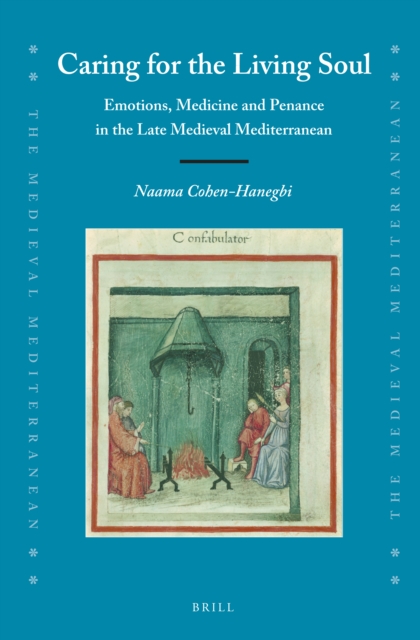
Caring for the Living Soul
Caring for the Living Soul identifies the fundamental role played by emotions in the development of learned medicine and in the formation of the social role of the \"physicians of the body\" in the western Mediterranean between 1200 and 1500.
eBook

The map of knowledge : a thousand-year history of how classical ideas were lost and found
\"The foundations of modern knowledge--philosophy, math, astronomy, geography--were laid by the Greeks, whose ideas were written on scrolls and stored in libraries across the Mediterranean and beyond. But as the vast Roman Empire disintegrated, so did appreciation of these precious texts. Christianity cast a shadow over so-called pagan thought, books were burned, and the library of Alexandria, the greatest repository of classical knowledge, was destroyed. Yet some texts did survive and The Map of Knowledge explores the role played by seven cities around the Mediterranean--rare centers of knowledge in a dark world, where scholars supported by enlightened heads of state collected, translated and shared manuscripts. In 8th century Baghdad, Arab discoveries augmented Greek learning. Exchange within the thriving Muslim world brought that knowledge to Cordoba, Spain. Toledo became a famous center of translation from Arabic into Latin, a portal through which Greek and Arab ideas reached Western Europe. Salerno, on the Italian coast, was the great center of medical studies, and Sicily, ancient colony of the Greeks, was one of the few places in the West to retain contact with Greek culture and language. Scholars in these cities helped classical ideas make their way to Venice in the 15th century, where printers thrived and the Renaissance took root. The Map of Knowledge follows three key texts--Euclid's Elements, Ptolemy's The Almagest, and Galen's writings on medicine--on a perilous journey driven by insatiable curiosity about the world\"-- Provided by publisher.
BOOK

Mechanisms of Exchange: Transmission in Medieval Art and Architecture of the Mediterranean, ca. 1000-1500
This special issue of Medieval Encounters examines the means by which portable and monumental art and architectural forms, techniques, and ideas were transmitted, as well as the individuals involved in such exchanges, in the medieval Mediterrean world ca. 1000-1500.
eBook