
Catalogue Search | MBRL


Are you sure you want to remove the book from the shelf?

{{itemTitle}}
31
result(s) for
"Medieval and early modern period, 425-1789"
Sort by:
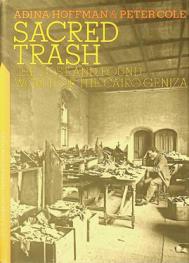
Sacred trash : the lost and found world of the Cairo Geniza
Traces the efforts of two women scholars who recovered what has become the most vital cache of Hebrew manuscripts ever discovered, in an account that explains what the findings reveal about Mediterranean Judaism.
Book

Concealment and Revelation
During the twelfth and thirteenth centuries, great new trends of Jewish thought emerged whose widely varied representatives--Kabbalists, philosophers, and astrologers--each claimed that their particular understanding revealed the actual secret of the Torah. They presented their own readings in a coded fashion that has come to be regarded by many as the very essence of esotericism. Concealment and Revelation takes us on a fascinating journey to the depths of the esoteric imagination. Carefully tracing the rise of esotericism and its function in medieval Jewish thought, Moshe Halbertal's richly detailed historical and cultural analysis gradually builds conceptual-philosophical force to culminate in a masterful phenomenological taxonomy of esotericism and its paradoxes. Among the questions addressed: What are the internal justifications that esoteric traditions provide for their own existence, especially in the Jewish world, in which the spread of knowledge was of great importance? How do esoteric teachings coexist with the revealed tradition, and what is the relationship between the various esoteric teachings that compete with that revealed tradition? Halbertal concludes that, through the medium of the concealed, Jewish thinkers integrated into the heart of the Jewish tradition diverse cultural influences such as Aristotelianism, Neoplatonism, and Hermeticisims. And the creation of an added concealed layer, unregulated and open-ended, became the source of the most daring and radical interpretations of the tradition.
eBook

Rabbis, sorcerers, kings, and priests
Rabbis, Sorcerers, Kings, and Priests examines the impact of the Persian Sasanian context on the Babylonian Talmud, perhaps the most important corpus in the Jewish sacred canon. What impact did the Persian Zoroastrian Empire, as both a real historical force and an imaginary interlocutor, have on rabbinic identity and authority as expressed in the Talmud? Drawing from the field of comparative religion, Jason Sion Mokhtarian addresses this question by bringing into mutual fruition Talmudic studies and ancient Iranology, two historically distinct disciplines. Whereas most research on the Talmud assumes that the rabbis were an insular group isolated from the cultural horizon outside their academies, this book contextualizes the rabbis and the Talmud within a broader sociocultural orbit by drawing from a wide range of sources from Sasanian Iran, including Middle Persian Zoroastrian literature, archaeological data such as seals and inscriptions, and the Aramaic magical bowl spells. Mokhtarian also includes a detailed examination of the Talmud's dozens of texts that portray three Persian \"others\": the Persians, the Sasanian kings, and the Zoroastrian priests. This book skillfully engages and demonstrates the rich penetration of Persian imperial society and culture on the Jews of late antique Iran.
eBook
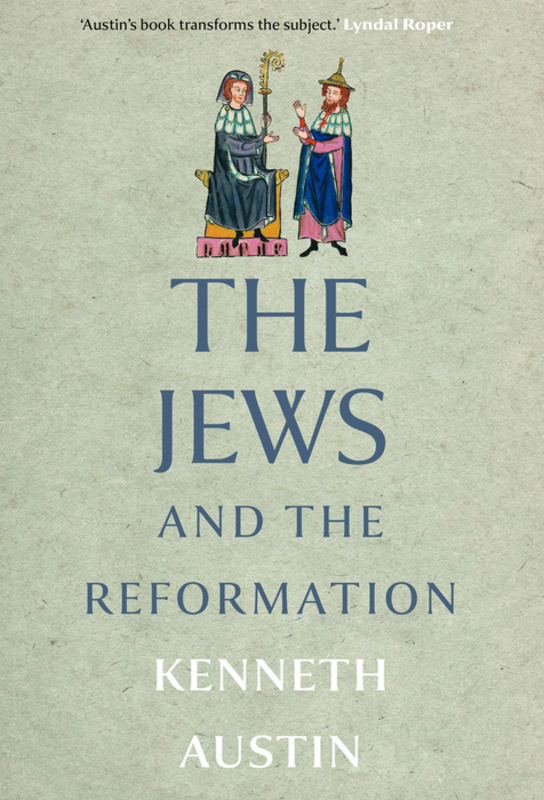
The Jews and the Reformation
The first comprehensive account of Protestant and Catholic attitudes toward Jews and Judaism in the European Reformation ?In this rich, wide-ranging, and meticulously researched account, Kenneth Austin examines the attitudes of various Christian groups in the Protestant and Catholic Reformations towards Jews, the Hebrew language, and Jewish learning. Martin Luther's writings are notorious, but Reformation attitudes were much more varied and nuanced than these might lead us to believe. This book has much to tell us about the Reformation and its priorities-and has important implications for how we think about religious pluralism more broadly.
eBook


Books Within Books
Books with Books is the second collection of interdisciplinary articles on Hebrew Binding fragments, representing current scholarship and its international scope. The volume presents new manuscripts discoveries from several European countries.
eBook


The Jews in Late Antiquity
The lack of source material makes it challenging, but this short book uses the available evidence to present facts and debates around Jews in late antiquity and to provide a first step towards the understanding of this little-known period in Jewish history. It focuses on seven different regions: Italy, North Africa (except Egypt), Gaul, Spain, Egypt, the Land of Israel, and Babylonia.
eBook
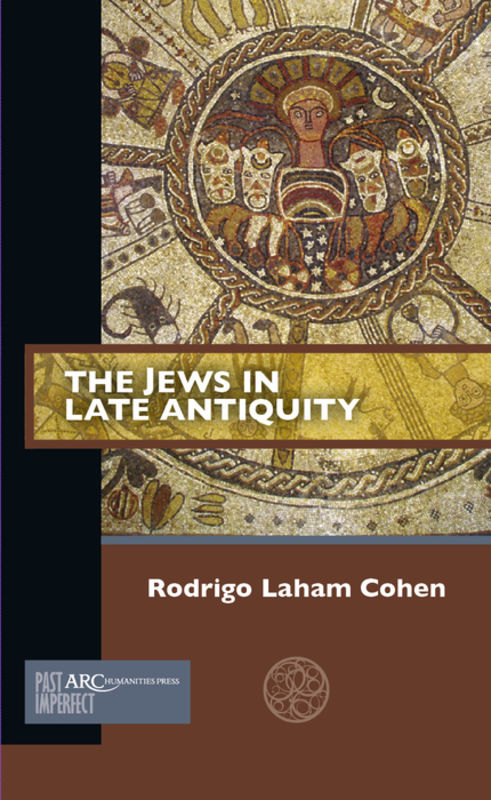
The Jews in Late Antiquity
Is it possible to summarize the history of the Jews in late antiquity? The lack of source material makes it challenging, but this short book provides a brief snapshot, based on the available evidence. It focuses on seven different regions: Italy, North Africa (except Egypt), Gaul, Spain, Egypt, the Land of Israel, and Babylonia, and identifies common patterns, but also clear regional and temporal differences between each distinct area. The Jews in Late Antiquity should be considered as a first step towards the understanding of a little-known period in Jewish history, and its aim is to leave the reader wanting to know more.
eBook