
Catalogue Search | MBRL


Are you sure you want to remove the book from the shelf?

{{itemTitle}}
407
result(s) for
"Mediterranean Region Civilization"
Sort by:

Centre and periphery in the ancient world
This collaborative volume is concerned with long-term social change. Envisaging individual societies as interlinked and interdependent parts of a global social system, the contributors determine the extent to which ancient societies were shaped over time by their incorporation in - or resistance to - the larger system.
Book

The Archaeology of Mediterranean Landscapes
This volume presents a comprehensive review of palaeoenvironmental evidence and its incorporation with landscape archaeology from across the Mediterranean. A fundamental aim of this book is to bridge the intellectual and methodological gaps between those with a background in archaeology and ancient history, and those who work in the palaeoenvironmental sciences. The volume also aims to provide archaeologists and landscape historians with a comprehensive overview of recent palaeoenvironmental research across the Mediterranean, and also to consider ways in which this type of research can be integrated with what might be considered 'mainstream' or 'cultural' archaeology. This volume takes a thematic approach, assessing the ways in which environmental evidence is employed in different landscape types. It presents analyses of how people have interacted with soils and vegetation, and revisits the key questions of human culpability in the creation of so-called degraded landscapes in the Mediterranean. It covers chronological periods from the Early Neolithic to the end of the Roman period.
eBook
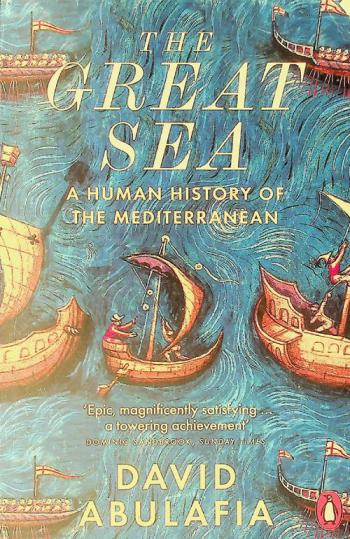
The great sea : a human history of the Mediterranean
For over three thousand years, the Mediterranean Sea has been one of the great centres of world civilisation. From the time of historical Troy until the middle of the nineteenth century, human activity here decisively shaped much of the course of world history. David Abulafia's The Great Sea is the first complete history of the Mediterranean from the erection of the mysterious temples on Malta around 3500 BC to the recent reinvention of the Mediterranean's shores as a tourist destination. Part of the argument of Abulafia's book is that the great port cities - Alexandria, Trieste and Salonika and many others - prospered in part because of their ability to allow many different peoples, religions and identities to co-exist within sometimes very confined spaces. He also brilliantly populates his history with identifiable individuals whose lives illustrate with great immediacy the wider developments he is describing. The Great Sea ranges stupendously across time and the whole extraordinary space of the Mediterranean from Gibraltar to Jaffa, Venice to Alexandria. Rather than imposing a false unity on the sea and the teeming human activity it has sustained, the book emphasises diversity - ethnic, linguistic, religious and political. Anyone who reads it will leave it with their understanding of those societies and their histories enormously enriched. David Abulafia.is Professor of Mediterranean History at Cambridge University (Publisher's note).
Book
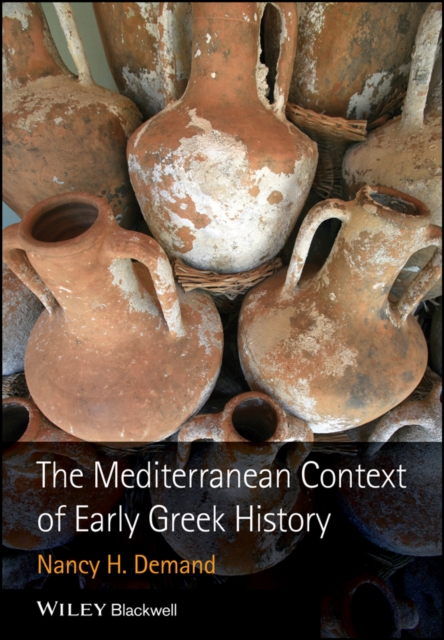
The Mediterranean context of early Greek history
Noted historian Nancy H. Demand joins the growing group of scholars who have abandoned traditional isolationist models of the development of the Greek polis and cast their gaze seaward, to the sparkling waters of the Mediterranean.
eBook


The Place of the Mediterranean in Modern Israeli Identity
This book offers new perspectives on Israel's evolving Mediterranean identity, which centers around the longing to find a \"natural\" place in the region. It explores Mediterraneanism as reflected in popular music, literature, architecture, and daily life, and analyzes ways in which the notion comprises cultural identity and polical realities.
eBook

Windows into the Medieval Mediterranean
\"This book reveals the medieval Mediterranean region as a richly nuanced space of places and peoples connected by a body of water, but far from unified - and seeks to challenge what we think we know about the medieval Mediterranean, and the world it influenced. Reflective of the diversity of the Mediterranean region, the contributors are an international body of scholars that bring together topics that are seemingly disparate but are in fact in a vibrant conversation with one another. The volume seeks to shed new light and perspectives on familiar topics. Each chapter begins with secondary commentary for context, and is followed by primary sources comprised of images and texts that invite careful reading, lively discussion, and possibilities for deeper research. Topics that are discussed include: Archaeology and Architecture, Stories of Travel and Encounter, Literature and Poetry, Matters of Faith, Crusades, Monarchies and Conflict, Ties that Bind and Around the Mediterranean World. Windows into the Medieval Mediterranean is simultaneously a scholarly and reader-friendly book intended to engage undergraduate and graduate students, scholars, and anyone interested in the Mediterranean of the Middles Ages\"-- Provided by publisher.
BOOK

Archaeology of the Mediterranean during Late Antiquity and the Middle Ages
Varied approaches to an overlooked time period in the
history and archaeology of the Mediterranean
This book presents multidisciplinary perspectives on Greece,
Corsica, Malta, and Sicily from the fourth to the thirteenth
centuries, an often-overlooked time in the history of the central
Mediterranean. The research approaches and areas of specialization
collected here range from material culture to landscape settlement
patterns, from epigraphy to architecture and architectural
decoration, and from funerary archaeology to urban fabric and
cityscapes.
Topics covered in these chapters include late Roman villas; the
formation of Byzantine and Islamic settlements in western Sicily;
reuse of protohistoric sites in late antiquity and the middle ages
in eastern Sicily; early Christian landscapes and settlements in
Corsica; the transition from late antiquity through Byzantine rule
to Muslim conquest in Malta; trade network trajectories of the
Aegean islands and Crete; and crosscultural interactions in
medieval Greece. Together, these essays show the potential of
post-Ancient and post-Classical archaeology, highlighting missing
links between the Roman world and medieval Byzantium and broadening
the horizons of new generations of archaeologists.
Contributors: Carla Aleo Nero | Effie F.
Athanassopoulos | Giuseppe Bazan | Amelia R. Brown | Gabriele
Castiglia | Angelo Castrorao Barba | David Cardona | Santino
Alessandro Cugno | Michael J. Decker | Franco Dell'Aquila | Scott
Gallimore | Matt King | Rosa Lanteri | Pasquale Marino | Roberto
Miccichè | Philippe Pergola | Filippo Pisciotta | Natalia Poulou |
Grant Schrama | Claudia Speciale | Davide Tanasi
eBook

The boundless sea : writing Mediterranean history
\"This volume brings together for the first time a collection of twelve articles written both jointly and individually by Peregrine Horden and Nicholas Purcell as they have participated in the debates generated by their major work, The Corrupting Sea: A Study of Mediterranean History (2000). One theme in those debates has been how a comprehensive Mediterranean history can be written: how an approach to Mediterranean history by way of its ecologies and the communications between them can be joined up with more mainstream forms of enquiry - cultural, social, economic, and political, with their specific chronologies and turning points. The second theme raises the question of how Mediterranean history can be fitted into a larger, indeed global history. It concerns the definition of the Mediterranean in space, the way to characterise its frontiers, and the relations between the region so defined and the other large spaces, many of them oceans, to which historians have increasingly turned for novel disciplinary-cum-geographical units of study. A volume collecting the two authors' studies on both these themes, as well as their reply to critics of The Corrupting Sea, should prove invaluable to students and scholars from a number of disciplines: ancient, medieval and early modern history, archaeology, and social anthropology\"-- Provided by publisher.
Book
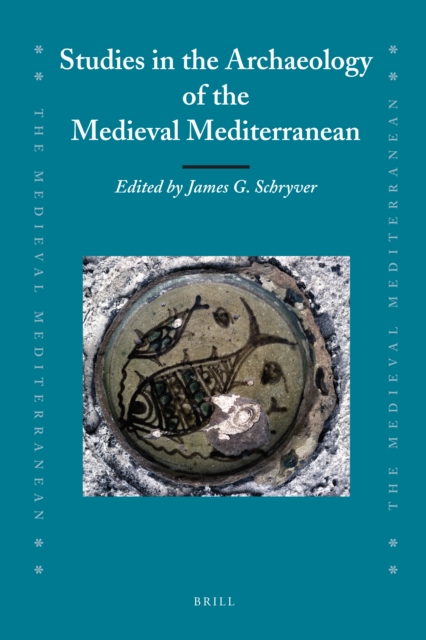
Studies in the Archaeology of the Medieval Mediterranean
This volume draws examples of work from around the Mediterranean basin to demonstrate the variety of archaeological studies being carried out, and the benefits each of these studies has enjoyed through the use of an interdisciplinary approach.
eBook