
Catalogue Search | MBRL


Are you sure you want to remove the book from the shelf?

{{itemTitle}}
89
result(s) for
"Melting pot"
Sort by:
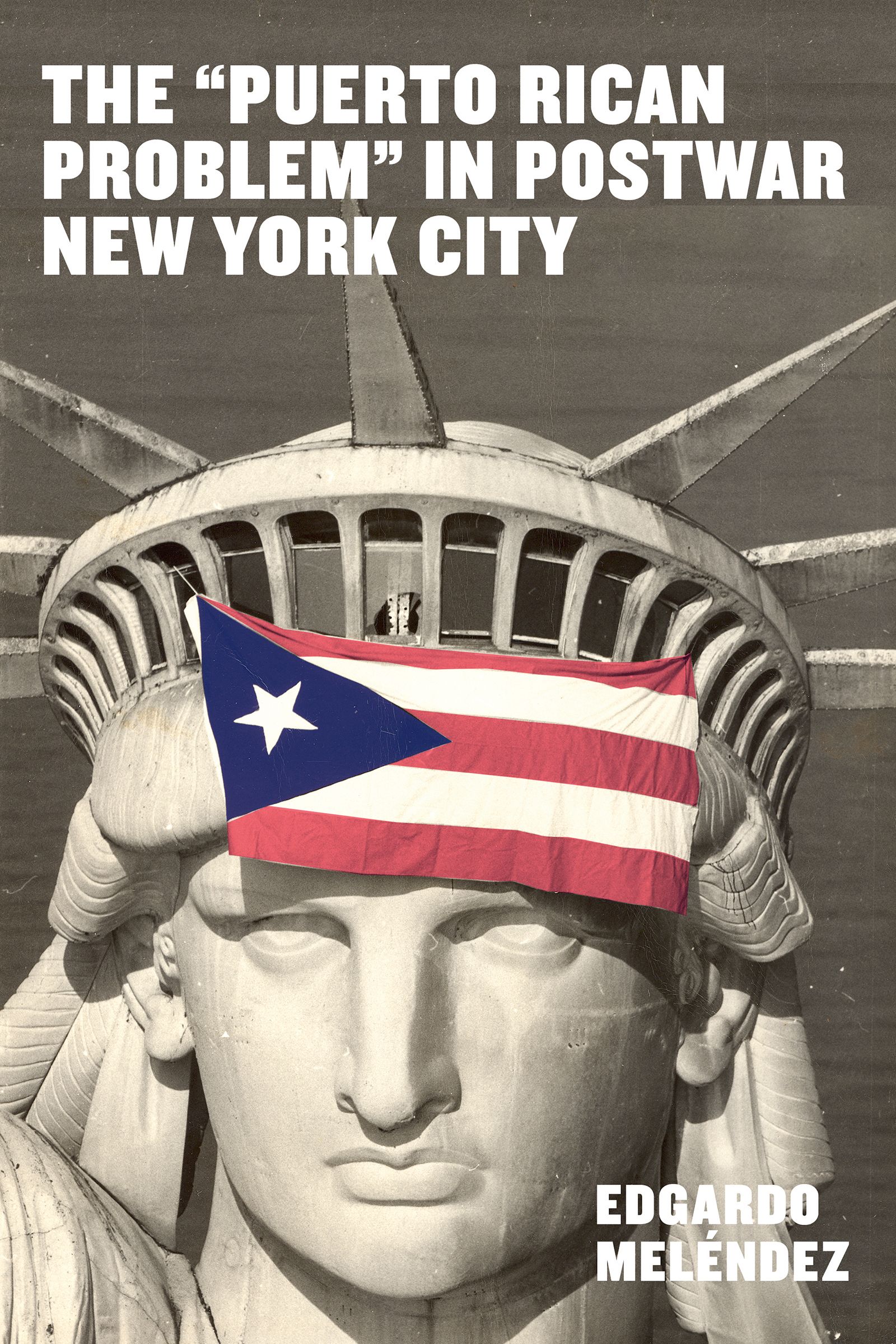
The \Puerto Rican problem\ in postwar New York City
The \"Puerto-Rican Problem\" in Postwar New York City presents the first comprehensive examination of the emergence, evolution, and consequences of the \"Puerto Rican problem\" campaign and narrative in New York City from 1945 to 1960.
eBook

The Puerto Rican Problem in Postwar New York City
The Puerto-Rican Problem in Postwar New York City presents the first comprehensive examination of the emergence, evolution, and consequences of the “Puerto Rican problem” campaign and narrative in New York City from 1945 to 1960. This notion originated in an intense public campaign that arose in reaction to the entry of Puerto Rican migrants to the city after 1945. The “problem” narrative influenced their incorporation in New York City and other regions of the United States where they settled. The anti-Puerto Rican campaign led to the formulation of public policies by the governments of Puerto Rico and New York City seeking to ease their incorporation in the city. Notions intrinsic to this narrative later entered American academia (like the “culture of poverty”) and American popular culture (e.g., West Side Story ), which reproduced many of the stereotypes associated with Puerto Ricans at that time and shaped the way in which Puerto Ricans were studied and perceived by Americans.
eBook

Amalgamation and Regeneration
Abstract This article discusses Israel Zangwill's play The Melting Pot (1908) and Horace M. Kallen's essay ‘Democracy versus the Melting Pot’ (1915) as two different visions of future Jewish inclusion. Zangwill's play and Kallen's response reflect social changes at the time, and both visions consider Jewish history exemplary for the world-to-come. Both show how conceptions of Jewishness were turned into universalist teleologies, but of different kinds. Zangwill's play opened in Washington at the height of immigration, urbanisation and social change, and it swiftly exemplified a vision of the American nation in the making, emphasising concepts of amalgamation more than old historical identities. In opposition, Kallen's response in 1915 emphasised historical identities and rejected the metal melting metaphors, replacing them with a Darwin-inspired spontaneous ‘symphony’. Zangwill and Kallen both imagined the future world as profoundly shaped by Jewishness, albeit with different consequences.
Journal Article
The Melting-Pot and Its Legacies
Abstract This article examines Israel Zangwill's 1908 play The Melting-Pot as a document in American immigration history, and the role of its most contested tropes – interfaith marriage and the melting-pot itself – in his efforts to rescue suffering Jews of Europe. Through close readings of the play and with reference to other works by Zangwill in the early twentieth century, the article looks at the play as a pragmatic work in a time of international upheaval and American nativism. A discussion of the play's reception by critics and audiences indicates that what was most controversial at the time of its production was not necessarily what Zangwill was most desirous to convey. But a look at its varied meanings over time reveals the persistence of the melting-pot metaphor in discussions of immigration, identity, ethnicity and nationhood, especially in the American imaginary.
Journal Article

Creativity, entrepreneurship and economic development: city-level evidence on creativity spillover of entrepreneurship
We examine the black box of creativity, entrepreneurship and economic development by asking about the mechanisms through which creativity can influence economic development in cities. We propose that, like the knowledge spillover theory of entrepreneurship,
creativity spillovers
occur and can be slowed by a creativity filter. We examine how creativity and entrepreneurship, and creativity and a melting pot environment, interact to influence urban economic development. Using data on 187 cities in 15 European countries for the period 1999–2009, we advance the extant literature by providing evidence on the existence and dynamics of a creativity filter.
Journal Article

American geography of opportunity reveals European origins
A large literature documents how intergenerational mobility—the degree to which (dis)advantage is passed on from parents to children—varies across and within countries. Less is known about the origin or persistence of such differences. We show that US areas populated by descendants to European immigrants have similar levels of income equality and mobility as the countries their forebears came from: highest in areas dominated by descendants to Scandinavian and German immigrants, lower in places with French or Italian heritage, and lower still in areas with British roots. Similar variation in mobility is found for the black population and when analyzing causal place effects, suggesting that mobility differences arise at the community level and extend beyond descendants of European immigrant groups. Our findings indicate that the geography of US opportunity may have deeper historical roots than previously recognized.
Journal Article

Overcome by Modernity
In the decades between the two World Wars, Japan made a dramatic entry into the modern age, expanding its capital industries and urbanizing so quickly as to rival many long-standing Western industrial societies. How the Japanese made sense of the sudden transformation and the subsequent rise of mass culture is the focus of Harry Harootunian's fascinating inquiry into the problems of modernity. Here he examines the work of a generation of Japanese intellectuals who, like their European counterparts, saw modernity as a spectacle of ceaseless change that uprooted the dominant historical culture from its fixed values and substituted a culture based on fantasy and desire. Harootunian not only explains why the Japanese valued philosophical understandings of these events, often over sociological or empirical explanations, but also locates Japan's experience of modernity within a larger global process marked by both modernism and fascism.
What caught the attention of Japanese thinkers was how the production of desire actually threatened historical culture. These intellectuals sought to \"overcome\" the materialism and consumerism associated with the West, particularly the United States. They proposed versions of a modernity rooted in cultural authenticity and aimed at infusing meaning into everyday life, whether through art, memory, or community. Harootunian traces these ideas in the works of Yanagita Kunio, Tosaka Jun, Gonda Yasunosuke, and Kon Wajiro, among others, and relates their arguments to those of such European writers as George Simmel, Siegfried Kracauer, Walter Benjamin, and Georges Bataille.
Harootunian shows that Japanese and European intellectuals shared many of the same concerns, and also stresses that neither Japan's involvement with fascism nor its late entry into the capitalist, industrial scene should cause historians to view its experience of modernity as an oddity. The author argues that strains of fascism ran throughout most every country in Europe and in many ways resulted from modernizing trends in general. This book, written by a leading scholar of modern Japan, amounts to a major reinterpretation of the nature of Japan's modernity.
eBook

The Rural Midwest Since World War II
J.L. Anderson seeks to change the belief that the Midwest lacks the kind of geographic coherence, historical issues, and cultural touchstones that have informed regional identity in the American South, West, and Northeast. The goal of this illuminating volume is to demonstrate uniqueness in a region that has always been amorphous and is increasingly so. Midwesterners are a dynamic people who shaped the physical and social landscapes of the great midsection of the nation, and they are presented as such in this volume that offers a general yet informed overview of the region after World War II.
The contributors—most of whom are Midwesterners by birth or residence—seek to better understand a particular piece of rural America, a place too often caricatured, misunderstood, and ignored. However, the rural landscape has experienced agricultural diversity and major shifts in land use. Farmers in the region have successfully raised new commodities from dairy and cherries to mint and sugar beets. The region has also been a place where community leaders fought to improve their economic and social well-being, women redefined their roles on the farm, and minorities asserted their own version of the American Dream.
The rural Midwest is a regional melting pot, and contributors to this volume do not set out to sing its praises or, by contrast, assume the position of Midwestern modesty and self-deprecation. The essays herein rewrite the narrative of rural decline and crisis, and show through solid research and impeccable scholarship that rural Midwesterners have confronted and created challenges uniquely their own.
eBook

A Critical Literary Review of the Melting Pot and Salad Bowl Assimilation and Integration Theories
Immigrant communities have varying degrees of acculturation based on their predispositions for specific cultural norms and their propensity to exhibit similarities in principles, values, and a common lifestyle with dominant racial and ethnic groups. Food metaphors like the Melting Pot and the Salad Bowl theories have illustrated different approaches to integration by explaining the political and power dynamics between dominant and minority groups. Yet, little consideration is given in either theory to existing local contexts that influence the actions of these groups. By combining ethnic identities into homogenous outcomes, food metaphors empower dominant ethnic groups and set the tone for discriminatory legislative policies that eliminate programs aimed at helping minorities. For refugees, this obscures their actual socio-political circumstances and erases their historical experiences. This paper aims to review and critique existing literature about metaphorical homogenous assimilation and integration theories, with experiences from around the world. This paper postulates that using a homogenous common good as the baseline metaphor for assimilation and integration disregards the individual accommodations that need to be made for both dominant and minority communities. These accommodations, although sometimes separate from the collective good, have a significant role in creating conducive environments for diversity and inclusion.
Journal Article
Israel Zangwill
Abstract Israel Zangwill (1864–1926) was the best-known Jewish anglophone writer and public intellectual during his lifetime. There has been a contemporary resurgence of interest in Zangwill's life and work in Britain, France, America and Israel, which will be discussed in the introduction and is illustrated by the articles in the special issue. I focus on the legacies of Zangwill both locally and globally. At the heart of the introduction is the way that Zangwill's legacy varies in different national cultures. It explores how Zangwill reuses the idea of the ghetto from the German tradition of ghetto literature; radicalises Herzl's political Zionism in the form of Jewish territorialism; and refashions President Roosevelt's idea of the melting-pot for popular consumption.
Journal Article