
Catalogue Search | MBRL


Are you sure you want to remove the book from the shelf?

{{itemTitle}}
144
result(s) for
"Melville, Herman, 1819-1891 Criticism and interpretation."
Sort by:

Herman Melville and the politics of the inhuman
\"Through a careful reconstruction of Melville's interaction with philosophy, Jonik argues that Melville develops a notion of the \"inhuman\" after Spinoza's radically nonanthropocentricnon-anthropocentric and relational thought. Melville's own political philosophy, in turn, actively disassembles differences between humans and nonhumans, and the animate and inanimate. Jonik has us rethink not only how we read Melville, but also how we understand our deeply inhuman condition.\"-- Provided by publisher.
BOOK
The New Cambridge Companion to Herman Melville
The New Cambridge Companion to Herman Melville provides timely, critical essays on Melville's classic works. The essays have been specially commissioned for this volume and provide a complete overview of Melville's career. Melville's major novels are discussed, along with a range of his short fiction and poetry, including neglected works ripe for rediscovery. The volume includes essays on such new topics as Melville and oceanic studies, Melville and animal studies, and Melville and the planetary, along with a number of essays that focus on form and aesthetics. Written at a level both challenging and accessible, this New Companion brings together a team of leading international scholars to offer students of American literature the most comprehensive introduction available to Melville's art.
eBook

A New Companion to Herman Melville
Discover a fascinating new set of perspectives on the life and work of Herman Melville
A New Companion to Herman Melville delivers an insightful examination of Melville for the twenty-first century. Building on the success of the first Blackwell Companion to Herman Melville, and offering a variety of tools for reading, writing, and teaching Melville and other authors, this New Companion offers critical, technological, and aesthetic practices that can be employed to read Melville in exciting and revelatory ways.
Editors Wyn Kelley and Christopher Ohge create a framework that reflects a pluralistic model for humanities teaching and research. In doing so, the contributing authors highlight the ways in which Melville himself was concerned with the utility of tools within fluid circuits of meaning, and how those ideas are embodied, enacted, and mediated.
In addition to considering critical theories of race, gender, sexuality, religion, transatlantic and hemispheric studies, digital humanities, book history, neurodiversity, and new biography and reception studies, this book offers:
* A thorough introduction to the life of Melville, as well as the twentieth- and twenty-first-century revivals of his work
* Comprehensive explorations of Melville's works, including Moby-Dick, Pierre, Piazza Tales, and Israel Potter, as well as his poems and poetic masterpiece Clarel
* Practical discussions of material books, print culture, and digital technologies as applied to Melville
* In-depth examinations of Melville's treatment of the natural world
* Two symposium sections with concise reflections on art and adaptation, and on teaching and public engagement
A New Companion to Herman Melville provides essential reading for scholars and students ranging from undergraduate and graduate students to more advanced scholars and specialists in the field.
eBook

Melville, mapping and globalization : literary cartography in the American baroque writer
In Melville, Mapping and Globalization, Robert Tally argues that Melville does not belong in the tradition of the American Renaissance, but rather creates a baroque literary cartography, artistically engaging with spaces beyond the national model.
eBook

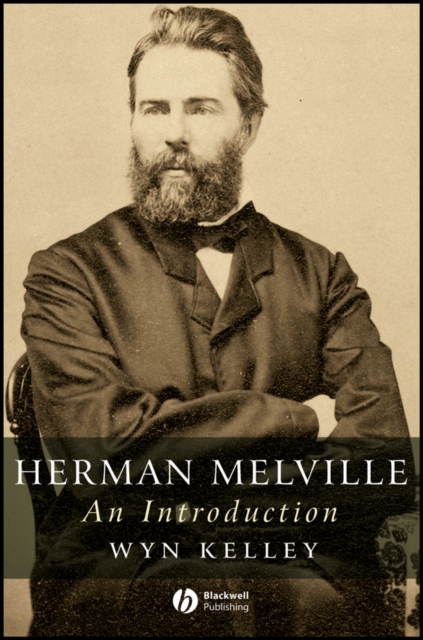
Herman Melville
This unique introduction explores Herman Melville as he described himself in Billy Budd-\"a writer whom few know.\" Moving beyond the recurring depiction of Melville as the famous author of Moby-Dick, this book traces his development as a writer while providing the basic tools for successful critical reading of his novels. Using the extraordinary \"Agatha\" correspondence with Nathaniel Hawthorne as a key to Melville's writing practices, beliefs and inclinations, the volume introduces Melville as a writer who constantly reflected on his craft and experimented with new forms
eBook

Herman Melville in context
\"Herman Melville in Context provides the fullest introduction in one volume to the multifaceted life and times of Herman Melville, a towering figure in nineteenth-century American and world literature. The book grounds the study of Herman Melville's writings to the world that influenced their composition, publication and recognition, making it a valuable resource to scholars, teachers, students and general readers. Bringing together contributions covering a wide range of topics, the collection of essays covers the geographical, social, cultural and literary contexts of Melville's life and works, as well as its literary reception. Herman Melville in Context will enable readers to approach Melville's writings with fuller insight, and to read and understand them in a way that approximates the way they were read and understood in his time\"-- Provided by publisher.
BOOK

Impersonality
Philosophers have long debated the subjects of person and personhood. Sharon Cameron ushers this debate into the literary realm by considering impersonality in the works of major American writers and figures of international modernism—writers for whom personal identity is inconsequential and even imaginary. In essays on William Empson, Jonathan Edwards, Ralph Waldo Emerson, Herman Melville, T. S. Eliot, and Simone Weil, Cameron examines the impulse to hollow out the core of human distinctiveness, to construct a voice that is no one’s voice, to fashion a character without meaningful attributes, a being that is virtually anonymous. “To consent to being anonymous,” Weil wrote, “is to bear witness to the truth. But how is this compatible with social life and its labels?” Throughout these essays Cameron examines the friction, even violence, set in motion from such incompatibility—from a “truth” that has no social foundation. Impersonality investigates the uncompromising nature of writing that suspends, eclipses, and even destroys the person as a social, political, or individual entity, of writing that engages with personal identity at the moment when its usual markers vanish or dissolve.
eBook