
Catalogue Search | MBRL


Are you sure you want to remove the book from the shelf?

{{itemTitle}}
6
result(s) for
"Memorialization -- Poland"
Sort by:

Jewish Space in Contemporary Poland
In a time of national introspection regarding the country's involvement in the persecution of Jews, Poland has begun to reimagine spaces of and for Jewishness in the Polish landscape, not as a form of nostalgia but as a way to encourage the pluralization of contemporary society. The essays in this book explore issues of the restoration, restitution, memorializing, and tourism that have brought present inhabitants into contact with initiatives to revive Jewish sites. They reveal that an emergent Jewish presence in both urban and rural landscapes exists in conflict and collaboration with other remembered minorities, engaging in complex negotiations with local, regional, national, and international groups and interests. With its emphasis on spaces and built environments, this volume illuminates the role of the material world in the complex encounter with the Jewish past in contemporary Poland.
eBook
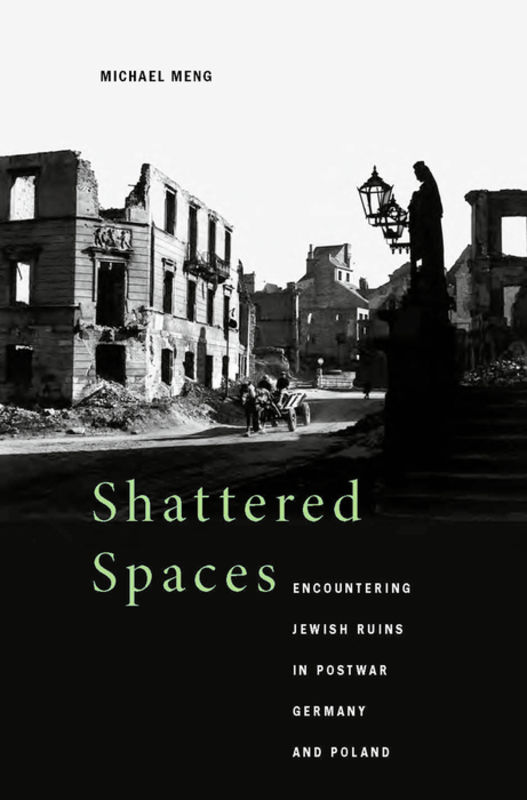
Shattered spaces : encountering Jewish ruins in postwar Germany and Poland
After the Holocaust, the empty, silent spaces of bombed-out synagogues, cemeteries, and Jewish districts were all that was left in many German and Polish cities with prewar histories rich in the sights and sounds of Jewish life. What happened to this scarred landscape after the war, and how have Germans, Poles, and Jews encountered these ruins over the past sixty years?
In the postwar period, city officials swept away many sites, despite protests from Jewish leaders. But in the late 1970s church groups, local residents, political dissidents, and tourists demanded the preservation of the few ruins still standing. Since the collapse of the Soviet Union in 1989, this desire to preserve and restore has grown stronger. In one of the most striking and little-studied shifts in postwar European history, the traces of a long-neglected Jewish past have gradually been recovered, thanks to the rise of heritage tourism, nostalgia for ruins, international discussions about the Holocaust, and a pervasive longing for cosmopolitanism in a globalizing world.
Examining this transformation from both sides of the Iron Curtain, Michael Meng finds no divided memory along West–East lines, but rather a shared memory of tensions and paradoxes that crosses borders throughout Central Europe. His narrative reveals the changing dynamics of the local and the transnational, as Germans, Poles, Americans, and Israelis confront a built environment that is inevitably altered with the passage of time. Shattered Spaces exemplifies urban history at its best, uncovering a surprising and moving postwar story of broad contemporary interest.
eBook
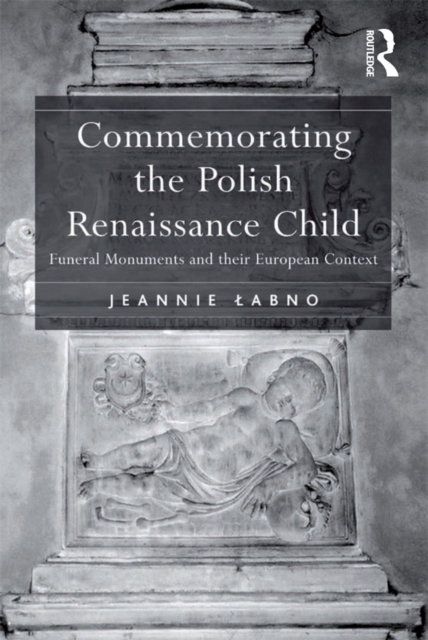
Commemorating the Polish Renaissance Child
The study of funeral monuments is a growing field, but monuments erected to commemorate children have so far received little attention. Whilst the practice of erecting monuments to the dead was widespread across Renaissance Europe, the vast majority of these commemorated adults, with children generally only appearing as part of their parents' memorials. However, as this study reveals, in Poland there developed a very different tradition of funerary monuments designed for, and dedicated to, individual children - daughters as well as sons.
The book consists of five major parts, which could be read in any order, though the overall sequencing is based on the premise that an understanding of the context and background will enhance a reading of these fascinating child monuments. Consequently, there is a progression of knowledge presented from the broader context of the earlier parts, towards the final parts where the actual child monuments are discussed in detail. Thus the book begins with an overview of the wider cultural contexts of funerary monuments and where children fitted into this. It then moves on to to look at the 'forgotten Renaissance' of central Europe and specifically the situation in Poland. The middle part addresses the 'culture of memory', examining the role of funerary monuments in reinforcing social, religious and familial continuity. The last parts deal with the physical monuments: empirical data, iconography and iconology.
Through this illuminating consideration of children's monuments, the book raises a host of fascinating questions relating to Polish social and cultural life, family structure, attitudes to children and gender. It also addresses the issue of why Poland witnessed this unusual development, and what this tells us about the transmission of cultural and artistic ideas across Renaissance Europe. Drawing upon social and cultural history, visual and gender studies, the work not only asks important new questions, but provides a fresh perspe
eBook

Shattered Spaces
After the Holocaust, the empty, silent spaces of bombed-out synagogues, cemeteries, and Jewish districts were all that was left of Jewish life in many German and Polish cities. What happened to this scarred landscape after the war, and how Germans, Poles, and Jews encountered these ruins over the past sixty years, is the story this book tells.
eBook

The Changing Landscape of Holocaust Memorialization in Poland
The Holocaust memory landscape in Poland is exceptionally dynamic, multifarious, and contentious, involving projects that range from the international preservation of former Nazi extermination and concentration camps to community‐based efforts to uncover hidden remnants of local Jewish history. This chapter provides an overview of Holocaust memorialization in Poland from the immediate postwar period to the new millennium. It focuses on “broken tablet” monuments that signify the fragmentation of prewar Jewish life; memorials at the six Nazi extermination camps; the evolution of Holocaust tourism under capitalism; and the establishment of new commemorative projects that seek to map regional and national Jewish memory in the midst of resurgent Polish nationalism. The Polish Holocaust memorial landscape is never static, always reflecting or responding to the dominant political ideologies, hegemonic structures, and counterdiscourses that circulate around and through the representation of Jewish life and death in Poland.
Book Chapter

The Kingdom of Death as a Heritage Site
The Auschwitz site, a Polish state museum since 1947 and on UNESCO's World Heritage List since 1979, has a multilayered, dissonant, and contested past. It has different meanings for its multiple victim groups, meanings that are both particularist and universal, and thus hard to accommodate satisfactorily within a museum context. As an emblematic site of “undesirable heritage,” it reminds the world of the dangers of intolerance, xenophobia, and state‐sponsored violence – and thereby challenges humanity to restate the commitment to the universal values and ethics that were so utterly denied in the historical Auschwitz. However, Auschwitz today is simultaneously a symbol, a cemetery, a pilgrimage site, a museum, a theater for the enactment of memorial events, and a place of “dark” tourism that continues to attract huge numbers of visitors. To make sense of Auschwitz as a heritage site, these complex issues need to be disentangled.
Book Chapter