
Catalogue Search | MBRL


Are you sure you want to remove the book from the shelf?

{{itemTitle}}
16
result(s) for
"Memorialization Germany History."
Sort by:


Our Fritz : Emperor Frederick III and the political culture of imperial Germany
On June 15, 1888, a mere ninety-nine days after ascending the throne to become king of Prussia and German emperor, Frederick III succumbed to throat cancer. Europeans were spellbound by the cruel fate nobly borne by the voiceless Fritz, who for more than two decades had been celebrated as a military hero and loved as a kindly gentleman. A number of grief-stricken individuals reportedly offered to sacrifice their own healthy larynxes to save the ailing emperor. Frank Lorenz Müller, in the first comprehensive life of Frederick III ever written, reconstructs how the hugely popular persona of \"Our Fritz\" was created and used for various political purposes before and after the emperor's tragic death. Sandwiched between the reign of his ninety-year-old father and the calamitous rule of his own son, the future emperor William II, Frederick III served as a canvas onto which different political forces projected their hopes and fears for Germany's future. The book moves beyond the myth that Frederick's humane liberalism would have built a lasting Anglo-German partnership, perhaps even preventing World War I, and beyond the castigations and exaggerations of parties with a different agenda. Surrounded by an unforgettable cast of characters that includes the emperor's widely hated English wife, Vicky—daughter of Queen Victoria—and the scheming Otto von Bismarck, Frederick III offers in death as well as in life a revealing, poignant glimpse of Prussia, Germany, and the European world that his son would help to shatter.
eBook


Beyond Berlin
Beyond Berlin breaks new ground in the ongoing effort to understand how memorials, buildings, and other spaces have figured in Germany's confrontation with its Nazi past. The contributors challenge reigning views of Germany's postwar memory work by examining how specific urban centers apart from the nation's capital have wrestled with their respective Nazi legacies. A wide range of West and East German cities is profiled in the volume: prominent metropolises like Hamburg, dynamic regional centers like Dresden, gritty industrial cities like Wolfsburg, and idyllic rural towns like Quedlinburg. In employing historical, art historical, anthropological, and geographical methodologies to examine these and other important urban centers, the volume's case studies shed new light upon the complex ways in which the confrontation with the Nazi past has directly shaped the German urban landscape since the end of the Second World War.
eBook

Civil society and memory in post-war Germany
\"Blending history and social science, this book tracks the role of social movements in shaping German public memory and values since 1945. Drawn from extensive original research, it offers a fresh perspective on the evolution of German democracy through civic confrontation with the violence of its past. Told through the stories of memory activists, the study upends some of the conventional wisdom about modern German political history. An analysis of the decades-long struggle over memory and democracy shows how grassroots actors challenged and then took over public institutions of memorialization. In the process, confrontation of the Holocaust has been pushed to the centre of political culture. In unified Germany, memory politics have shifted again, as activists from East Germany have brought attention to the crimes of the East German state. This book delivers a novel and important contribution to scholarship about post-war Germany and the wider study of memory politics.\"--Provided by publisher.
Book

Tailoring Truth
By looking at state-sponsored memory projects, such as memorials, commemorations, and historical museums, this book reveals that the East German communist regime obsessively monitored and attempted to control public representations of the past to legitimize its rule. It demonstrates that the regime's approach to memory politics was not stagnant, but rather evolved over time to meet different demands and potential threats to its legitimacy. Ultimately the party found it increasingly difficult to control the public portrayal of the past, and some dissidents were able to turn the party's memory politics against the state to challenge its claims of moral authority.
eBook

Memorializing the GDR
Since unification, eastern Germany has witnessed a rapidly changing memorial landscape, as the fate of former socialist monuments has been hotly debated and new commemorative projects have met with fierce controversy. Memorializing the GDR provides the first in-depth study of this contested arena of public memory, investigating the individuals and groups devoted to the creation or destruction of memorials as well as their broader aesthetic, political, and historical contexts. Emphasizing the interrelationship of built environment, memory and identity, it brings to light the conflicting memories of recent German history, as well as the nuances of national and regional constructions of identity.
eBook

The Monumental Nation
From the 1860s onward, Habsburg Hungary attempted a massive project of cultural assimilation to impose a unified national identity on its diverse populations. In one of the more quixotic episodes in this \"Magyarization,\" large monuments were erected near small towns commemorating the medieval conquest of the Carpathian Basin—supposedly, the moment when the Hungarian nation was born. This exactingly researched study recounts the troubled history of this plan, which—far from cultivating national pride—provoked resistance and even hostility among provincial Hungarians. Author Bálint Varga thus reframes the narrative of nineteenth-century nationalism, demonstrating the complex relationship between local and national memories.
eBook
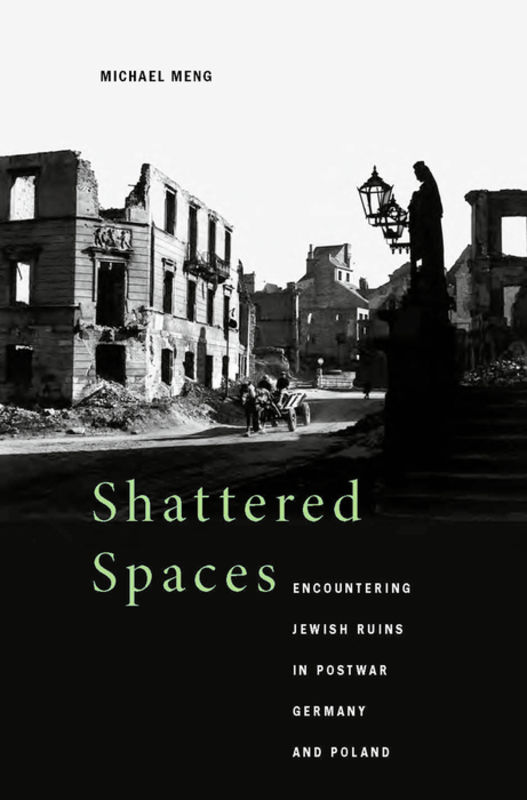
Shattered spaces : encountering Jewish ruins in postwar Germany and Poland
After the Holocaust, the empty, silent spaces of bombed-out synagogues, cemeteries, and Jewish districts were all that was left in many German and Polish cities with prewar histories rich in the sights and sounds of Jewish life. What happened to this scarred landscape after the war, and how have Germans, Poles, and Jews encountered these ruins over the past sixty years? In the postwar period, city officials swept away many sites, despite protests from Jewish leaders. But in the late 1970s church groups, local residents, political dissidents, and tourists demanded the preservation of the few ruins still standing. Since the collapse of the Soviet Union in 1989, this desire to preserve and restore has grown stronger. In one of the most striking and little-studied shifts in postwar European history, the traces of a long-neglected Jewish past have gradually been recovered, thanks to the rise of heritage tourism, nostalgia for ruins, international discussions about the Holocaust, and a pervasive longing for cosmopolitanism in a globalizing world. Examining this transformation from both sides of the Iron Curtain, Michael Meng finds no divided memory along West–East lines, but rather a shared memory of tensions and paradoxes that crosses borders throughout Central Europe. His narrative reveals the changing dynamics of the local and the transnational, as Germans, Poles, Americans, and Israelis confront a built environment that is inevitably altered with the passage of time. Shattered Spaces exemplifies urban history at its best, uncovering a surprising and moving postwar story of broad contemporary interest.
eBook
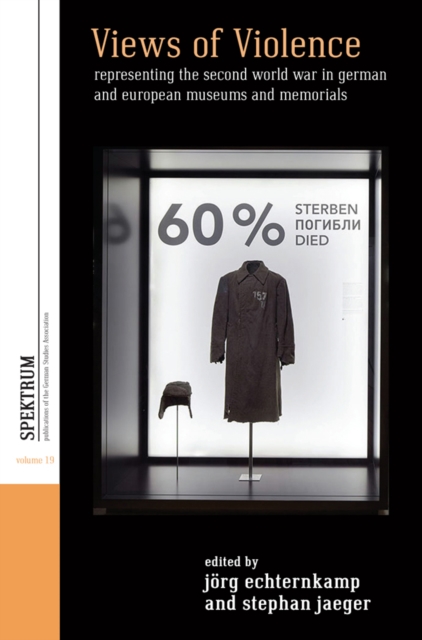
Views of Violence
Twenty-first-century views of historical violence have been immeasurably influenced by cultural representations of the Second World War. Within Europe, one of the key sites for such representation has been the vast array of museums and memorials that reflect contemporary ideas of war, the roles of soldiers and civilians, and the self-perception of those who remember. This volume takes a historical perspective on museums covering the Second World War and explores how these institutions came to define political contexts and cultures of public memory in Germany, across Europe, and throughout the world.
eBook