
Catalogue Search | MBRL


Are you sure you want to remove the book from the shelf?

{{itemTitle}}
5,153
result(s) for
"Memory Case studies."
Sort by:


Cultural memory : resistance, faith & identity
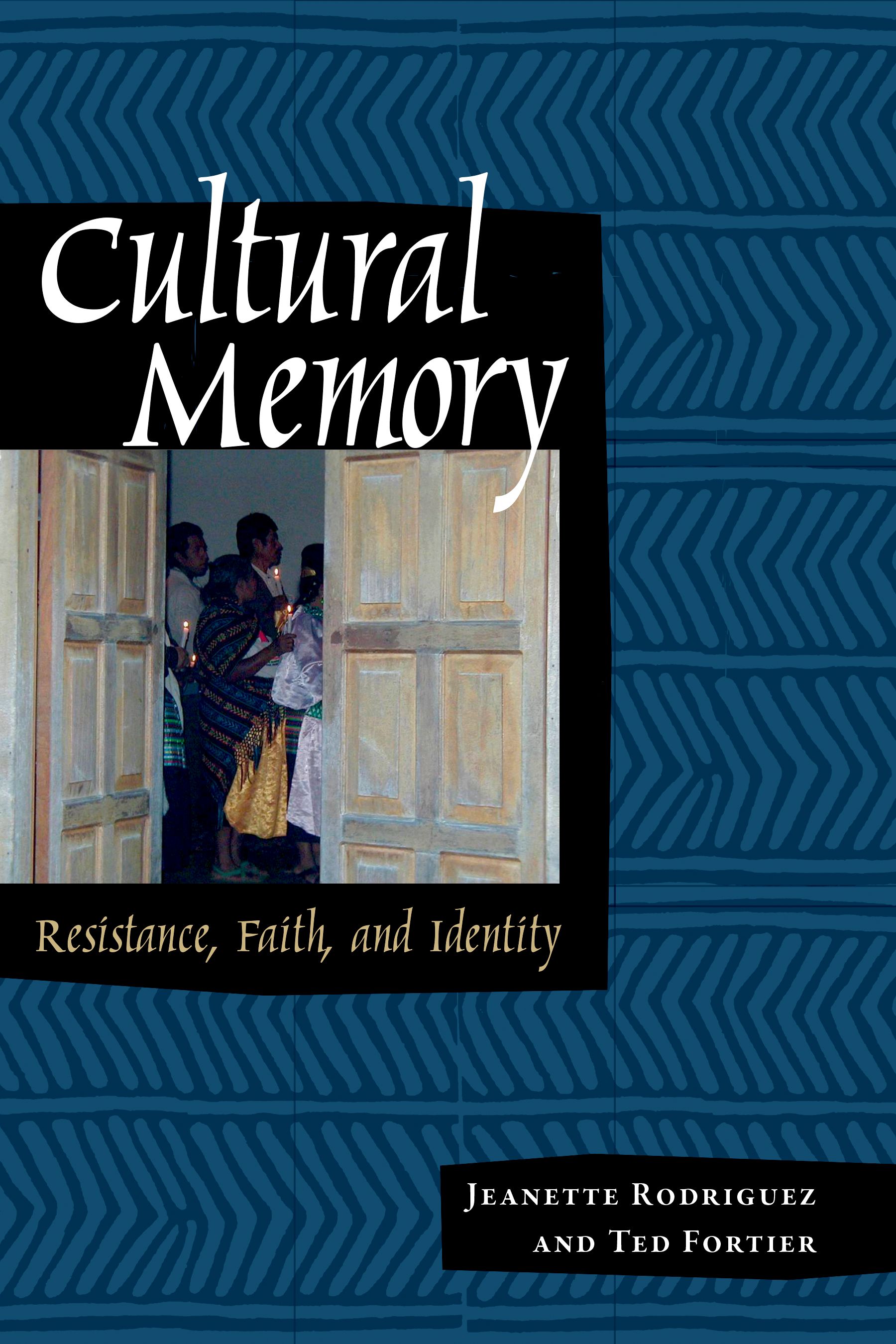
Sangre llama a sangre. (Blood cries out to blood.)—Latin American aphorism The common “blood” of a people—that imperceptible flow that binds neighbor to neighbor and generation to generation—derives much of its strength from cultural memory. Cultural memories are those transformative historical experiences that define a culture, even as time passes and it adapts to new influences. For oppressed peoples, cultural memory engenders the spirit of resistance; not surprisingly, some of its most powerful incarnations are rooted in religion. In this interdisciplinary examination, Jeanette Rodriguez and Ted Fortier explore how four such forms of cultural memory have preserved the spirit of a particular people. Cultural Memory is not a comparative work, but it is a multicultural one, with four distinct case studies: the image of Our Lady of Guadalupe and the devotion it inspires among Mexican Americans; the role of secrecy and ceremony among the Yaqui Indians of Arizona; the evolving narrative of Archbishop Oscar Romero of San Salvador as transmitted through the church of the poor and the martyrs; and the syncretism of Catholic Tzeltal Mayans of Chiapas, Mexico. In each case, the authors’ religious credentials eased the resistance encountered by social scientists and other researchers. The result is a landmark work in cultural studies, a conversation between a liberation theologian and a cultural anthropologist on the religious nature of cultural memory and the power it brings to those who wield it.
eBook

Cultural Memory
Sangre llama a sangre. (Blood cries out to blood.)—Latin American aphorism
The common \"blood\" of a people—that imperceptible flow that binds neighbor to neighbor and generation to generation—derives much of its strength from cultural memory. Cultural memories are those transformative historical experiences that define a culture, even as time passes and it adapts to new influences. For oppressed peoples, cultural memory engenders the spirit of resistance; not surprisingly, some of its most powerful incarnations are rooted in religion. In this interdisciplinary examination, Jeanette Rodriguez and Ted Fortier explore how four such forms of cultural memory have preserved the spirit of a particular people.
Cultural Memory is not a comparative work, but it is a multicultural one, with four distinct case studies: the image of Our Lady of Guadalupe and the devotion it inspires among Mexican Americans; the role of secrecy and ceremony among the Yaqui Indians of Arizona; the evolving narrative of Archbishop Oscar Romero of San Salvador as transmitted through the church of the poor and the martyrs; and the syncretism of Catholic Tzeltal Mayans of Chiapas, Mexico. In each case, the authors' religious credentials eased the resistance encountered by social scientists and other researchers. The result is a landmark work in cultural studies, a conversation between a liberation theologian and a cultural anthropologist on the religious nature of cultural memory and the power it brings to those who wield it.
eBook


The Heritage of War
The Heritage of War is an interdisciplinary study of the ways in which heritage is mobilized in remembering war, and in reconstructing landscapes, political systems and identities after conflict. It examines the deeply contested nature of war heritage in a series of places and contexts, highlighting the modes by which governments, communities, and individuals claim validity for their own experiences of war, and the meanings they attach to them.
From colonizing violence in South America to the United States' Civil War, the Second World War on three continents, genocide in Rwanda and continuing divisions in Europe and the Middle East, these studies bring us closer to the very processes of heritage production. The Heritage of War uncovers the histories of heritage: it charts the constant social and political construction of heritage sites over time, by a series of different agents, and explores the continuous reworking of meaning into the present.
What are the forces of contingency, agency and political power that produce, define and sustain the heritage of war? How do particular versions of the past and particular identities gain legitimacy, while others are marginalised? In this book contributors explore the active work by which heritage is produced and reproduced in a series of case studies of memorialization, battlefield preservation, tourism development, private remembering and urban reconstruction. These are the acts of making sense of war; they are acts that continue long after violent conflict itself has ended.
eBook

The future of memory
Memory studies has become a rapidly growing area of scholarly as well as public interest. This volume brings together world experts to explore the current critical trends in this new academic field. It embraces work on diverse but interconnected phenomena, such as twenty-first century museums, shocking memorials in present-day Rwanda and the firsthand testimony of the victims of genocidal conflicts. The collection engages with pressing 'real world' issues, such as the furor around the recent 9/11 memorial, and what we really mean when we talk about 'trauma'.
eBook


Truth Commissions
Since the 1980s a number of countries have established truth commissions to come to terms with the legacy of past human rights violations, yet little is known about the achievements and shortcomings of this popular transitional justice tool. Drawing on research on Chile's National Truth and Reconciliation Commission and Peru's Truth and Reconciliation Commission, and exploring the scholarship on thirteen other transitional contexts, Onur Bakiner evaluates the success of truth commissions in promoting policy reform, human rights accountability, and the public recognition of human rights violations. He argues that although political elites often see a truth commission as a convenient way to address past atrocities, the findings, historical narratives, and recommendations of such commissions often surprise, upset, and discredit influential political actors. Even when commissions produce only modest change as a result of political constraints, Bakiner contends, they open up new avenues for human rights activism by triggering the creation of new victims' organizations, facilitating public debates over social memory, and inducing civil society actors to monitor the country's human rights policy.Bakiner demonstrates how truth commissions have recovered basic facts about human rights violations, forced societies to rethink the violence and exclusion of nation building, and produced a new dynamic whereby the state seeks to legitimize its central position between history and politics by accepting a high degree of societal penetration into the production and diffusion of official national history. By doing so, truth commissions have challenged and transformed public discourses on memory, truth, justice, reconciliation, recognition, nationalism, and political legitimacy in the contemporary world.
eBook