
Catalogue Search | MBRL


Are you sure you want to remove the book from the shelf?

{{itemTitle}}
55
result(s) for
"Memory Popular works."
Sort by:


Borges and Memory
A scientist's exploration of the working of memory begins with a story by Borges about a man who could not forget.
Imagine the astonishment felt by neuroscientist Rodrigo Quian Quiroga when he found a fantastically precise interpretation of his research findings in a story written by the great Argentinian fabulist Jorge Luis Borges fifty years earlier. Quian Quiroga studies the workings of the brain—in particular how memory works—one of the most complex and elusive mysteries of science. He and his fellow neuroscientists have at their disposal sophisticated imaging equipment and access to information not available just twenty years ago. And yet Borges seemed to have imagined the gist of Quian Quiroga's discoveries decades before he made them.
The title character of Borges's \"Funes the Memorious\" remembers everything in excruciatingly particular detail but is unable to grasp abstract ideas. Quian Quiroga found neurons in the human brain that respond to abstract concepts but ignore particular details, and, spurred by the way Borges imagined the consequences of remembering every detail but being incapable of abstraction, he began a search for the origins of Funes. Borges's widow, María Kodama, gave him access to her husband's personal library, and Borges's books led Quian Quiroga to reread earlier thinkers in philosophy and psychology. He found that just as Borges had perhaps dreamed the results of Quian Quiroga's discoveries, other thinkers—William James, Gustav Spiller, John Stuart Mill—had perhaps also dreamed a story like \"Funes.\"
With Borges and Memory, Quian Quiroga has given us a fascinating and accessible story about the workings of the brain that the great creator of Funes would appreciate.
eBook

Why we forget and how to remember better : the science behind memory
\"One of us (Elizabeth) had the opportunity to conduct research with a gentleman named Henry Molaison (better known by his initials, H.M.1), who had the interior portion of his left and right temporal lobes (the part of your brain next to your temples) removed in 1953 because of epileptic seizures that were difficult to control. From a technical standpoint, the surgical procedures went fine. But, as he recovered, the doctors and researchers soon noticed something very troubling: he was unable to form any new memories. He could read, and talk, and if you were having a brief conversation with him, you would probably not notice anything amiss. But family members would visit and, although he knew who they were, he would have no memory of them coming. New doctors would introduce themselves and the next day (or even the next hour) he did not recall that he had met them. It was then that the doctors understood that, somehow, the removal of those parts of the temporal lobe caused him to become completely amnestic\"-- Provided by publisher.
BOOK

Memory Fitness
Do all adults experience memory difficulties as they age? What is the difference between normal memory change and the symptoms of Alzheimer's disease? Is it possible to stem-or even reverse-memory decline? This timely book is a comprehensive guide for the growing number of adults who are eager to learn how aging affects memory and what can or cannot be done about it.Gilles Einstein and Mark McDaniel, widely respected for their research and lectures on memory, explain how memory works and how memory processes change with age. Based on up-to-date and rigorous scientific evidence, they also offer* techniques and strategies for improving memory in everyday life
* alternatives to hard-to-use mnemonic techniques
* physical and mental exercises that can enhance memory
* a review of drugs and nutritional supplements touted to enhance memory
* a complete discussion of Alzheimer's disease, its symptoms and risk factors, along with guidance for caretakers
* and much more.
eBook


Handbook of Imaging the Alzheimer Brain
Alzheimer's disease is a common problem that is becoming progressively more prevalent and burdensome to the world. Through better recognition of this disease and more precise diagnosis, led by brain imaging in the appropriate clinical context, it is our sincere hope that mankind can conquer this terrible disease. This handbook was developed to provide an overview of the state of the art of brain-imaging approaches that have recently emerged to reveal the critical characteristics of brains of patients with Alzheimer's disease. It provides numerous chapters that examine this critical phase of Alzheimer's disease, as well as chapters that discuss diagnosis, early biomarkers, late changes, the role of vascular disease, treatment, progression of the disease, determining the variability of the manifestation of Alzheimer's disease, and estimating the utility of these metrics of disease severity for examining the effects of treatments. Each of 10 sections addresses a particular neuroimaging modality that has been found to be useful in understanding or diagnosing Alzheimer's disease. Each section features an introduction to the particular technique and its potential for informing clinical care or evaluating novel therapies for Alzheimer's patients. Chapters in each section provide clinicians with specific information as to how the particular neuroimaging technique is or can be useful in a clinical setting, from radiology to primary care, and address specific advances in the various types of neuroimaging. The book includes brief overviews of imaging of Alzheimer's disease and reviews fundamental principles for neuroimaging pathological changes that it causes, with an emphasis on practical and future applications.
eBook


Building an ageless mind
By the year 2000 half of the people in the United States were over the age of 50. By 2030, 70 million elderly will account for 20% of the U.S. population. The percentage of the population with Alzheimer’s disease is significantly on the rise and by 2025 there will be a 45% increase in developed countries and a 215% increase in developing countries. Aging populations face many other issues involving cognitive decline. Building an Ageless Mind offers practical solutions, including specific directives to assist individuals in changing the course of cognitive decline as a result of aging and disease. The brain, our ability to think, and our self-concept are so very important to individual lives, and the desire to maintain robust cognitive function is the ultimate goal for anyone concerned about the aging mind. Here, Dr. William J. Tippett helps readers understand the basics of how the brain works, and explains why engaging in certain exercises may be helpful. He gives people the tools to maintain, combat, and understand good brain health. He also examines one of the most profound brain aging related illnesses of our time, Alzheimer’s disease, and provides detailed information on how this disease affects the individual, as well as ways to protect against it and to alter its course even if it’s been diagnosed. Lifestyle strategies to promote brain health are also offered throughout. Readers will be fascinated by the way the brain functions and ages, and the many methods available to everyone to maintain better brain health as they age.
eBook

Reversing Alzheimer's : the new toolkit to improve cognition and protect brain health
One of the foremost Alzheimer's dementia-care clinicians presents an individualized, step-by-step, whole-body, evidence-based approach to reversing and preventing cognitive decline, aiming to help people with dementia return to themselves and help those who are living in fear of developing dementia take good care of their current and future brain health.
Book
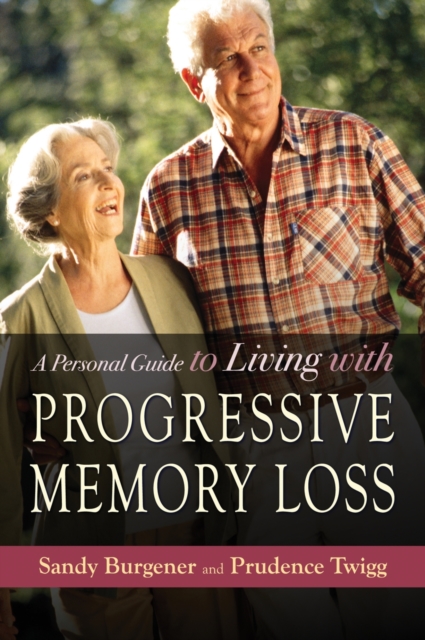
A Personal Guide to Living with Progressive Memory Loss
Memory loss can create problems in every aspect of a person's life. The challenge of communicating thoughts and feelings can be made even harder by other people's negative perceptions of dementia.
This book provides practical guidance for coping with progressive memory loss, and includes examples of real people who have faced similar challenges. These stories highlight both good and bad ways to deal with the problems that arise, and are also useful for describing the experiences of memory loss to friends and family. The authors suggest ways of maintaining physical and mental health by staying active and engaged in society. They also offer techniques for improving communication, preserving self-esteem and overcoming the stigma associated with memory loss.
A Personal Guide to Living with Progressive Memory Loss offers inspiration and advice for anyone in the early stages of dementia. It also provides useful insight for family and friends who wish to offer support for a loved one affected by progressive memory loss.
eBook