
Catalogue Search | MBRL


Are you sure you want to remove the book from the shelf?

{{itemTitle}}
2,101
result(s) for
"Memory Research History."
Sort by:


Hermeneutics, History and Memory
History is the true record of an absent past. The trust between historians and their readers has always been founded upon this traditional claim. In a postmodern world, that claim and that trust have both been challenged as never before, drawing either angry or apologetic responses from historians.
Hermeneutics, History and Memory answers differently. It sees the sceptical challenge as an opportunity for reflection on history’s key processes and practices, and draws upon methodological resources that are truly history’s own, but from which it has become estranged. In seeking to restore these resources, to return history to its roots, this book presents a novel contribution to topical academic debate, focusing principally upon:
the challenges and detours of historical methodology
hermeneutic interpretation in history
the work of Paul Ricoeur
the relation between history and memory.
Hermeneutics, History and Memory will appeal to experienced historical researchers who seek to explore the theoretical and methodological foundations of their empirical investigations. It will also be highly beneficial to research students in history and the social sciences concerned with understanding the principles and practices through which documentary analysis and in-depth interview can be both validated and conducted.
Philip Gardner is a Senior Lecturer in the School of Education at the University of Cambridge, UK.
Selected Contents: Acknowledgements Introduction Chapter 1. History: Challenges and Detours Chapter 2. History and Hermeneutics Chapter 3. History, Hermeneutics and Ricoeur Chapter 4. History and Memory Conclusion
eBook

Communities of Style
Communities of Style examines the production and circulation of portable luxury goods throughout the Levant in the early Iron Age (1200–600 BCE). In particular it focuses on how societies in flux came together around the material effects of art and style, and their role in collective memory. Marian H. Feldman brings her dual training as an art historian and an archaeologist to bear on the networks that were essential to the movement and trade of luxury goods—particularly ivories and metal works—and how they were also central to community formation. The interest in, and relationships to, these art objects, Feldman shows, led to wide-ranging interactions and transformations both within and between communities. Ultimately, she argues, the production and movement of luxury goods in the period demands a rethinking of our very geo-cultural conception of the Levant, as well as its influence beyond what have traditionally been thought of as its borders.
eBook

Memory's library
In Jennifer Summit’s account, libraries are more than inert storehouses of written tradition; they are volatile spaces that actively shape the meanings and uses of books, reading, and the past. Considering the two-hundred-year period between 1431, which saw the foundation of Duke Humfrey’s famous library, and 1631, when the great antiquarian Sir Robert Cotton died, Memory’s Library revises the history of the modern library by focusing on its origins in medieval and early modern England. Summit argues that the medieval sources that survive in English collections are the product of a Reformation and post-Reformation struggle to redefine the past by redefining the cultural place, function, and identity of libraries. By establishing the intellectual dynamism of English libraries during this crucial period of their development, Memory’s Library demonstrates how much current discussions about the future of libraries can gain by reexamining their past.
eBook
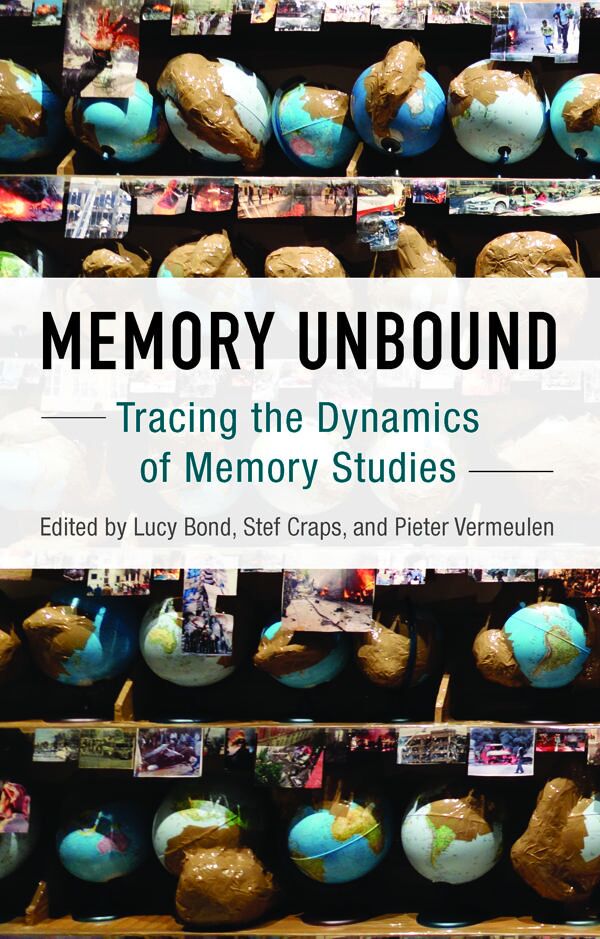
Memory Unbound
Though still a relatively young field, memory studies has undergone significant transformations since it first coalesced as an area of inquiry. Increasingly, scholars understand memory to be a fluid, dynamic, unbound phenomenon—a process rather than a reified object. Embodying just such an elastic approach, this state-of-the-field collection systematically explores the transcultural, transgenerational, transmedial, and transdisciplinary dimensions of memory—four key dynamics that have sometimes been studied in isolation but never in such an integrated manner. Memory Unbound places leading researchers in conversation with emerging voices in the field to recast our understanding of memory's distinctive variability.
eBook

Desiring Arabs
Sexual desire has long played a key role in Western judgments about the value of Arab civilization. In the past, Westerners viewed the Arab world as licentious, and Western intolerance of sex led them to brand Arabs as decadent; but as Western society became more sexually open, the supposedly prudish Arabs soon became viewed as backward. Rather than focusing exclusively on how these views developed in the West, in Desiring Arabs Joseph A. Massad reveals the history of how Arabs represented their own sexual desires. To this aim, he assembles a massive and diverse compendium of Arabic writing from the nineteenth century to the present in order to chart the changes in Arab sexual attitudes and their links to Arab notions of cultural heritage and civilization. A work of impressive scope and erudition, Massad’s chronicle of both the history and modern permutations of the debate over representations of sexual desires and practices in the Arab world is a crucial addition to our understanding of a frequently oversimplified and vilified culture.
eBook

How to play 20 questions with nature and lose
Despite dozens of empirical studies and a growing body of meta-analytic work, there is little consensus regarding the efficacy of cognitive training. In this review, we examine why this substantial corpus has failed to answer the often-asked question, “Does cognitive training work?” We first define cognitive training and discuss the general principles underlying training interventions. Next, we review historical interventions and discuss how findings from this early work remain highly relevant for current cognitive-training research. We highlight a variety of issues preventing real progress in understanding the underlying mechanisms of training, including the lack of a coherent theoretical framework to guide training research and methodological issues across studies and meta-analyses. Finally, suggestions for correcting these issues are offered in the hope that we might make greater progress in the next 100 y of cognitive-training research.
Journal Article

Contemplating Historical Consciousness
The last several decades have witnessed an explosion of new empirical research into representations of the past and the conditions of their production, prompting claims that we have entered a new era in which the past has become more \"present\" than ever before.Contemplating Historical Consciousness brings together leading historians, ethnographers, and other scholars who give illuminating reflections on the aims, methods, and conceptualization of their own research as well as the successes and failures they have encountered. This rich collective account provides valuable perspectives for current scholars while charting new avenues for future research.
eBook

Carlisle Indian Industrial School
The Carlisle Indian School (1879-1918) was an audacious educational experiment. Capt. Richard Henry Pratt, the school's founder and first superintendent, persuaded the federal government that training Native children to accept the white man's ways and values would be more efficient than fighting deadly battles. The result was that the last Indian war would be waged against Native children in the classroom.More than 10,500 children from virtually every Native nation in the United States were taken from their homes and transported to Pennsylvania. Carlisle provided a blueprint for the federal Indian school system that was established across the United States and served as a model for many residential schools in Canada. The Carlisle experiment initiated patterns of dislocation and rupture far deeper and more profound and enduring than its initiators ever grasped.Carlisle Indian Industrial Schooloffers varied perspectives on the school by interweaving the voices of students' descendants, poets, and activists with cutting-edge research by Native and non-Native scholars. These contributions reveal the continuing impact and vitality of historical and collective memory, as well as the complex and enduring legacies of a school that still touches the lives of many Native Americans.
eBook

Genealogical Memory and Its Function in Bridging the ‘Floating Gap’
The concept of genealogical memory is commonly presumed to be synonymous with family or intergenerational memory. However, this paper asserts the necessity for a more detailed examination, seeking to refine and contextualize these notions from a genealogist’s perspective. Exploring the focal point of this study, genealogical memory unveils distinctive characteristics that warrant meticulous scrutiny. Foremost among these characteristics is its intentional nature and inherently reconstructive essence, enabling the recollection of long-deceased ancestors and contemplation of their fates. Consequently, genealogical memory proves invaluable in bridging the ‘floating gap’ between communicative and cultural memory, as posited by Jan Vansina’s conceptualization. The primary objective of this article is to comprehensively explore and structure the concept of genealogical memory, with a particular focus on the genealogist’s role as a memory-maker.
Journal Article