
Catalogue Search | MBRL


Are you sure you want to remove the book from the shelf?

{{itemTitle}}
3,854
result(s) for
"Men -- Health and hygiene"
Sort by:


Health Issues in Latino Males
It is estimated that more than 50 million Latinos live in the United States. This is projected to more than double by 2050. InHealth Issues in Latino Malesexperts from public health, medicine, and sociology examine the issues affecting Latino men's health and recommend policies to overcome inequities and better serve this population. The book addresses sexual and reproductive health; alcohol, tobacco, and drug use; mental and physical health among those in the juvenile justice or prison systems; chronic diseases; HIV/AIDS; Alzheimer's and dementia; and health issues among war veterans. It discusses utilization, insurance coverage, and research programs, and includes an extensive appendix charting epidemiological data on Latino health.
eBook

Men'sHealth natural bodybuilding bible : a complete 24-week program for sculpting muscles that show
\"GenY is ready for a fresh new guidebook that takes a healthier approach to bodybuilding, written by the poster boy for clean eating and natural homegrown muscle: Tyler English, whose youth, long hair and tats, and unorthodox bootcamp workouts will appeal to young lifters\"-- Provided by publisher.
Book
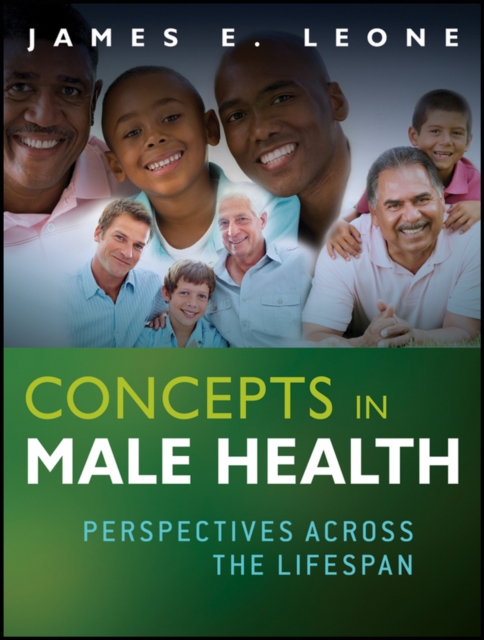
Concepts in male health
Concepts in Male Health: Perspectives Across the Lifespan
Concepts in Male Health: Perspectives Across the Lifespan offers a practical approach to understanding the health of males of all races, ethnicities, socioeconomic status, cultures, ages, and orientations. Each chapter of this book comprehensively reviews an important dimension of male health and examines the contributing historical, epidemiological, psychosocial, cultural-ethical, legal, political, and economic influences. The diverse range of topics allows for complete coverage ranging from body structures—and sexuality to aggression and occupational health. The book contains the most recent research and evidence-based science and addresses issues in male health throughout the lifespan in an easy-to-understand format. Learning objectives are presented in an accessible format and reflect real life situations. Review questions provided at the end of each chapter address health-specific content included in the chapter and span both the scope and the breadth of the information. This book is ideal for programs in health education, public health, community health nursing, gender studies, and other health sciences.
eBook

Aging Men, Masculinities and Modern Medicine
Aging Men, Masculinities and Modern Medicine explores the multiple socio-historical contexts surrounding men's aging bodies in modern medicine from a global perspective. The first of its kind, it investigates the interrelated aspects of aging, masculinities and biomedicine, allowing for a timely reconsideration of the conceptualisation of aging men within the recent explosion of social science studies on men's health and biotechnologies including anti-aging perspectives.
This book discusses both healthy and diseased states of aging men in medical practices, bringing together theoretical and empirical conceptualisations. Divided into four parts it covers:
Historical epistemology of aging, bodies and masculinity and the way in which the social sciences have theorised the aging body and gender.
Material practices and processes by which biotechnology, medical assemblages and men's aging bodies relate to concepts of health and illness.
Aging experience and its impact upon male sexuality and identity.
The importance of men's roles and identities in care-giving situations and medical practices.
Highlighting how aging men's bodies serve as trajectories for understanding wider issues of masculinity, and the way in which men's social status and men's roles are made in medical cultures, this innovative volume offers a multidisciplinary dialogue between sociology of health and illness, anthropology of the body and gender studies.
eBook


Working with men in health and social care
′Working with Men in Health and Social Care is a very welcome contribution to the recent increase in books addressing men and masculinities. It is especially useful for those interested in direct practice and policy applications in the fields of welfare, and for those who work with the problems men create, the problems men experience, and their interconnections′ - Jeff Hearn, co-editor Men and Masculinities, University of Huddersfield and Linköping University This is an important and timely book that introduces the complex issues and debates involved in working with men in a range of professional settings. The authors locate academic and popular discourse on masculinities within the specific context of health and social care settings, critically analysing the theory and policy that underpin and inform practice, and continually linking theoretical frameworks to ′real-life′ practice examples. This thought-provoking and topical book will be essential reading for students and academics in social work, health care, probation, counselling, and allied disciplines, and for those facing the reality of working with men in their day-to-day practice.
eBook

Meat is for pussies : a how-to guide for dudes who want to get fit, kick ass, and take names
\"From author, triathlete, and punk rocker John Joseph, a provocative, entertaining, and eye-opening guide to plant-based life that crushes the myth that eating meat is macho. At first glance, few people would associate the word \"vegan\" with John Joseph. As the lead singer of a punk rock band and a competitive triathlete, his tattoo-covered biceps don't exactly scream \"plant eater.\" But it's that very misconception he rallies against in his provocative book, Meat Is for Pussies. According to Joseph, eating animals--whether in the form of steak, burgers, wings, or ribs--is for the weak. Contrary to popularly accepted wisdom, eating animal protein doesn't make you stronger, tougher, or manlier--it makes you sicker, heavier, slower, and more prone to life-threatening disease. In essence: it makes you a pussy.In Meat Is for Pussies, Joseph shares his shocking and compelling story of evolving from a life of violence and hard-knock living to a man who chooses not to participate in the cycle of violence by eating animals. He also dispels the common myths surrounding meat, while sharing the latest information on the nutritional benefits of a plant-based diet and the dangers of eating meat and processed foods. In addition, Joseph offers practical guidance about such everyday issues as meal planning, recipes, and working out.There is a substantial category of vegan literature out there, but no one has written a book like this. By turns explosive, controversial, moving, and laugh-out-loud funny, and illustrated with eight pages of black-and-white photos, Meat Is for Pussies is a plant-based manifesto\"-- Provided by publisher.
Book

Working with African American males : a guide to practice
This volume examines special issues associated with providing services and guidance to African American men. Although this group of men is like any other in its struggle with its social and economic problems, African American men experience a higher rate of murder, imprisonment, unemployment and racism. The contributors to this book provide a broad, interdisciplinary view of the possible solutions to the different problems facing African American men.
eBook