
Catalogue Search | MBRL


Are you sure you want to remove the book from the shelf?

{{itemTitle}}
13,782
result(s) for
"Men in motion pictures"
Sort by:


Anders als die Andern
Released in 1919, Anders als die Andern ( Different
from the Others ) stunned audiences with its straightforward
depiction of queer love. Supporters celebrated the film's moving
storyline, while conservative detractors succeeded in prohibiting
public screenings. Banned and partially destroyed after the rise of
Nazism, the film was lost until the 1970s and only about one-third
of its original footage is preserved today.
Directed by Richard Oswald and co-written by Oswald and the
renowned sexologist Magnus Hirschfeld, Anders als die
Andern is a remarkable artifact of cinema culture connected to
the vibrant pre-Stonewall homosexual rights movement of
early-twentieth-century Germany. The film makes a strong case for
the normalization of homosexuality and for its decriminalization,
but the central melodrama still finds its characters undone by
their public outing. Ervin Malakaj sees the film's portrayal of the
pain of living life queerly as generating a complex emotional
identification in modern spectators, even those living in
apparently friendlier circumstances. There is a strange comfort in
knowing that we are not alone in our struggles, and Malakaj
recuperates Anders als die Andern 's mournful cinema as an
essential element of its endurance, treating the film's melancholia
both as a valuable feeling in and of itself and as a springboard to
engage in an intergenerational queer struggle.
Over a century after the film's release, Anders als die
Andern serves as a stark reminder of how hostile the world can
be to queer people, but also as an object lesson in how to find
sustenance and social connection in tragic narratives.
eBook


Men Out of Focus
Men Out of Focus charts conversations and polemics about masculinity in Soviet cinema and popular media during the liberal period – often described as The Thaw – between the death of Stalin in 1953 and the invasion of Czechoslovakia in 1968. The book shows how the filmmakers of the long 1960s built stories around male protagonists who felt disoriented by a world that was becoming increasingly suburbanized, rebellious, consumerist, household-oriented, and scientifically complex. The dramatic tension of 1960s cinema revolved around the male protagonists’ inability to navigate the challenges of postwar life.
Selling over three billion tickets annually, the Soviet film industry became a fault line of postwar cultural contestation. By examining both the discussions surrounding the period’s most controversial movies as well as the cultural context in which these debates happened, the book captures the official and popular reactions to the dizzying transformations of Soviet society after Stalin.
eBook


Bigger Than Life
Hardcore pornboth the straight and gay varietiesentered mainstream American culture in the 1970s as the sexual revolution swept away many of the cultural inhibitions and legal restraints on explicit sexual expression. The first porn movie ever to be reviewed by Variety, the entertainment industry's leading trade journal, was Wakefield Poole's Boys in the Sand (1971), a sexually-explicit gay movie shot on Fire Island with a budget of 4000. Moviegoers, celebrities and criticsboth gay and straightflocked to see Boys in the Sand when it opened in mainstream movie theaters in New York, Los Angeles and San Francisco. Within a year, Deep Throat, a heterosexual hardcore feature opened to rave reviews and a huge box officeexceeding that of many mainstream Hollywood features. Almost all of those involved in making commercial\" gay pornographic movies began as amateurs in a field that had virtually never existed before, either as art or commerce. Many of their underground\" predecessors had repeatedly suffered arrest and other forms of legal harassment. There was no developed gay market and any films made commercially were shown in adult x-rated theaters. After the Stonewall riots and the emergence of the gay liberation movement in 1969, a number of entrepreneurs began to make gay adult movies for the new mail order market. The gay porn film industry grew dramatically during the next thirty years and transformed the way mengay men in particularconceived of masculinity and their sexuality. Bigger Than Life tells that story.
eBook


Straight Girls and Queer Guys
Exploring the archetypal representation of the straight girl with the queer guy in film and television culture from 1948 to the present day, Straight Girls and Queer Guys considers the process of the 'hetero media gaze' and the way it contextualizes sexual diversity and gender identity. Offering both an historical foundation and a rigorous conceptual framework, Christopher Pullen draws on a range of case studies, including the films of Doris Day and Rock Hudson, the performances of Kenneth Williams, televisions shows such as Glee, Sex and the City and Will and Grace, the work of Derek Jarman, and the role of the gay best friend in Hollywood film. Critiquing the representation of the straight girl and the queer guy for its relation to both power and otherness, this is a provocative study that frames a theoretical model which can be applied across diverse media forms.
eBook

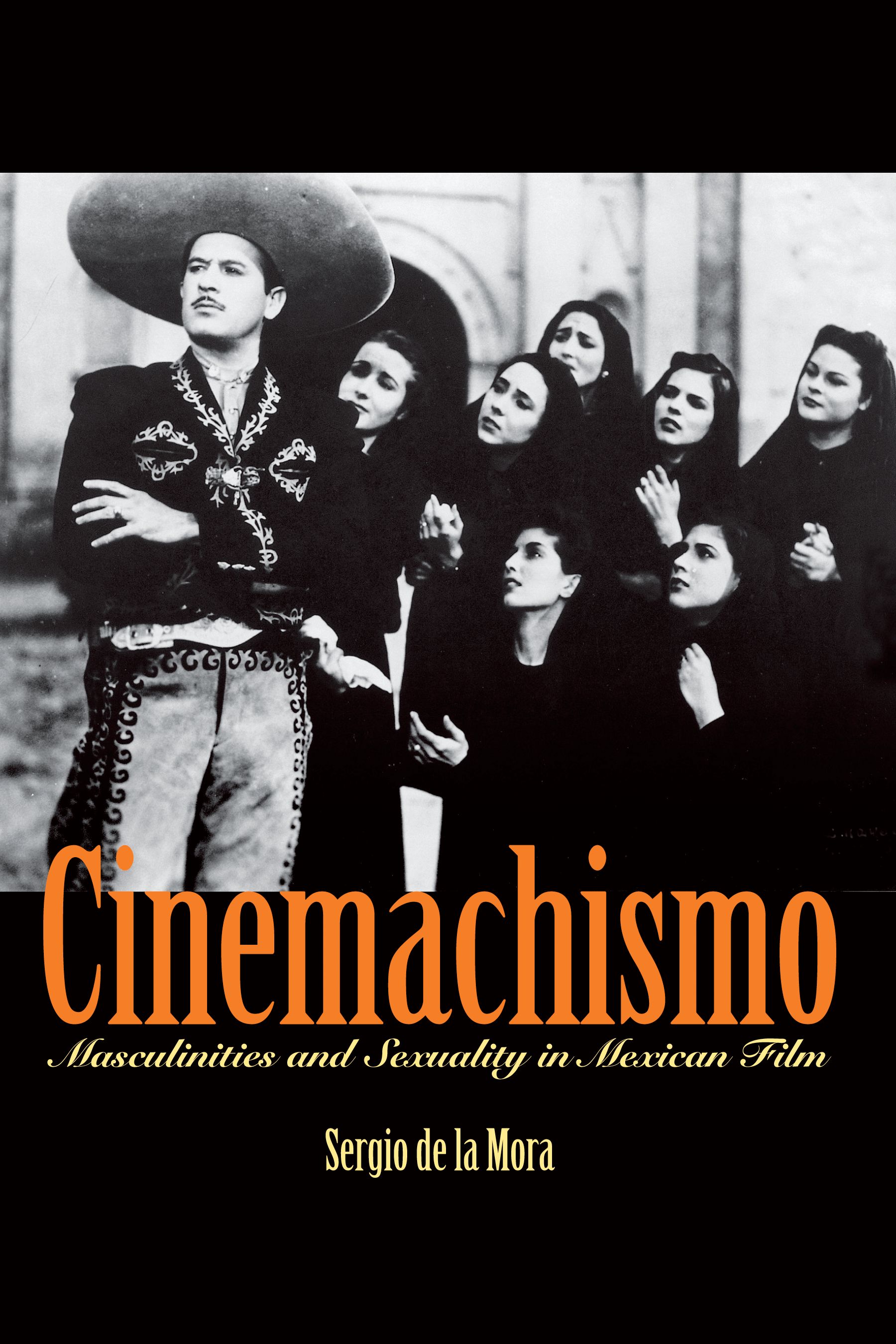
Cinemachismo
After the modern Mexican state came into being following the Revolution of 1910, hyper-masculine machismo came to be a defining characteristic of \"mexicanidad,\" or Mexican national identity. Virile men (pelados and charros), virtuous prostitutes as mother figures, and minstrel-like gay men were held out as desired and/or abject models not only in governmental rhetoric and propaganda, but also in literature and popular culture, particularly in the cinema. Indeed, cinema provided an especially effective staging ground for the construction of a gendered and sexualized national identity. In this book, Sergio de la Mora offers the first extended analysis of how Mexican cinema has represented masculinities and sexualities and their relationship to national identity from 1950 to 2004. He focuses on three traditional genres (the revolutionary melodrama, the cabaretera [dancehall] prostitution melodrama, and the musical comedy \"buddy movie\") and one subgenre (the fichera brothel-cabaret comedy) of classic and contemporary cinema. By concentrating on the changing conventions of these genres, de la Mora reveals how Mexican films have both supported and subverted traditional heterosexual norms of Mexican national identity. In particular, his analyses of Mexican cinematic icons Pedro Infante and Gael García Bernal and of Arturo Ripstein's cult film El lugar sin límites illuminate cinema's role in fostering distinct figurations of masculinity, queer spectatorship, and gay male representations. De la Mora completes this exciting interdisciplinary study with an in-depth look at how the Mexican state brought about structural changes in the film industry between 1989 and 1994 through the work of the Mexican Film Institute (IMCINE), paving the way for a renaissance in the national cinema.
eBook