
Catalogue Search | MBRL


Are you sure you want to remove the book from the shelf?

{{itemTitle}}
3,092
result(s) for
"Mendel"
Sort by:

مندل واجتياح البنى المعدلة وراثيا
يتناول الكتاب التعريف بمندل بأنه أبو علم الوراثة، وكان أول من اكتشف كيفية انتقال خصائص النوع من الأهل إلى الأولاد، ونجح بتفسيرات آليات التوارث، أي لماذا ورثنا عن أمهاتنا وآبائنا أو عن أجدادنا لون العينين أو الشعر، أو البشرة، فهي قواعد الحياة الأساسية التي أمست اليوم بفضل الاكتشافات التكنولوجية بمتناول الإنسان، يطبقها ويستغلها فتأتي بنتائج لا تحدها إلا مخيلتنا.
Book

Review of Recent Type-2 Fuzzy Controller Applications
Type-2 fuzzy logic controllers (T2 FLC) can be viewed as an emerging class of intelligent controllers because of their abilities in handling uncertainties; in many cases, they have been shown to outperform their Type-1 counterparts. This paper presents a literature review on recent applications of T2 FLCs. To follow the developments in this field, we first review general T2 FLCs and the most well-known interval T2 FLS algorithms that have been used for control design. Certain applications of these controllers include robotic control, bandwidth control, industrial systems control, electrical control and aircraft control. The most promising applications are found in the robotics and automotive areas, where T2 FLCs have been demonstrated and proven to perform better than traditional controllers. With the development of enhanced algorithms, along with the advancement in both hardware and software, we shall witness increasing applications of these frontier controllers.
Journal Article
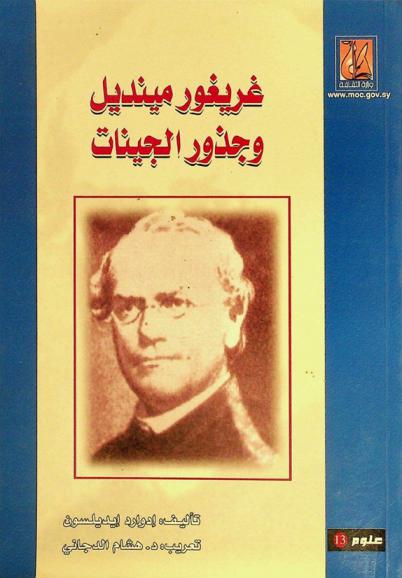
غريغور مينديل وجذور الجينات
عندما توفي جريجور مندل عام 1884، لم يعترف أي عالم بمساهماته التاريخية في علم الأحياء، أعيد اكتشاف رئيس الدير الأوغسطيني المتواضع في برنو (في جمهورية التشيك اليوم) في مطلع القرن عندما ذهل العلماء عندما علموا أن النتائج التي توصلوا إليها حول الميراث قد تم التوصل إليها بالفعل من قبل راهب مجهول قبل ثلاثة عقود. كان مندل باحثا متفانيا قضى كل ساعة في دراسة العلوم الطبيعية، وقد ابتكر سلسلة من التجارب البسيطة الرائعة باستخدام نبات يمكن زراعته بسهولة في أراضي الدير، وهو نبات البازلاء، وفي غضون سنوات قليلة فقط، توصل إلى الاكتشافات الشهيرة التي أصبحت فيما بعد محور علم الوراثة، في رواية مسلية ومستنيرة تماما، يتتبع إدوارد إيدلسون حياة مندل من أصوله المتواضعة إلى شهرته بعد وفاته، مما يوفر لنا مقدمة موجزة عن علم الوراثة الرائع وسردا ملهما لما يمكن أن يحققه رجل متواضع بتفان وبراعة.
Book

How Mendel’s Interest in Inheritance Grew out of Plant Improvement
Gregor Mendel’s crossing experiments in pea are the foundation of classical genetics, but since the importance of his 1866 paper was not understood until after long after his notebooks were burned, we know little... Despite the fact that Gregor Mendel is generally respected as the founder of genetics, little is known about the origin of and motivation for his revolutionary work. No primary sources are known that discuss his work during the period of his pea crossing experiments. Here, we report on two previously unknown interconnected local newspaper articles about Mendel’s work that predate his famous Pisum lectures by 4 years. These articles describe Mendel as a plant breeder and a horticulturist. We argue that Mendel’s initial interests concerned crop improvement, but that with time he became more interested in fundamental questions about inheritance, fertilization, and natural hybridization.
Journal Article

A remarkable journey : the story of evolution
\"Charles Darwin's On the Origin of Species appeared a little more than 150 years ago. Although Darwin had already been developing his theory for more than twenty years and others before him had advocated evolutionary views, the book was transformative and marked the beginning of the development of evolutionary biology. The story of the development of evolutionary theory over the last century and a half is fascinating and conceptually rich; it has involved repeated modification, clarification, experimentation and frustration. A Remarkable Journey: The Story of Evolution follows the theory of evolution along its captivating, often tortuous path--filled with intrigue and philosophical richness--from Darwin's original brilliant formulation to today's robust, vibrant and deeply explanatory principle. In many respects, the story of evolution documents the maturing of biological science; as the evolutionary biologist Theodosius Dobzhansky asserted in 1973, 'Nothing in biology makes sense except in the light of evolution.' A Remarkable Journey is a historical narrative of the discoveries, debates, experimentation and field work that became the evidential base on which the theory of evolution rests, of the systematic assembling of these into an elegant and powerful science, and of how it increasingly won over the biological and scientific communities. This considered and absorbing overview will provide all readers with an insight into the development of what most of us now take for granted as a basic--and beautiful--principle of life.\"--Dust jacket.
Book

What can we learn from selfish loci that break Mendel’s law?
Exceptions to Mendel’s law of segregation were important for demonstrating that chromosomes carry genetic material. Scrutiny of additional exceptions to Mendel’s law caused by selfish genes has the potential to unravel other unsolved mysteries of genetics.
Journal Article

A different kind of order : the ICP Triennial
The 2013 Triennial, A Different Kind of Order, focuses on artworks created in our current moment of widespread economic, social, and political instability. The exhibition will include 28 international artists who employ photography, film, video, and interactive media. Many of their works reflect the growing importance of new paradigms associated with digital image making and network culture. A Different Kind of Order is organized by Kristen Lubben, Christopher Phillips, Carol Squiers, and Joanna Lehan.
Book

A reference genome for pea provides insight into legume genome evolution
We report the first annotated chromosome-level reference genome assembly for pea, Gregor Mendel’s original genetic model. Phylogenetics and paleogenomics show genomic rearrangements across legumes and suggest a major role for repetitive elements in pea genome evolution. Compared to other sequenced Leguminosae genomes, the pea genome shows intense gene dynamics, most likely associated with genome size expansion when the Fabeae diverged from its sister tribes. During Pisum evolution, translocation and transposition differentially occurred across lineages. This reference sequence will accelerate our understanding of the molecular basis of agronomically important traits and support crop improvement.
Journal Article
Gregor Mendel’s legacy in quantitative genetics
Gregor Mendel's discovery of the laws of segregation and independent assortment and his inference of the existence of non-mendelian interactions between loci remain at the heart of today's explorations of the genetic architecture of quantitative traits.
Journal Article

Gregor Johann Mendel
Gregor Mendel was an Augustinian priest in the Monastery of St. Thomas in Brünn (Brno, Czech Republic) as well as a civilian employee who taught natural history and physics in the Brünn Modern School. The monastery’s secular function was to provide teachers for the public schools across Moravia. It was a cultural, educational, and artistic center with an elite core of friar-teachers with a well-stocked library and other amenities including a gourmet kitchen. It was wealthy, with far-flung holdings yielding income from agricultural productions. Mendel had failed his tryout as a parish priest and did not complete his examination for teaching certification despite 2 y of study at the University of Vienna. In addition to his teaching and religious obligations, Mendel carried out daily meteorological and astronomical observations, cared for the monastery's fruit orchard and beehives, and tended plants in the greenhouse and small outdoor gardens. In the years 1856 to 1863, he carried out experiments on heredity of traits in garden peas regarded as revolutionary today but not widely recognized during his lifetime and until 16 y after his death. In 1868 he was elected abbot of the monastery, a significantly elevated position in the ecclesiastical and civil hierarchy. While he had hoped to be elected, and was honored to accept, he severely underestimated its administrative responsibilities and gradually had to abandon his scientific interests. The last decade of his life was marred by an ugly dispute with civil authorities over monastery taxation.
Journal Article