
Catalogue Search | MBRL


Are you sure you want to remove the book from the shelf?

{{itemTitle}}
1,138
result(s) for
"Mental health services -- United States -- History"
Sort by:

The first resort : the history of social psychiatry in the United States
\"Social psychiatry was a mid-twentieth-century approach to mental health that stressed the prevention of mental illness rather than its treatment. Its proponents developed environmental explanations of mental health, arguing that socioeconomic problems such as poverty, inequality, and social isolation were the underlying causes of mental illness. The influence of social psychiatry contributed to the closure of psychiatric hospitals and the emergence of community mental health care during the 1960s. By the 1980s, however, social psychiatry was in decline, having lost ground to biological psychiatry and its emphasis on genetics, neurology, and psychopharmacology. The First Resort is a history of the rise and fall of social psychiatry that also explores the lessons this largely forgotten movement has to offer today. Matthew Smith examines four ambitious projects that investigated the relationship between socioeconomic factors and mental illness in Chicago, New Haven, New York City, and Nova Scotia. He contends that social psychiatry waned not because of flaws in its preventive approach to mental health but rather because the economic and political crises of the 1970s and the shift to the right during the 1980s foreclosed the social changes required to create a more mentally healthy society. Smith also argues that social psychiatry provides timely insights about how progressive social policies, such as a universal basic income, can help stem rising rates of mental illness in the present day\"-- Provided by publisher.
BOOK

Better but not well : mental health policy in the United States since 1950
The past half-century has been marked by major changes in the treatment of mental illness: important advances in understanding mental illnesses, increases in spending on mental health care and support of people with mental illnesses, and the availability of new medications that are easier for the patient to tolerate. Although these changes have made things better for those who have mental illness, they are not quite enough. In Better But Not Well, Richard G. Frank and Sherry A. Glied examine the well-being of people with mental illness in the United States over the past fifty years, addressing issues such as economics, treatment, standards of living, rights, and stigma. Marshaling a range of new empirical evidence, they first argue that people with mental illness—severe and persistent disorders as well as less serious mental health conditions—are faring better today than in the past. Improvements have come about for unheralded and unexpected reasons. Rather than being a result of more effective mental health treatments, progress has come from the growth of private health insurance and of mainstream social programs—such as Medicaid, Supplemental Security Income, housing vouchers, and food stamps—and the development of new treatments that are easier for patients to tolerate and for physicians to manage. The authors remind us that, despite the progress that has been made, this disadvantaged group remains worse off than most others in society. The \"mainstreaming\" of persons with mental illness has left a policy void, where governmental institutions responsible for meeting the needs of mental health patients lack resources and programmatic authority. To fill this void, Frank and Glied suggest that institutional resources be applied systematically and routinely to examine and address how federal and state programs affect the well-being of people with mental illness.
eBook

Break on through : radical psychiatry and the American counterculture
\"Break on Through examines the mental health profession, activism, and the American mind in the 1970s. In exploring 'radicalism' and 'anti-psychiatry', Lucas Richert helps the reader understand changes in the Diagnostic and Statistical Manual of Mental Disorders and struggles within the American Psychiatric Association but he also sheds new light on emergent mental health therapies (transactional analysis, Primal Therapy), Scientology, and the rise of parapsychology. Disputes in the field of psychiatry over homosexuality, drug use, or replicable drug trials, were but one element of wider political, economic, and cultural change. The politics of the era mattered particularly, as did the cultural trends, individual patients, and economic developments. The book offers a fresh view of the difficult struggles within psychiatry in the turbulent 1960-1970s. While there is a great deal of research on the coercive and overreaching power of the psychiatry profession and the medico-corporate establishment, on specific classes of psychiatric drugs, and the debates between bio-medically oriented psychiatrists and psychoanalysts, there is limited work about radical unrest within psychiatry. More broadly, by locating radical psychiatrists in the spectrum of health movements, Break on Through adds to our understanding of American health activism. Using a wide-ranging set of archival sources and a clear style, Break on Through draws on intersecting stories in psychiatry, policy, and drug development and regulation, to offer recommendations for the future. In the face of rising diagnoses for depression and ADHD, the need for common measures and standardized approaches in mental health, and major developments in drug regulation, the book's historical perspectives could not be timelier\"-- Provided by publisher.
Book
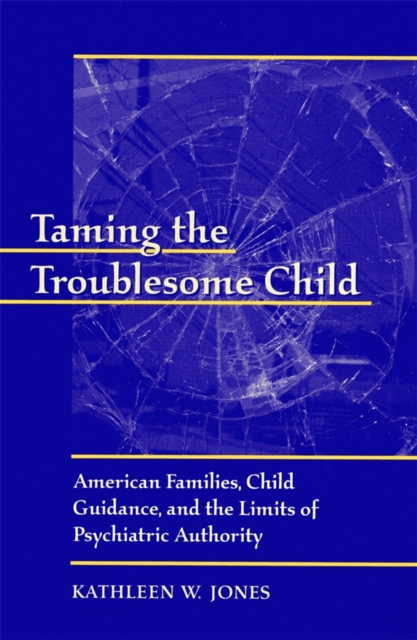
Taming the troublesome child
When our children act up--whether they're just moody and rebellious
or taking drugs and committing crimes--our solution, so often now,
is to send them to a psychiatrist or developmental psychologist for
help. What makes us think this will work? How did we come to rely
on psychological explanations--and corrections--for juvenile
misconduct? In Taming the Troublesome Child , these
questions lead to the complex history of \"child guidance,\" a
specialized psychological service developed early in the twentieth
century. Kathleen Jones puts this professional history into the
context of the larger culture of age, class, and gender conflict.
Using the records of Boston's Judge Baker Guidance Center from 1920
to 1945, she looks at the relationships among the social activists,
doctors, psychologists, social workers, parents, and young people
who met in the child guidance clinic, then follows the clinicians
as they adapt delinquency work to the problems of nondelinquent
children--an adaptation that often entailed a harsh critique of
American mothers. Her book reveals the uses to which professionals
and patients have put this interpretation of juvenile misbehavior,
and the conditions that mother-blaming has imposed on social policy
and private child rearing to this day.
eBook

Homefront 911 : how families of veterans are wounded by our wars /
\"The hallmarks of America's War on Terror have been repeated long deployments and a high percentage of troops returning with psychological problems. Family members of combat veterans are at a higher risk of potentially lethal domestic violence than almost any other demographic; it's estimated that one in four children of active-duty service members have symptoms of depression; and nearly one million veterans of Iraq and Afghanistan require increased care due to physical or psychological trauma. But, despite these staggering trends, civilian America has not been mobilized to take care of the families left behind; the American homefront, which traditionally has been rallied to support the nation's war efforts, has disappeared. In Homefront 911 Stacy Bannerman, a nationally-recognized advocate for military families, provides an insider's view of how more than a decade of war has contributed to the emerging crisis we are experiencing in today's military and veteran families as they battle with overwhelmed VA offices, a public they feel doesn't understand their sacrifices, and a nation that still isn't fully prepared to help those who have given so much. Bannerman, whose husband served in Iraq, describes how extended deployments cause cumulative, long-lasting strain on families who may not see their parent, child, or spouse for months on end. She goes on to share the tools she and others have found to begin to heal their families, and advocates policies for advancing programs, services, and civilian support, all to help repair the broken agreement that the nation will care for its returning soldiers and their families\"-- Provided by publisher.
Book

Therapeutic Revolutions
Therapeutic Revolutionsexamines the evolving relationship between American medicine, psychiatry, and culture from World War II to the dawn of the 1970s. In this richly layered intellectual history, Martin Halliwell ranges from national politics, public reports, and healthcare debates to the ways in which film, literature, and the mass media provided cultural channels for shaping and challenging preconceptions about health and illness.Beginning with a discussion of the profound impact of World War II and the Cold War on mental health, Halliwell moves from the influence of work, family, and growing up in the Eisenhower years to the critique of institutional practice and the search for alternative therapeutic communities during the 1960s. Blending a discussion of such influential postwar thinkers as Erich Fromm, William Menninger, Erving Goffman, Erik Erikson, and Herbert Marcuse with perceptive readings of a range of cultural text that illuminate mental health issues--among themSpellbound, Shock Corridor, Revolutionary Road,andI Never Promised You a Rose Garden--this compelling study argues that the postwar therapeutic revolutions closely interlink contrasting discourses of authority and liberation.
eBook


More People Than Ever Before Are Receiving Behavioral Health Care In The United States, But Gaps And Challenges Remain
The high prevalence of mental illness and substance abuse disorders and their significant impact on disability, mortality, and other chronic diseases have encouraged new initiatives in mental health policy including important provisions of the Affordable Care Act and changes in Medicaid. This article examines the development and status of the behavioral health services system, gaps in access to and quality of care, and the challenges to implementing aspirations for improved behavioral and related medical services. Although many more people than ever before are receiving behavioral health services in the United States-predominantly pharmaceutical treatments-care is poorly allocated and rarely meets evidence-based standards, particularly in the primary care sector. Ideologies, finances, and pharmaceutical marketing have shaped the provision of services more than treatment advances or guidance from a growing evidence base. Among the many challenges to overcome are organizational and financial realignments and improved training of primary care physicians and the behavioral health workforce.
Journal Article

Vanished in Hiawatha : the story of the Canton Asylum for Insane Indians
\"Begun as a pork-barrel project by the federal government in the early 1900s, the Canton Asylum for Insane Indians quickly became a dumping ground for inconvenient Indians. The federal institution in Canton, South Dakota, deprived many Native patients of their freedom without genuine cause, often requiring only the signature of a reservation agent. Only nine Native patients in the asylum's history were committed by court order. Without interpreters, mental evaluations, or therapeutic programs, few patients recovered. But who cared about Indians and what went on in South Dakota? After three decades of complacency, both the superintendent and the city of Canton were surprised to discover that someone did care, and that a bitter fight to shut the asylum down was about to begin. In this disturbing tale, Carla Joinson unravels the question of why this institution persisted for so many years. She also investigates the people who allowed Canton Asylum's mismanagement to reach such staggering proportions and asks why its administrators and staff were so indifferent to the misery experienced by patients. Grim Shadows is the harrowing tale of the mistreatment of Native American patients at a notorious insane asylum whose history helps us to understand the broader mistreatment of Native peoples under forced federal assimilation in the nineteenth and early twentieth centuries\"-- Provided by publisher.
Book

Mental Health Challenges Related to Neoliberal Capitalism in the United States
Rates of mental illness have increased dramatically over the past 15 years in the United States [Products—Data Briefs—Number 283—August 2017. Centers for Disease Control and Prevention.
https://www.cdc.gov/nchs/products/databriefs/db283.htm
. Published August 15, 2017]. Additionally, life expectancy has fallen over the past several years due to increases in death from suicide, opioid overdose, and alcoholic liver cirrhosis as reported by Case and Deaton [Deaths of despair and the future of capitalism. Princeton University Press, 2020]. Over the last decade some have questioned whether these changes are due to neoliberal capitalist policies and ideologies. Neoliberal capitalism incorporates theories of eliminating all restrictions on the market and decreasing government assistance programs as reported by Harvey [A brief history of neoliberalism, Oxford University Press, 2005]. Since then these policies have led to income inequality, disempowerment of workers, outsourcing of manufacturing jobs, inadequate social services, mass incarceration and an expensive and ineffective healthcare system as reported by Case and Deaton [Deaths of despair and the future of capitalism. Princeton University Press, 2020] and Nkansah-Amankra et al. [International Journal of Health Services 43(2):217-240, 2013]. Studies have shown that the consequences of these policies and ideologies likely have a role in increasing rates of mental illness. This paper will discuss how these factors increase mental distress and postulate ways that mental health professionals can advocate for change.
Journal Article