
Catalogue Search | MBRL


Are you sure you want to remove the book from the shelf?

{{itemTitle}}
244,245
result(s) for
"Merkel, Angela"
Sort by:
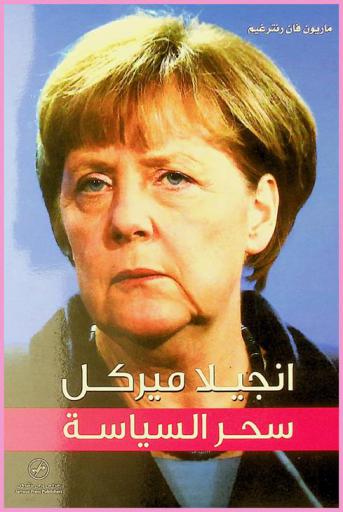
أنجيلا ميركل : سحر السياسة
جاءت أنجيلاء ميركل من ألمانيا الشرقية الواقعة في الكتلة السوفييتية المهملة من قبل أوروبا والغرب. أنجيلا ميركل مختلفة لأنها تعرف ما تعنيه الحرية، لقد عرفت البروتستانتية المطلقة وعرفت كيف تجد لنفسها مكانا وسط رجال كاثوليكيين كبار، هي عالمة بالأصل ولم تسع للتألق بل للعمل، متأنية، عنيدة، بلا ألق، مزيج من مخططة ميكافيللية وامرأة أخلاقية، فهي لا تتردد في قتل منافسيها السياسيين، مع سبق الترصد : لكنها احتضنت، في المقابل، مئات آلاف اللاجئين بخلاف ناخبيها. تقفت ماريون فإن رنترغيم أثر (أقوى امرأة في العالم) والتقت بأصدقاء طفولتها وسألت الممثلين والشهود عن صعودها وجمعت ذكريات المستشارة من رجال الدولة أو مستشاريهم، من طوني بلير إلى فلاديمير بوتين مرورا برؤساء فرنسا الأربعة : شيراك وساركوزي وهولاند وماكرون. سحر السياسة، يجسد أنجيلا ميركل في زمن تحولات ألمانيا وأوروبا، إنها جزء من تاريخنا المشترك. ماريون فإن رنترغيم هي معدة تقارير بارزة في (فانيتي فير) بعد أن مارست هذا العمل لفترة طويلة في (لو موند) وقد حازت عدة جوائز في الصحافة ومنها جائزة (ألبير لوندر)
BOOK

Democratic Leadership Revisited
Political theorists such as James MacGregor Burns (1978/2010), J. Ronald Pennock (1979), and Eric Beerbohm (2015) have argued that democratic leaders, to be democratic, must forge joint commitments with their followers before they act. But what happens when leaders act without doing so? Does this make them undemocratic? In this article, I challenge this standard, stepwise model of democratic leadership. I outline alternative models of democratic leadership that do not require leaders to forge joint commitments with their followers before they act. Democratic leaders must provide justifications for their actions, and they must be held accountable for them, but they might nevertheless act before they forge joint commitments with followers. In a trust‐based model of democratic leadership, for example, trust functions as a temporary stand‐in for justification, giving democratic leaders leeway to make decisions without first consulting their publics or forging joint commitments with them. In the hindsight model of democratic leadership, the consequences of actions can take the place of—or supplement—the justifications leaders provide. I argue that these alternative models of democratic leadership are more consistent with practices of leadership in the real world of politics. I illustrate the theory with two examples: The first focuses on Canadian Prime Minister Brian Mulroney’s decision to introduce the Goods and Services Tax in 1991; the second examines German Chancellor Angela Merkel’s leadership during the European “migrant crisis” in 2015.
Journal Article

Freedom : memoirs 1954-2021
For 16 years, Angela Merkel was Chancellor of Germany. She led the country through numerous crises, shaping both Germany and international politics with her actions and attitudes. In her memoirs, co-written with her long-time political advisor Beate Baumann, she reflects on her life in two German states - 35 years in the German Democratic Republic, 35 years in reunited Germany.
BOOK

Rallying Around or Keeping Distance?
Abstract This article centers on former Chancellor Angela Merkel's major standalone televised address to the nation—her coronavirus speech during the initial phase of the covid-19 pandemic—and reactions to it in mainstream German newspapers and among social media users. Employing a case study approach, we investigate the communicative means used by Merkel to generate unity and appeal to people's solidarity, the ways in which the mainstream press echoed or challenged aspects of her speech, and how social media users engaged with the speech online. Merkel's address demonstrates strong persuasive potential that is reflected in public opinion (via high approval ratings), fairly balanced coverage in established newspapers, and generally supportive reactions among most social media users. In contrast, those with links to the Alternative for Germany (AfD) on social media used a considerably more negative tone to voice their opinions, often revealing their outright antipathy toward Merkel rather than criticizing pandemic-related policy measures. Implications for political elites’ crisis communication are discussed during times of increased uncertainty and against the backdrop of the rise of the far right.
Journal Article

Becoming Madam Chancellor : Angela Merkel and the Berlin Republic
\"Since 2005, Angela Merkel has transformed not only the way Germans see themselves but also the way that politicians worldwide, male and female, perceive women in power. The East German daughter of a Protestant pastor, this physicist-turned-politician has deployed her life experiences to cultivate a unique set of leadership skills. Her pragmatic, data-driven, and future-oriented approach to politics - grounded in a commitment to democratic pluralism, human rights, and personal responsibility - has produced extraordinary paradigm shifts in many national policies in the wake of major crises. As the first English-language scholarly book to provide an in-depth account of her career and influence, Becoming Madam Chancellor examines Merkel's achievements across six key policy domains, contextualizes these within broader German history before and after reunification, and uncovers the personal and political factors that have contributed to Chancellor Merkel's hard-earned status as the world's most powerful woman.\" -- Publisher's description
Book

The Merkel Court: Judicial Populism since the Lisbon Treaty
The German Federal Constitutional Court’s recent case law in context – A systematic account of the Federal Constitutional Court’s changing constitutional imagination – The constitutional footprint of the grand coalitions during Angela Merkel’s 16-year term as German Chancellor – The changing architecture of parliamentary government in the Federal Republic and the role of the Court – The supermajoritarian structure of the German political system – Majority rule and veto players – Legislation and parliamentary oversight – Executive autonomy and parliamentary control – Political representation and counter-representation by the Court – The constitutional nature of cabinet and ministerial responsibility – constitutional limits of political speech in government office – The normative model of administrative constitutionalism – The pouvoir neutre in the German constitution – The constitutionalisation of distributive justice
Journal Article
Legacies of Leadership
Abstract Leaving office after 16 years as German chancellor, Angela Merkel has multifold and complex legacies. While Merkel's leadership style has frequently been described as cautious in domestic politics, her role in international relations is often characterized as that of an active defender of liberal international norms and values. Yet she was also responsible for some of the most controversial decisions regarding Europe, often raising questions about Germany's commitments and goals. This article explores her foreign policy and her role in the European Union through a gender-sensitive lens. It examines the scope and significance of her leadership based on three case studies to allow for a differentiated analysis: the Eurozone crisis, the migrant crisis, and the COVID-19 crisis.
Journal Article

Understanding the Role of Leadership Styles of Erdogan and Merkel in Sustainability of Turkey-European Union Relations: A Leadership Trait Analysis
This study aims to understand the role of the leadership styles of Turkish President Recep Tayyip Erdogan and German Chancellor Angela Merkel in European Union-Turkey relations by conducting a Leadership Trait Analysis (LTA), which takes into account the leaders’ personalities in foreign policy. The article makes use of the verbal records of the two leaders regarding the bilateral relations between their countries and the European Union. The results unveil that the two leaders’ personal characteristics bear similarities to a considerable extent; i.e., both leaders are sceptical in inter-personal relations, discernibly intuitive, self-confident and so forth. The study suggests that those personal traits of the leaders which have occasionally outweighed crude rationality have been some of the important factors enabling the sustainability of relations between Turkey and the EU against all odds.
Journal Article
The Quest for Gender Parity
Abstract Given Angela Merkel's long-standing reluctance to label herself a feminist, many scholars would find it hard to credit her with the increasingly “intersectional” composition of the Bundestag and the Landtage as of the 2021 elections. The last 16 years have nonetheless witnessed major shifts in German policies affecting the rights of women, persons with migration background, and lgbtqia community members. These developments have arguably contributed, directly and indirectly, to voters’ willingness to accept candidates with diverse backgrounds as capable of representing “the people's interests” beyond the needs of their respective identity groups. This article considers multiple factors contributing to increasing diversity among German lawmakers at various levels, including policy shifts that have helped to reconfigure the political opportunity structure and thus the electoral landscape. It concludes with reflections on Merkel's legacy, coupled with the role of generational change in “normalizing” diversity across the Berlin Republic.
Journal Article
A Spectre Haunting Europe
Abstract Germany's 2017 elections marked the first time since 1949 that a far-right party with neo-Nazi adherents crossed the 5 percent threshold, entering the Bundestag. Securing nearly 13 percent of the vote, the Alternative for Germany (AfD) impeded Chancellor Angela Merkel's ability to pull together a sustainable national coalition for nearly six months. Violating long-standing partisan taboos, the AfD “victory” is a weak reflection of national-populist forces that have gained control of other European governments over the last decade. This paper addresses the ostensible causes of resurgent ethno-nationalism across eu states, especially the global financial crisis of 2008/2009 and Merkel's principled stance on refugees and asylum seekers as of 2015. The primary causes fueling this negative resurgence are systemic in nature, reflecting the deconstruction of welfare states, shifts in political discourse, and opportunistic, albeit misguided responses to demographic change. It highlights a curious gender-twist underlying AfD support, particularly in the East, stressing eight factors that have led disproportionate numbers of middle-aged men to gravitate to such movements. It offers an exploratory treatment of the “psychology of aging” and recent neuro-scientific findings involving right-wing biases towards authoritarianism, social aggression and racism.
Journal Article