
Catalogue Search | MBRL


Are you sure you want to remove the book from the shelf?

{{itemTitle}}
714
result(s) for
"Messiah"
Sort by:
Matthew's non-messianic mapping of messianic texts : evidences of a broadly eschatological hermeneutic
In Matthew's Non-Messianic Mapping of Messianic Texts, Bruce Henning challenges the popular description of Matthew's use of fulfillment language as Christological to the more general category \"broadly eschatological\" by exploring case studies which map a messianic image to Jesus' disciples.
eBook

The Little Messiah: Jesus as phrase omitted in Luke 19:3
New Testament scholars almost universally understand Zacchaeus to be \"short in stature\" ([phrase omitted]) in Luke 19:3. I argue that it is just as plausible, if not more so, to understand Jesus as \"the short one\" instead. I problematize three approaches scholars use to justify Zacchaeus as \"the short one\" in Luke 19: (a) that the canonical gospels do not contain physical descriptions of Jesus, unlike other ancient bioi; (b) that the syntactical and intratextual evidence in Luke 19 points incontrovertibly to Zacchaeus as the short one; and (c) that ancient physiognomic parallels related to Zacchaeuss behavior confirm that he is the one described in Luke 19:3. I contend that readers cognizant of Luke's portrayal of Jesus as an Aesopic fabulist or as a Socratic figure would have perceived Jesus as the one who was short. Early Christian reception of Jesus's physical appearance, especially mediated through Origens report of Celsus, indicate that regarding Jesus as \"the short one\" in Luke 19 is plausible even in an ancient Christian context.
Journal Article

The Savior Narrative: A Comparative Study of the Messiah in Early Judaism and Maitreya in Buddhism
This paper explores the savior narratives of the Messiah in early Judaism and Maitreya in Buddhism focusing on the structural and thematic similarities between the two savior figures. Through an analysis of the Hebrew Bible, Talmud, and Buddhist texts such as Ārya Maitreya-Vyākaranam (The Prophecy of the Superior Maitreya) and Anāgata-vaṃsa (The History of the Future), the study examines four key elements of these narratives: the bestowal of the savior’s divine identity, the tribulations of the end times, the fulfillment of the savior’s mission and the role of “virtuous individuals” in redemption. The research highlights how both saviors are portrayed as future redeemers tasked with guiding humanity to redemption, while also emphasizing the moral requirements for believers in both religions. Specifically, the analysis reveals a “dual-redemption paradigm”, wherein both the savior’s mission and the moral actions of followers are essential to achieving redemption. The study also examines the balance between the divine and secular aspects within the narrative structure, illustrating how historical figures have manipulated these narratives for political and social gains. This research aims to deepen the understanding of savior traditions in Judaism and Buddhism, foster inter-religious dialogue, and contribute to comparative religious philosophy.
Journal Article
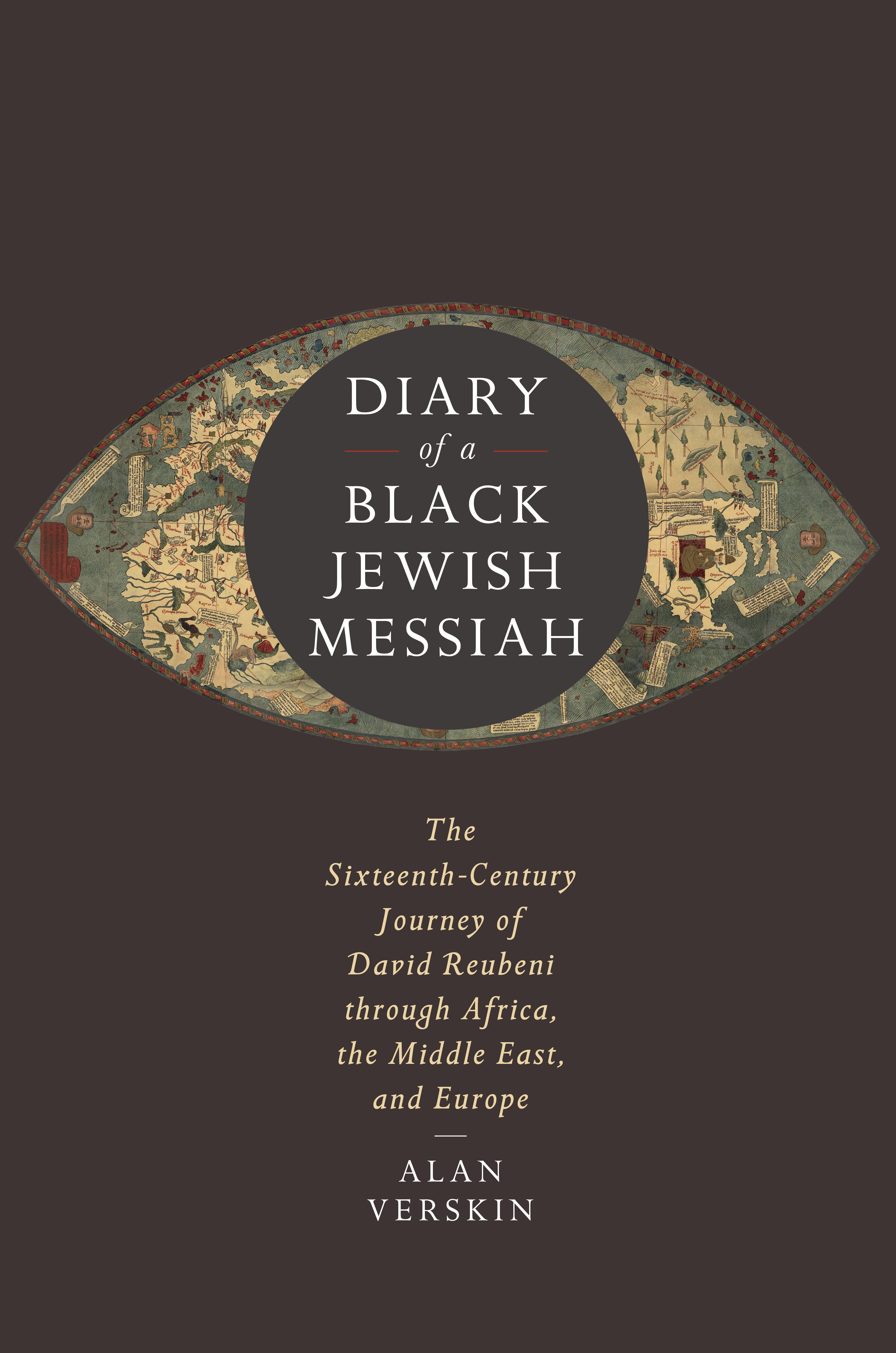
Diary of a Black Jewish Messiah
In 1524, a man named David Reubeni appeared in Venice, claiming to be the ambassador of a powerful Jewish kingdom deep in the heart of Arabia. In this era of fierce rivalry between great powers, voyages of fantastic discovery, and brutal conquest of new lands, people throughout the Mediterranean saw the signs of an impending apocalypse and envisioned a coming war that would end with a decisive Christian or Islamic victory. With his army of hardy desert warriors from lost Israelite tribes, Reubeni pledged to deliver the Jews to the Holy Land by force and restore their pride and autonomy. He would spend a decade shuttling between European rulers in Italy, Portugal, Spain, and France, seeking weaponry in exchange for the support of his hitherto unknown but mighty Jewish kingdom. Many, however, believed him to favor the relatively tolerant Ottomans over the persecutorial Christian regimes. Reubeni was hailed as a messiah by many wealthy Jews and Iberia's oppressed conversos, but his grand ambitions were halted in Regensburg when the Holy Roman Emperor, Charles V, turned him over to the Inquisition and, in 1538, he was likely burned at the stake.
Diary of a Black Jewish Messiah is the first English translation of Reubeni's Hebrew-language diary, detailing his travels and personal travails. Written in a Hebrew drawn from everyday speech, entirely unlike other literary works of the period, Reubeni's diary reveals both the dramatic desperation of Renaissance Jewish communities and the struggles of the diplomat, trickster, and dreamer who wanted to save them.
eBook

Mainstreaming and Defamiliarizing the Rapture: The Leftovers Reads Left Behind
The popular
series has been credited with mainstreaming dispensational premillennialism, or fragments of that ideology, in U.S. popular culture. The less popular, but critically acclaimed HBO series
, based on the novel of the same name by Tom Perrotta, attests to the ideology’s popularity while defamiliarizing its notions of Rapture and Messiah/Antichrist. While
apologizes for the ideology and strives to make the metanarrative’s identity attractive, entertaining, and thrilling,
takes a “not quite” Rapture as its “what if” fictional starting point. The result embraces mystery, rather than apologetic certainty, and ordinary human life, rather than the supernatural. Fulfilled prophecy becomes confusion, coping, and possibly delusion. The metanarrative becomes unstuck fragments. Election (exceptional national and individual identities), miracle, and messiah are demythologized. Theodicy occurs only on a human level. At the same time, however,
takes its “what if” seriously and sympathetically. Despite skepticism, its characters also understand the appeal of Rapture, Messiah, and the like as they too look for something sacred.
Journal Article
Israeli Jewish Attitudes toward Core Religious Beliefs in God, the Election of Israel, Eschatology, and the Temple Mount—Statistical Analysis
In this article, we aim to gauge the perspectives of Israeli Jews on core Jewish beliefs in God, the ideas of the Election of Israel, the afterlife, the advent of the messiah, and the significance of the Temple Mount at the End of Days. We conducted a survey among a representative sample of 1204 Israeli–Jewish respondents. The survey was administered in Hebrew and fielded between 27 March and 18 April 2023. This study shows that among the Israeli public, there is a so-called secular–religious dichotomy, at least to some extent. We were able to confirm that about 50% of the sample prays often, believes that Judaism is the only true religion, and identifies as traditional or Orthodox. We also analyze a typology of secular Israelis, including traditionalist seculars, spiritual seculars, and atheist or agnostic seculars. This study further shows that there are important generational differences in Israeli society when it comes to questions of faith. The youngest Israelis comprise the most religious age cohort, while the older generations are the least religious. In the survey, we asked multiple questions on the opinions toward visiting, praying, and constructing a synagogue or a Temple on the Temple Mount.
Journal Article

Jewish Messianism and the History of Philosophy
Jewish Messianism and the History of Philosophy contests the ancient opposition between Athens and Jerusalem by retrieving the concept of meontology - the doctrine of nonbeing - from the Jewish philosophical and theological tradition. For Emmanuel Levinas, as well as for Franz Rosenzweig, Hermann Cohen and Moses Maimonides, the Greek concept of nonbeing (understood as both lack and possibility) clarifies the meaning of Jewish life. These thinkers of 'Jerusalem' use 'Athens' for Jewish ends, justifying Jewish anticipation of a future messianic era as well as portraying the subjects intellectual and ethical acts as central in accomplishing redemption. This book envisions Jewish thought as an expression of the intimate relationship between Athens and Jerusalem. It also offers new readings of important figures in contemporary Continental philosophy, critiquing previous arguments about the role of lived religion in the thought of Jacques Derrida, the role of Plato in the thought of Emmanuel Levinas and the centrality of ethics in the thought of Franz Rosenzweig.
eBook

Strongest constraint on the parastatistical Quon model with the VIP-2 measurements
The spin-statistics theorem leads to Pauli’s Exclusion Principle (PEP), the basis of the stability of matter and many other phenomena relevant to physics, astrophysics, cosmology, and even biology. Possible violations of the PEP (PEPV) have been searched for since its inception; they may come from various Beyond Standard Model descriptions, including Non-Commutative Quantum Gravity models and extensions of the Quantum Field Theory, which must follow the Messiah-Greenberg Super-Selection (MGSS) rule and lead to the Quon description of the spin-statistic symmetries: the parastatstics. Efforts to search for a PEPV are not new; however, they have typically measured those cases without respecting MGSS. VIP (VIolation of the Pauli exclusion principle) first and its successor VIP-2, both sited in the “Gran Sasso underground laboratory,” aimed to set the most stringent limit for the non-Paulian transition following the MGSS rule. After two years of data with VIP-2 and better modeling of the electron-atom interaction, we present the most stringent upper limit of the probability of PEP violation for this case (
), thus completing the state-of-the-art of all possible PEPV cases, and the consequent constraint to the Quon description:
.
Journal Article

Journey to the Kingdom: The Three-Fold Compositional Arc of Book II of the Psalter
Employing the methodology of Editorial Criticism, this article seeks to demonstrate that Book II of the Psalter (i.e., Psalms 42-72) consists of three parallel, compositional arcs that take the form of a journey. Based on key-word links, as well as clear organizational clues found in the superscriptions, the psalms of Book II are deliberately arranged to portray three parallel depictions of the same progression of events. Mirroring the general sequence of eschatological events portrayed in the prophets, Book II presents a three-fold analogous deliverance out of exile into a global kingdom ruled by the Davidic king. While each journey highlights one compelling facet of that future kingdom, together they provide a multi-perspectival and even complementary vision of the future which signals a renewed hope in the Davidic promises. Thus, this article will argue that the design of Book II of the Psalter does not extol the glorious days of a bygone era, but rather orients the reader to anticipate the ultimate eschatological fulfillment of what God had guaranteed in the future. The net effect of these compositional arcs (or journeys) for the readers would inevitably be to sustain them through the disorienting experiences of captivity and provide invincible hope for the age to come.
Journal Article