
Catalogue Search | MBRL


Are you sure you want to remove the book from the shelf?

{{itemTitle}}
21,110
result(s) for
"Metal crystals."
Sort by:

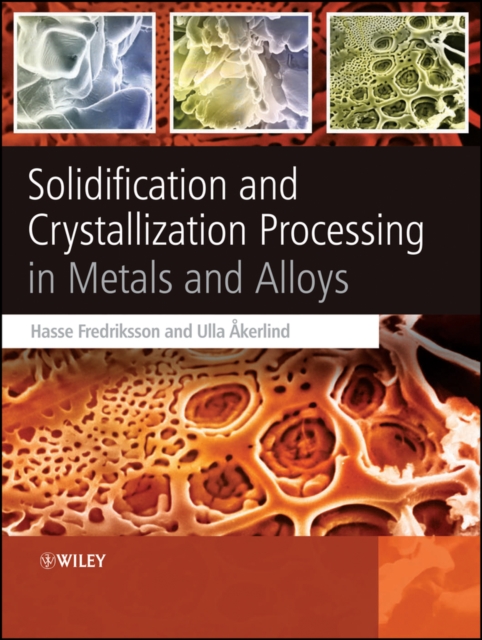
Solidification and crystallization processing in metals and alloys
Solidification and Crystallization Processing in Metals and Alloys
Hasse Fredriksson KTH, Royal Institute of Technology, Stockholm, Sweden
Ulla Åkerlind University of Stockholm, Sweden
Solidification or crystallization occurs when atoms are transformed from the disordered liquid state to the more ordered solid state, and is fundamental to metals processing. Conceived as a companion volume to the earlier works, Materials Processing during Casting (2006) and Physics of Functional Materials (2008), this book analyzes solidification and crystallization processes in depth.
Starting from the thermodynamic point of view, it gives a complete description, taking into account kinetics and mass transfer, down to the final structure. Importantly, the book shows the relationship between the theory and the experimental results. Topics covered include:
* Fundamentals of thermodynamics
* Properties of interfaces
* Nucleation
* Crystal growth - in vapours, liquids and melts
* Heat transport during solidification processes
* Solidification structures - faceted, dendritic, eutectic and peritectic
* Metallic glasses and amorphous alloy melts
Solidification and Crystallization Processing in Metals and Alloys features many solved examples in the text, and exercises (with answers) for students. Intended for Masters and PhD students as well as researchers in Materials Science, Engineering, Chemistry and Metallurgy, it is also a valuable resource for engineers in industry.
eBook

A Self-Regenerable Fiber Sloughing Its Heavy Metal Skin for Ultrahigh Separation Capability
Developing efficient separation materials for recovering metal resources from aqueous environments is crucial for the sustainable water–food–energy nexus, which addresses the interdependence between energy production, water production, and energy consumption. Various material-based separation processes have demonstrated outstanding performance. However, electric energy and chemicals are used to frequently replace the separation materials used in such processes owing to their short life span. This study presents a methodology for designing the self-regenerable fiber (SRF) according to the types of metals through a self-regeneration model. The SRF can semi-permanently recover the metal resources from water through a repetitive adsorption–crystallization–detachment process of metal ions on its surface. The ionic metal resources are adsorbed and crystallized with the counter-anions on the SRF surface. Next, the metal crystals are self-detached from the SRF surface by the collision between the crystals and curvature and non-sticky surface of the SRF. Thus, a module containing the SRF maintains its metal recovery capability even during continuous injection of the metal solution without its replacement. These findings highlight the significance of interfacial engineering and further guide the rational design of energy/environmentally friendly resource recovery modules.
Graphical abstract
Journal Article

Atomic mechanism of metal crystal nucleus formation in a single-walled carbon nanotube
Knowing how crystals nucleate at the atomic scale is crucial for understanding, and in turn controlling, the structure and properties of a wide variety of materials. However, because of the scale and highly dynamic nature of nuclei, the formation and early growth of nuclei are very difficult to observe. Here, we have employed single-walled carbon nanotubes as test tubes, and an ‘atomic injector’ coupled with aberration-corrected transmission electron microscopy, to enable in situ imaging of the initial steps of nucleation at the atomic scale. With three different metals we observed three main processes prior to heterogeneous nucleation: formation of crystal nuclei directly from an atomic seed (Fe), from a pre-existing amorphous nanocluster (Au) or by coalescence of two separate amorphous sub-nanometre clusters (Re). We demonstrate the roles of the amorphous precursors and the existence of an energy barrier before nuclei formation. In all three cases, crystal nucleus formation occurred through a two-step nucleation mechanism.Crystal nucleation processes are difficult to probe experimentally because of the spatial and temporal scales involved. Now, the heterogeneous nucleation of three different metals has been observed by electron microscopy with atomic resolution—using single-walled carbon nanotube as test tubes—and, in each case, shown to adopt a two-step nucleation mechanism involving a metastable amorphous precursor.
Journal Article
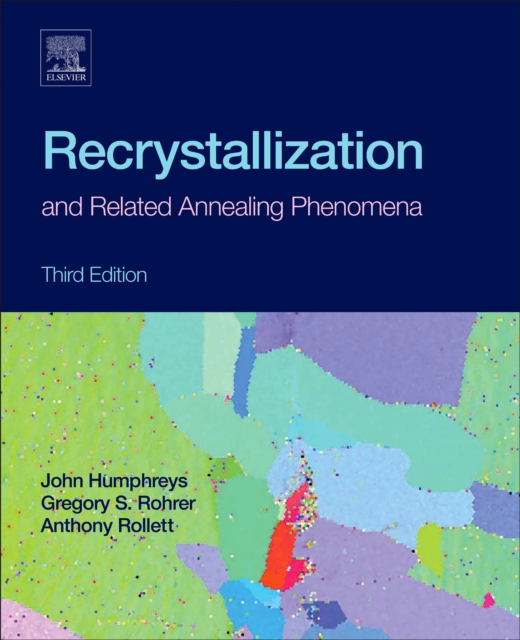
Recrystallization and related annealing phenomena
Recrystallization and Related Annealing Phenomena, Third Edition, fulfills the information needs of materials scientists in both industry and academia.The subjects treated in the book are all active research areas, forming a major part of at least four regular international conference series.
eBook

Research on Plastic Deformation of Rolled Pieces of Four-power rolling Mill Based on Deform
Aiming at the problems of large cross-section size change and low shape and position accuracy of the workpiece rolled by the four-power rolling mill, based on analyzing the plastic deformation mechanism of metal crystals, the rolling simulation was carried out by deform software to analyze the variation of section plastic deformation height and equivalent stress distribution of the rolled workpiece section. The results show that under the action of mutual vertical rolling force, the large plastic deformation with a length of about 2mm occurs in the local area of 45 ° diagonal at the end of the section, and the maximum height dimension increases by 4.5% relative to the blank height dimension. Its equivalent stress at the ends of both sides of the section is also the largest, and then gradually decreases and tends to be stable.
Journal Article

Sponge-like nanoporous single crystals of gold
Single crystals in nature often demonstrate fascinating intricate porous morphologies rather than classical faceted surfaces. We attempt to grow such crystals, drawing inspiration from biogenic porous single crystals. Here we show that nanoporous single crystals of gold can be grown with no need for any elaborate fabrication steps. These crystals are found to grow following solidification of a eutectic composition melt that forms as a result of the dewetting of nanometric thin films. We also present a kinetic model that shows how this nano-porous single-crystalline structure can be obtained, and which allows the potential size of the porous single crystal to be predicted. Retaining their single-crystalline nature is due to the fact that the full crystallization process is faster than the average period between two subsequent nucleation events. Our findings clearly demonstrate that it is possible to form single-crystalline nano porous metal crystals in a controlled manner.
Naturally occurring single crystals can exhibit various intricate porous morphologies. Here, the authors are able to grow nanoporous single crystals of gold following solidification of a eutectic composition melt that forms as a result of the dewetting of nanometric thin films.
Journal Article

Metal nanomaterials undergo changes in mechanical properties due to variations in grain size
With the rapid development of nanotechnology, an increasing number of metal nanomaterials are being applied in modern society. This paper primarily investigates the Hall-Petch relationship in metal crystals, which is a physical law describing the correlation between grain size and yield strength in metal nanomaterials. According to this relationship, the grain size influences the yield strength of the materials. At the nanoscale, this relationship may alter, exhibiting the inverse Hall-Petch effect, where further reducing the grain size paradoxically decreases the material’s yield strength. This paper also explores various mechanical properties of metal nanomaterials, including deformation and fracture mechanisms, and discusses their yield strength, plastic deformation, and fatigue performance. Additionally, the article analyses various strengthening mechanisms in metal nanocrystals, combining them with the Hall-Petch relationship to deepen the understanding of the impacts brought by changes in grain size. This provides new insights for optimizing material preparation techniques and improving mechanical properties through the control of microstructures.
Journal Article

On the Adhesive Interaction Between Metals in Atomistic Simulations of Friction and Wear
Atomistic simulations are performed to assess how the main characteristics of a pairwise interatomic potential function can affect the occurrence of wear. A Morse-like potential is tailored in its attractive part such as to vary independently the cut-off radius and the maximum value of the attractive (adhesive) force. An ideal numerical experiment is then performed where the interaction between a metal crystal and a probe changes, while their material properties are not affected, to isolate the behavior of the interface. Force functions with larger adhesive force can loosely be interpreted as describing dry contacts while those with smaller adhesive force can be interpreted as describing lubricated contacts. Results demonstrate that the occurrence of wear is strongly dependent on the shape of the interatomic force field, and more specifically on the combination of maximum adhesive force and effective length of the interatomic attraction. Wear can initiate also at small adhesive energy, provided that the maximum adhesive force between atoms is large. When the surface of the crystal is taken to be rough instead of flat, the effect of the interatomic potential function on friction and wear becomes smaller, as the atoms belonging to the roughness are weakly bound to the rest of the crystal and are easily dislodged with any of the force functions we used.
Journal Article

Precise Calorimetry of Small Metal Samples Using Noise Thermometry
We describe a compact calorimeter that opens ultra-low-temperature heat capacity studies of small metal crystals in moderate magnetic fields. The performance is demonstrated on the canonical heavy fermion metal YbRh
2
Si
2
. Thermometry is provided by a fast current sensing noise thermometer. This single thermometer enables us to cover a wide temperature range of interest from 175 µK to 90 mK with temperature-independent relative precision. Temperatures are tied to the international temperature scale with a single-point calibration. A superconducting solenoid surrounding the cell provides the sample field for tuning its properties and operates a superconducting heat switch. Both adiabatic and relaxation calorimetry techniques, as well as magnetic field sweeps, are employed. The design of the calorimeter results in an addendum heat capacity which is negligible for the study reported. The keys to sample and thermometer thermalisation are the lack of dissipation in the temperature measurement and the steps taken to reduce the parasitic heat leak into the cell to the tens of fW level.
Journal Article