
Catalogue Search | MBRL


Are you sure you want to remove the book from the shelf?

{{itemTitle}}
157
result(s) for
"Mexican-American Border Region History."
Sort by:

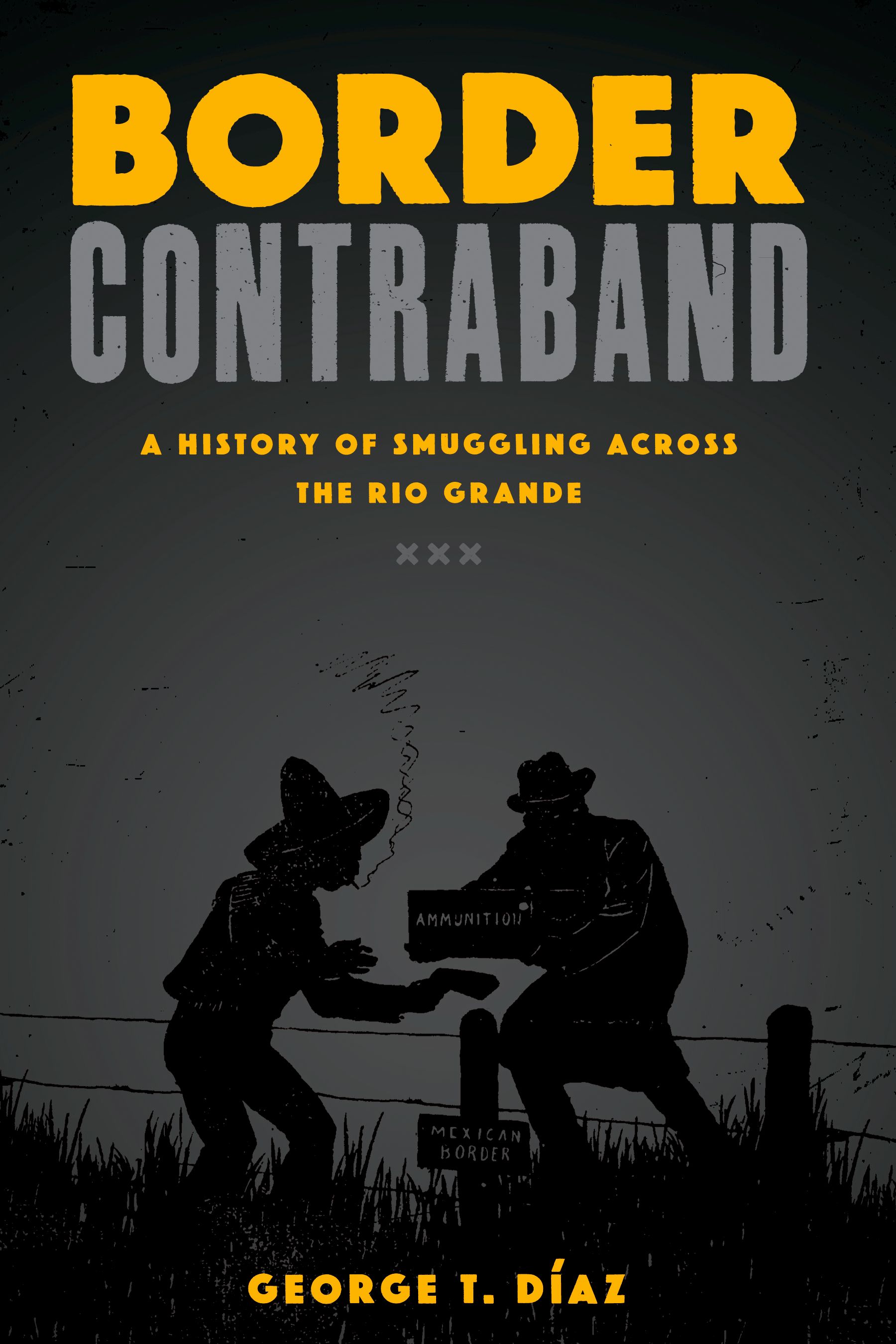
Border Contraband
Present-day smuggling across the U.S.-Mexico border is a professional, often violent, criminal activity. However, it is only the latest chapter in a history of illicit business dealings that stretches back to 1848, when attempts by Mexico and the United States to tax commerce across the Rio Grande upset local trade and caused popular resentment. Rather than acquiesce to what they regarded as arbitrary trade regulations, borderlanders continued to cross goods and accepted many forms of smuggling as just. In Border Contraband, George T. Díaz provides the first history of the common, yet little studied, practice of smuggling across the U.S.-Mexico border. In Part I, he examines the period between 1848 and 1910, when the United States’ and Mexico’s trade concerns focused on tariff collection and on borderlanders’ attempts to avoid paying tariffs by smuggling. Part II begins with the onset of the Mexican Revolution in 1910, when national customs and other security forces on the border shifted their emphasis to the interdiction of prohibited items (particularly guns and drugs) that threatened the state. Díaz’s pioneering research explains how greater restrictions have transformed smuggling from a low-level mundane activity, widely accepted and still routinely practiced, into a highly profitable professional criminal enterprise.
eBook


Border Land, Border Water
From the boundary surveys of the 1850s to the ever-expanding fences and highway networks of the twenty-first century, Border Land, Border Water examines the history of the construction projects that have shaped the region where the United States and Mexico meet. Tracing the accretion of ports of entry, boundary markers, transportation networks, fences and barriers, surveillance infrastructure, and dams and other river engineering projects, C. J. Alvarez advances a broad chronological narrative that captures the full life cycle of border building. He explains how initial groundbreaking in the nineteenth century transitioned to unbridled faith in the capacity to control the movement of people, goods, and water through the use of physical structures. By the 1960s, however, the built environment of the border began to display increasingly obvious systemic flaws. More often than not, Alvarez shows, federal agencies in both countries responded with more construction—“compensatory building\" designed to mitigate unsustainable policies relating to immigration, black markets, and the natural world. Border Land, Border Water reframes our understanding of how the border has come to look and function as it does and is essential to current debates about the future of the US-Mexico divide.
eBook

The border : journeys along the U.S.-Mexico border, the world's most consequential divide
\"David Danelo has traveled the U.S.-Mexico border and his investigative report about a complex issue examines the border in human terms. As topical today as it was when he made his trek, this updated edition asks and answers the core questions: Is a fence or wall the answer? Is the U.S. government capable of fully securing the border?\"-- Provided by publisher.
Book

Portable Borders
After World War II, the concept of borders became unsettled, especially after the rise of subaltern and multicultural studies in the 1980s. Art at the U.S.-Mexico border came to a turning point at the beginning of that decade with the election of U.S. President Ronald Reagan. Beginning with a political history of the border, with an emphasis on the Chicano movement and its art production, Ila Sheren explores the forces behind the shift in thinking about the border in the late twentieth century. Particularly in the world of visual art, borders have come to represent a space of performance rather than a geographical boundary, a cultural terrain meant to be negotiated rather than a physical line. From 1980 forward, Sheren argues, the border became portable through performance and conceptual work. This dematerialization of the physical border after the 1980s worked in two opposite directions—the movement of border thinking to the rest of the world, as well as the importation of ideas to the border itself. Beginning with site-specific conceptual artwork of the 1980s, particularly the performances of the Border Art Workshop/Taller de Arte Fronterizo, Sheren shows how these works reconfigured the border as an active site. Sheren moves on to examine artists such as Guillermo Gómez-Peña, Coco Fusco, and Marcos Ramirez \"ERRE.\" Although Sheren places emphasis on the Chicano movement and its art production, this groundbreaking book suggests possibilities for the expansion of the concept of portability to contemporary art projects beyond the region.
eBook

Border towns and border crossings : a history of the U.S.-Mexico divide
\"This is a compelling and revealing look at the history of the U.S.-Mexican border as a place and symbol of cross-cultural melding and a source of growing anxiety over immigration and national security\"-- Provided by publisher.
Book

War of a Thousand Deserts
In the early 1830s, after decades of relative peace, northern Mexicans and the Indians whom they called \"the barbarians\" descended into a terrifying cycle of violence. For the next fifteen years, owing in part to changes unleashed by American expansion, Indian warriors launched devastating attacks across ten Mexican states. Raids and counter-raids claimed thousands of lives, ruined much of northern Mexico's economy, depopulated its countryside, and left man-made \"deserts\" in place of thriving settlements. Just as important, this vast interethnic war informed and emboldened U.S. arguments in favor of seizing Mexican territory while leaving northern Mexicans too divided, exhausted, and distracted to resist the American invasion and subsequent occupation.
Exploring Mexican, American, and Indian sources ranging from diplomatic correspondence and congressional debates to captivity narratives and plains Indians' pictorial calendars,War of a Thousand Desertsrecovers the surprising and previously unrecognized ways in which economic, cultural, and political developments within native communities affected nineteenth-century nation-states. In the process this ambitious book offers a rich and often harrowing new narrative of the era when the United States seized half of Mexico's national territory.
eBook