
Catalogue Search | MBRL


Are you sure you want to remove the book from the shelf?

{{itemTitle}}
1,933
result(s) for
"Mexico, North History."
Sort by:


War of a Thousand Deserts
In the early 1830s, after decades of relative peace, northern Mexicans and the Indians whom they called \"the barbarians\" descended into a terrifying cycle of violence. For the next fifteen years, owing in part to changes unleashed by American expansion, Indian warriors launched devastating attacks across ten Mexican states. Raids and counter-raids claimed thousands of lives, ruined much of northern Mexico's economy, depopulated its countryside, and left man-made \"deserts\" in place of thriving settlements. Just as important, this vast interethnic war informed and emboldened U.S. arguments in favor of seizing Mexican territory while leaving northern Mexicans too divided, exhausted, and distracted to resist the American invasion and subsequent occupation.
Exploring Mexican, American, and Indian sources ranging from diplomatic correspondence and congressional debates to captivity narratives and plains Indians' pictorial calendars,War of a Thousand Desertsrecovers the surprising and previously unrecognized ways in which economic, cultural, and political developments within native communities affected nineteenth-century nation-states. In the process this ambitious book offers a rich and often harrowing new narrative of the era when the United States seized half of Mexico's national territory.
eBook


From the Republic of the Rio Grande
The Republic of the Rio Grande had a brief and tenuous existence (1838-1840) before most of it was reabsorbed by Mexico and the remainder annexed by the United States, yet this region that straddles the Rio Grande has retained its distinctive cultural identity to the present day. Born on one side of the Rio Grande and raised on the other, Beatriz de la Garza is a product of this region. Her birthplace and its people are the subjects of this work, which fuses family memoir and borderlands history.
From the Republic of the Rio Grandebrings new insights and information to the study of transnational cultures by drawing from family papers supplemented by other original sources, local chronicles, and scholarly works. De la Garza has fashioned a history of this area from the perspective of individuals involved in the events recounted. The book is composed of nine sections spanning some two hundred years, beginning in the mid-1700s. Each section covers not only a chronological period but also a particular theme relating to the history of the region. De la Garza takes a personal approach, opening most sections with an individual observation or experience that leads to the central motif, whether this is the shared identity of the inhabitants, their pride in their biculturalism and bilingualism, or their deep attachment to the land of their ancestors.
eBook


These people have always been a republic : indigenous electorates in the U.S.-Mexico borderlands, 1598-1912
\"By focusing on this long history, Maurice Crandall demonstrates how Indigenous peoples absorbed, adapted, or eschewed colonially imposed forms of electoral politics and exercised political sovereignty based on local needs. In doing so, this study compares and contrasts not only Spanish, Mexican, and American conceptions of Indian citizenship, but also the differences among indigenous groups that populated what became the states of Arizona and New Mexico. Crandall's work represents a significant contribution to the fields of indigenous political rights and legal status in the American Southwest, as well as Indian-Hispano and Indian-Anglo relations in the U.S.-Mexico Borderlands\"-- Provided by publisher.
Book
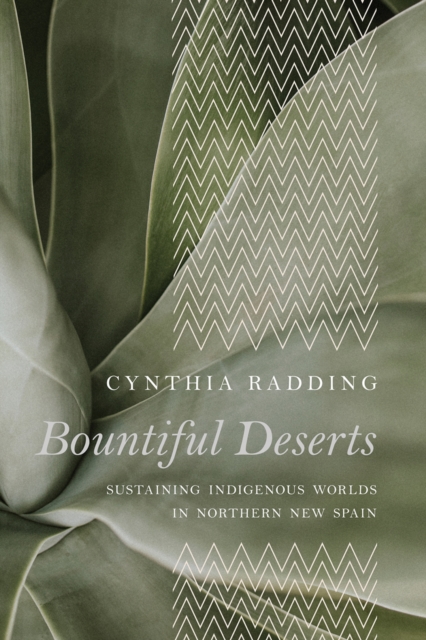
Bountiful Deserts
Common understandings drawn from biblical references,
literature, and art portray deserts as barren places that are far
from God and spiritual sustenance. In our own time, attention
focuses on the rigors of climate change in arid lands and the
perils of the desert in the northern Mexican borderlands for
migrants seeking shelter and a new life. Bountiful Deserts
foregrounds the knowledge of Indigenous peoples in the arid lands
of northwestern Mexico, for whom the desert was anything but barren
or empty. Instead, they nurtured and harvested the desert as a
bountiful and sacred space. Drawing together historical texts and
oral testimonies, archaeology, and natural history, author Cynthia
Radding develops the relationships between people and plants and
the ways that Indigenous people sustained their worlds before
European contact through the changes set in motion by Spanish
encounters, highlighting the long process of colonial conflicts and
adaptations over more than two centuries. This work reveals the
spiritual power of deserts by weaving together the cultural
practices of historical peoples and contemporary living
communities, centered especially on the Yaqui/Yoeme and
Mayo/Yoreme. Radding uses the tools of history, anthropology,
geography, and ecology to paint an expansive picture of Indigenous
worlds before and during colonial encounters. She re-creates the
Indigenous worlds in both their spiritual and material realms,
bringing together the analytical dimension of scientific research
and the wisdom of oral traditions in its exploration of different
kinds of knowledge about the natural world.
Published in cooperation with the William P. Clements Center for
Southwest Studies, Southern Methodist University
eBook