
Catalogue Search | MBRL


Are you sure you want to remove the book from the shelf?

{{itemTitle}}
1,230
result(s) for
"Mexico Civilization."
Sort by:

Modern Mexican culture : critical foundations
This collection of essays presents a key idea or event in the making of modern Mexico through the lenses of art and history--Provided by publisher.
Book

The Biocultural Consequences of Contact in Mexico
Examining the long-lasting effects of European
colonization on Mexican populations
The Biocultural Consequences of Contact in Mexico
explores how Mexican populations have been shaped both culturally
and biologically by the arrival of Spanish conquistadors and the
years following the defeat of the Aztec empire in 1521.
Contributors to this volume draw on a diverse set of methods from
archaeology, bioarchaeology, genetics, and history to examine the
response to European colonization, providing evidence for the
resilience of the Mexican people in the face of tumultuous
change.
Essays focus on Central Mexico, Yucatan, and Oaxaca, providing a
cross-regional perspective, and they highlight Mexican scholars'
work and viewpoints. They examine the effects of the
castas system-which the colonizers used to organize
society according to parentage and the social construction of
race-on individuals' and groups' access to power, social mobility,
health, and mate choice. Contributors illuminate the poorly
understood extent that this system-and the national identity of
mestizaje that replaced it-caused inequality and the
structural violence of stress and health disparities, as well as
genetic admixture.
Five hundred years after the Spanish first clashed with Aztec
forces and began to influence modern Mexico, this volume adds to
discussions of colonialism, the reconstruction of biosocial
relationships, and the work of decolonization. Students and
scholars in anthropology and history will gain insights into how
human populations transform and adapt in the wake of major
historical events that result in migration, demographic change, and
social upheaval.
Contributors: Josefina Bautista Martínez |
Alfredo Coppa | Andrea Cucina | Heather J. H. Edgar | Blanca Z.
González-Sobrino | María Teresa Jaén Esquivel | Haagen D. Klaus |
Michaela Lucci | Abigail Meza-Peñaloza | Emily Moes | Corey S.
Ragsdale | Katelyn M. Rusk | Robert C. Schwaller | Julie K. Wesp |
Cathy Willermet
A volume in the series Bioarchaeological Interpretations of the
Human Past: Local, Regional, and Global Perspectives, edited by
Clark Spencer Larsen
eBook

The Aztecs
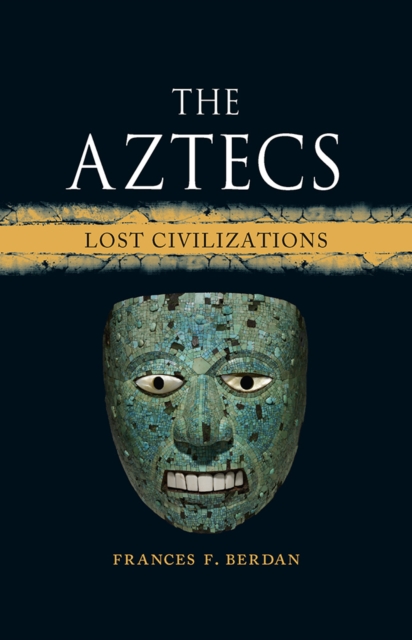
In this rich and surprising book, Frances F. Berdan shines fresh light on the enigmatic, ancient Aztecs, the Nahuatl-speaking people living in the Basin of Mexico from ad 1325 to 1521. She casts her net wide, covering topics as diverse as ethnicity, empire-building, palace life, etiquette, origin myths and human sacrifice. While sometimes described as 'stone age', the Aztecs' achievements were remarkable. They built wondrous city-states such as Tenochtitlan and Texcoco, constructed lofty temples and produced fine arts in precious stones, gold and shimmering feathers. They crafted beautiful poetry and studied the sciences. They had schools and libraries, entrepreneurs and money, and a bewildering array of deities and dramatic ceremonies. Based on the latest research and lavishly illustrated, this book reveals the Aztecs to be a civilization of sophistication and finesse.
eBook


Gender and the Negotiation of Daily Life in Mexico, 1750-1856
History is not just about great personalities, wars, and revolutions; it is also about the subtle aspects of more ordinary matters. On a day-to-day basis the aspects of life that most preoccupied people in late eighteenth- through mid nineteenth-century Mexico were not the political machinations of generals or politicians but whether they themselves could make a living, whether others accorded them the respect they deserved, whether they were safe from an abusive husband, whether their wives and children would obey them-in short, the minutiae of daily life.
Sonya Lipsett-Rivera'sGender and the Negotiation of Daily Life in Mexico, 1750-1856explores the relationships between Mexicans, their environment, and one another, as well as their negotiation of the cultural values of everyday life. By examining the value systems that governed Mexican thinking of the period, Lipsett-Rivera examines the ephemeral daily experiences and interactions of the people and illuminates how gender and honor systems governed these quotidian negotiations. Bodies and the built environment were inscribed with cultural values, and the relationship of Mexicans to and between space and bodies determined the way ordinary people acted out their culture.
eBook

Ancient Maya inside out
This exciting book explores the culture and achievements of the ancient Maya through the examination of artifacts that have survived through the centuries. Each primary-source artifact offers the reader significant clues to the civilization's technologies, cultural traditions, foods, and conflicts.
Book

Baroque Sovereignty
In the seventeenth century, even as the Spanish Habsburg monarchy entered its irreversible decline, the capital of its most important overseas territory was flourishing. Nexus of both Atlantic and Pacific trade routes and home to an ethnically diverse population, Mexico City produced a distinctive Baroque culture that combined local and European influences. In this context, the American-born descendants of European immigrants-or creoles, as they called themselves-began to envision a new society beyond the terms of Spanish imperialism, and the writings of the Mexican polymath Carlos de Sigüenza y Góngora (1645-1700) were instrumental in this process. Mathematician, antiquarian, poet, and secular priest, Sigüenza authored works on such topics as the 1680 comet, the defense of New Spain, pre-Columbian history, and the massive 1692 Mexico City riot. He wrote all of these, in his words, \"out of love for mypatria.\" Through readings of Sigüenza y Góngora's diverse works,Baroque Sovereigntylocates the colonial Baroque at the crossroads of a conflicted Spanish imperial rule and the political imaginary of an emergent local elite. Arguing that Spanish imperialism was founded on an ideal of Christian conversion no longer applicable at the end of the seventeenth century, More discovers in Sigüenza y Góngora's works an alternative basis for local governance. The creole archive, understood as both the collection of local artifacts and their interpretation, solved the intractable problem of Spanish imperial sovereignty by establishing a material genealogy and authority for New Spain's creole elite. In an analysis that contributes substantially to early modern colonial studies and theories of memory and knowledge, More posits the centrality of the creole archive for understanding how a local political imaginary emerged from the ruins of Spanish imperialism.
eBook

In the shadow of Cortés : conversations along the route of conquest
\"The book proposes a visual and cultural history of the legacy of the contact between Spaniards and indigenous societies of Mexico by following the route of Hernán Cortés and by conducting personal interviews with ordinary Mexican people along these territories once crossed by the army of Spaniards\"--Provided by publisher.
Book

Discovering the Olmecs
This lively history of seven decades of archaeological exploration in the Olmec region of Mexico tells the fascinating backstory of how archaeological discoveries are made while offering an exceptional overview of this ancient civilization.
eBook