
Catalogue Search | MBRL


Are you sure you want to remove the book from the shelf?

{{itemTitle}}
1,482
result(s) for
"Microbiologists."
Sort by:

Salvador Luria : an immigrant biologist in Cold War America
\"Scientific biography of Salvador Luria, Nobel-prize-winning biologist, activist, and MIT professor\"-- Provided by publisher.
BOOK
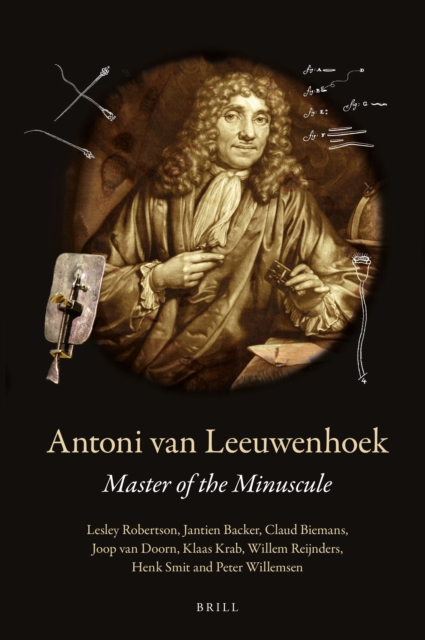
Antoni van Leeuwenhoek
In Antoni van Leeuwenhoek, Master of the Minuscule, the Father of Microbiology is presented in the context of his time, relationships and the Dutch Golden Age. Although he lacked an academic education, he dedicated his life to investigating the microscopic world using handmade, single-lensed microscopes and magnifiers. An expert observer, he planned experiments and designed equipment to test his theories. His pioneering discoveries included blood cells, protozoa, bacteria and spermatozoa, and resulted in an international reputation among the scientific and upper classes of 17th and 18th century Europe, aided by his Fellowship of the Royal Society of London. This lavishly illustrated biography sets his legacy of scientific achievements against the ideas and reactions of his fellow scientists and other contemporaries.
eBook

Louis Pasteur : germ destroyer
The number of scientific discoveries by Louis Pasteur is astounding. From his work on fermentation that led to the process of pasteurization to the rabies vaccine, Pasteur made a huge impact on industry, medicine, and scientific theory.
BOOK


Louis Pasteur advances microbiology
\"Learn about the great scientist Louis Pasteur as he made advances in microbiology. You'll read about his life, the science behind his studies, and the impact of his work on the world today\"-- Provided by publisher.
BOOK
Spotlight on...Wilhelmina M. Huston
Keywords: chlamydia; microbiology careers; public perception of science; women's health; women in STEMM; work-life balance
Journal Article

Louis Pasteur : groundbreaking chemist & biologist
Biography of the famous scientist, Louis Pasteur.
BOOK

Pasteurian Contributions to the Study of IBordetella pertussis/I Toxins
As a tribute to Louis Pasteur on the occasion of the 200th anniversary of his birth, this article summarizes the main contributions of scientists from Pasteur Institutes to the current knowledge of toxins produced by Bordetella pertussis. The article therefore focuses on publications authored by researchers from Pasteur Institutes and is not intended as a systematic review of B. pertussis toxins. Besides identifying B. pertussis as the causative agent of whooping cough, Pasteurians have made several major contributions with respect to the structure–function relationship of the Bordetella lipo-oligosaccharide, adenylyl cyclase toxin and pertussis toxin. In addition to contributing to the understanding of these toxins’ mechanisms at the molecular and cellular levels and their role in pathogenesis, scientists at Pasteur Institutes have also exploited potential applications of the gathered knowledge of these toxins. These applications range from the development of novel tools to study protein–protein interactions over the design of novel antigen delivery tools, such as prophylactic or therapeutic vaccine candidates against cancer and viral infection, to the development of a live attenuated nasal pertussis vaccine. This scientific journey from basic science to applications in the field of human health matches perfectly with the overall scientific objectives outlined by Louis Pasteur himself.
Journal Article

Louis Pasteur
\"Louis was born at a time when doctors were still trying to figure out what made people sick. As a teen, he discovered a love for science. As an adult, his curiosity led him to discover that microbes cause illnesses, and his groundbreaking research resulted in the creation of vaccines that have saved countless lives around the world. This amazing story of one of the fathers of modern medicine features a fact and photo section at the back.\"-- Page 4 of cover.
BOOK

Microbial Interaction with Clay Minerals and Its Environmental and Biotechnological Implications
Clay minerals are very common in nature and highly reactive minerals which are typical products of the weathering of the most abundant silicate minerals on the planet. Over recent decades there has been growing appreciation that the prime involvement of clay minerals in the geochemical cycling of elements and pedosphere genesis should take into account the biogeochemical activity of microorganisms. Microbial intimate interaction with clay minerals, that has taken place on Earth’s surface in a geological time-scale, represents a complex co-evolving system which is challenging to comprehend because of fragmented information and requires coordinated efforts from both clay scientists and microbiologists. This review covers some important aspects of the interactions of clay minerals with microorganisms at the different levels of complexity, starting from organic molecules, individual and aggregated microbial cells, fungal and bacterial symbioses with photosynthetic organisms, pedosphere, up to environmental and biotechnological implications. The review attempts to systematize our current general understanding of the processes of biogeochemical transformation of clay minerals by microorganisms. This paper also highlights some microbiological and biotechnological perspectives of the practical application of clay minerals–microbes interactions not only in microbial bioremediation and biodegradation of pollutants but also in areas related to agronomy and human and animal health.
Journal Article