
Catalogue Search | MBRL


Are you sure you want to remove the book from the shelf?

{{itemTitle}}
332
result(s) for
"Microcomputers History."
Sort by:

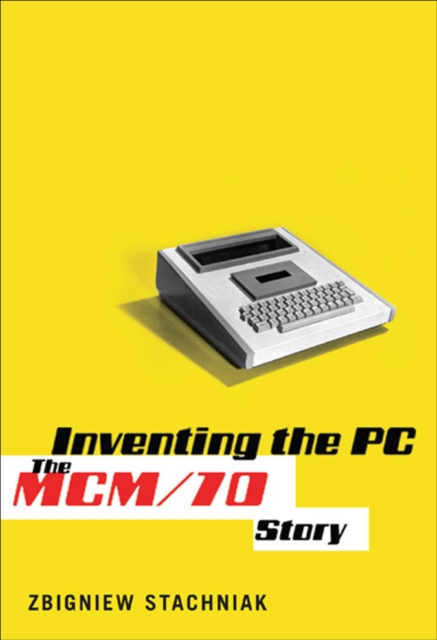
Inventing the PC
Inventing the PC details the invention and design of the MCM/70 computer and the prolonged struggle to bring it to market. Zbigniew Stachniak offers an insider's view of events on the front lines of pioneering work on personal computers. He shows what information and options PC pioneers had, how well they understood what they were doing, and how that understanding - or lack thereof - shaped both their engineering ingenuity and the indecisiveness and over-reaching ambition that would ultimately turn a very promising venture into a missed opportunity. Providing comprehensive historical background and rich photographic documentation, Inventing the PC tells the story of a Canadian company on the cutting-edge of the information age.
eBook


A Tribute to STEVE P. JOBS
Halamka summarizes five points from Jobs's plan when he returned to Apple (http://geekdoctor.blogspot.com/2011/08/lessons-learned-fromsteve- jobs.html) and outlines how these lessons may be used in health information technology. [...] google the use of iPad or iPhone in health care and see what you will find. [...] as a tribute to Steve P. Jobs, let us, as educators, use his tools to enhance our teaching abilities, engage and enrich our students' learning experiences, and inspire the next generation of nurses.
Journal Article


The interface experience : a user's guide
\"The last forty years have seen the rise of the personal computer, a device that has enabled ordinary individuals to access a tool that had been exclusive to laboratories and corporate technology centers. During this time, computers have become smaller, faster, more powerful, and more complex. So much has happened with so many products, in fact, that we often take for granted the uniqueness of our experiences with different machines over time. The Interface Experience surveys some of the landmark devices in the history of personal computing-including the Commodore 64, Apple Macintosh Plus, Palm Pilot Professional, and Microsoft Kinect-and helps us to better understand the historical shifts that have occurred with the design and material experience of each machine. With its spiral-bound design reminiscent of early computer user manuals and thorough consideration of the cultural moment represented by each device, The Interface Experience is a one-of-a-kind tour of modern computing technology\"-- Provided by publisher.
Book

History and Computers: The Views from Selected Social Studies Journals
Reviews and summarizes some of the most influential articles concerning history instruction and computers. Articles appeared in various social studies journals over the last five years. Most included specific guidelines and software reviews. Includes information on the journals reviewed. (MJP)
Journal Article

Great electronic gadget designs : 1900-today
Discover the most amazing gadget designs since 1900. From the Japanese Tamagotchi to the iPhone, this book charts the story of design that led to some amazing games and gadgets. We look at the needs that prompted their design, the designers responsible for breaking boundariesand the technology that made them possible.
Book
