
Catalogue Search | MBRL


Are you sure you want to remove the book from the shelf?

{{itemTitle}}
1,038
result(s) for
"Microplastics Environmental aspects."
Sort by:

A poison like no other : how microplastics corrupted our planet and our bodies
It's falling from the sky and is in the air we breathe. It's in our food, our clothes, and our homes. It's microplastic and it's everywhere--including our own bodies. Scientists are just beginning to discover how these tiny particles threaten health, but the studies are alarming. A Poison Like No Other is the first book to fully explore this new dimension of the plastic crisis. Matt Simon follows the intrepid scientists who travel to the ends of the earth and the bottom of the ocean to understand the consequences of our dependence on plastic. Unlike other pollutants that are single elements or simple chemical compounds, microplastics represent a cocktail of toxicity linked to diseases ranging from diabetes to cancer. There is no easy fix, Simon warns. But we will never curb our plastic addiction until we begin to recognize the invisible particles all around us.
Book
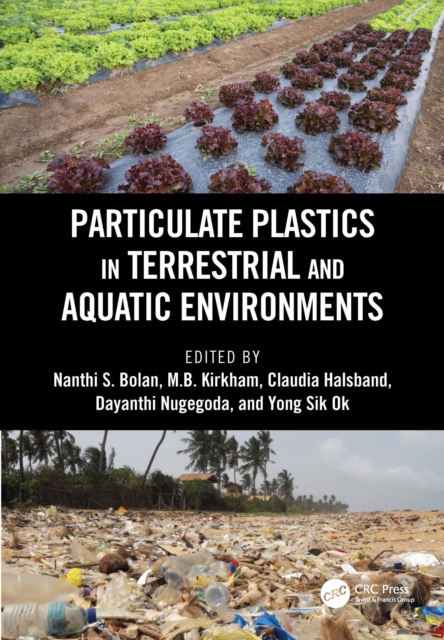
Particulate Plastics in Terrestrial and Aquatic Environments
The manufacture of plastic as well as its indiscriminate disposal and destruction by
incineration pollutes atmospheric, terrestrial, and aquatic ecosystems. Synthetic
plastics do not break down; they accumulate in the environment as macro-, micro-, and
nanoplastics. These particulate plastics are a major source of pollutants in soil and
marine ecosystems.
Particulate Plastics in Terrestrial and Aquatic Environments
provides a fundamental understanding of the sources of these plastics and the
threats they pose to the environment. The book demonstrates the ecotoxicity of
particulate plastics using case studies and offers management practices to mitigate
particulate plastic contamination in the environment.
eBook
Microplastics in water and wastewater
This book covers the topic of microplastics in water and wastewater.The chapters start with introductory issues related to the growing interest in the scientific community on microplastics and the human water cycle and point out where the microplastics could interact with water.
eBook

Microplastic Pollution
This book sheds light on the causes, effects, and control of microplastic pollution, providing valuable insights into the tools and techniques for analysis, the impact on ecosystems, and the potential risks to human well-being. The editors focus on the urgency of addressing this global environmental challenge through collaborative efforts and sustainable solutions. This reference features 10 edited chapters covering multiple aspects of microplastic pollution. The book introduces the reader to various tools and techniques used to analyze microplastic pollution in both aquatic and terrestrial ecosystems. It then examines the sources, pathways, and levels of microplastic contamination in the environment and explains how to assess the potential health risks for the nearby communities. The impact of microplastic on flora and fauna is presented in one chapter. To emphasize the importance of accurate assessment methods in understanding the extent and impact of microplastic contamination. The editors also present a case study conducted in Thoothukudi, South India, to explore the implications of microplastic pollution on human health. The book also provides information on solutions to microplastic pollution including the use of bioplastics and removal techniques. Microplastic Pollution: Causes, Effects, and Control It equips readers with a complete understanding of the global challenge of microplastics, fostering awareness and encouraging further research and action to protect our ecosystems and human health from their detrimental impact. It is an ideal handbook for environmental science researchers and students who need to understand microplastic pollution and plan environmental impact assessments for research projects in academic and professional settings, Key Features - Comprehensive coverage of microplastic pollution with 10 structured chapters -
Informs readers about important parameters to understand and measure the impact of microplastics on local fauna, flora and the surrounding environment - Covers evaluation and remediation of microplastics in both terrestrial and marine environments - Includes references for advanced readers - Includes a case study on the effect of microplastics in Thoothukudi, South India Audience Environmental science scholars and learners, general readers and decision makers involved in pollution control.
eBook


The plastic brain: neurotoxicity of micro- and nanoplastics
Given the global abundance and environmental persistence, exposure of humans and (aquatic) animals to micro- and nanoplastics is unavoidable. Current evidence indicates that micro- and nanoplastics can be taken up by aquatic organism as well as by mammals. Upon uptake, micro- and nanoplastics can reach the brain, although there is limited information regarding the number of particles that reaches the brain and the potential neurotoxicity of these small plastic particles.
Earlier studies indicated that metal and metal-oxide nanoparticles, such as gold (Au) and titanium dioxide (TiO
2
) nanoparticles, can also reach the brain to exert a range of neurotoxic effects. Given the similarities between these chemically inert metal(oxide) nanoparticles and plastic particles, this review aims to provide an overview of the reported neurotoxic effects of micro- and nanoplastics in different species and in vitro. The combined data, although fragmentary, indicate that exposure to micro- and nanoplastics can induce oxidative stress, potentially resulting in cellular damage and an increased vulnerability to develop neuronal disorders. Additionally, exposure to micro- and nanoplastics can result in inhibition of acetylcholinesterase activity and altered neurotransmitter levels, which both may contribute to the reported behavioral changes.
Currently, a systematic comparison of the neurotoxic effects of different particle types, shapes, sizes at different exposure concentrations and durations is lacking, but urgently needed to further elucidate the neurotoxic hazard and risk of exposure to micro- and nanoplastics.
Journal Article

Sinking of microbial-associated microplastics in natural waters
Degraded plastic debris has been found in nearly all waters within and nearby urban developments as well as in the open oceans. Natural removal of suspended microplastics (MPs) by deposition is often limited by their excess buoyancy relative to water, but this can change with the attachment of biological matter. The extent to which the attached biological ballast affects MP dynamics is still not well characterised. Here, we experimentally demonstrate using a novel OMCEC (Optical Measurement of CEll colonisation) system that the biological fraction of MP aggregates has substantial control over their size, shape and, most importantly, their settling velocity. Polyurethane MP aggregates made of 80% biological ballast had an average size almost twice of those containing 5% biological ballast, and sank about two times slower. Based on our experiments, we introduce a settling velocity equation that accounts for different biological content as well as the irregular fractal structure of MP aggregates. This equation can capture the settling velocity of both virgin MPs and microbial-associated MP aggregates in our experiment with 7% error and can be used as a preliminary tool to estimate the vertical transport of MP aggregates made of different polymers and types of microbial ballast.
Journal Article
Wastewater treatment alters microbial colonization of microplastics
Microplastics are ubiquitous contaminants in aquatic habitats globally, and wastewater treatment plants (WWTPs) are point sources of microplastics. Within aquatic habitats microplastics are colonized by microbial biofilms, which can include pathogenic taxa and taxa associated with plastic breakdown. Microplastics enter WWTPs in sewage and exit in sludge or effluent, but the role that WWTPs play in establishing or modifying microplastic bacterial assemblages is unknown. We analyzed microplastics and associated biofilms in raw sewage, effluent water, and sludge from two WWTPs. Both plants retained >99% of influent microplastics in sludge, and sludge microplastics showed higher bacterial species richness and higher abundance of taxa associated with bioflocculation (e.g. Xanthomonas ) than influent microplastics, suggesting that colonization of microplastics within the WWTP may play a role in retention. Microplastics in WWTP effluent included significantly lower abundances of some potentially pathogenic bacterial taxa (e.g. Campylobacteraceae ) compared to influent microplastics; however, other potentially pathogenic taxa (e.g. Acinetobacter ) remained abundant on effluent microplastics, and several taxa linked to plastic breakdown (e.g. Klebsiella , Pseudomonas , and Sphingomonas ) were significantly more abundant on effluent compared to influent microplastics. These results indicate that diverse bacterial assemblages colonize microplastics within sewage and that WWTPs can play a significant role in modifying the microplastic-associated assemblages, which may affect the fate of microplastics within the WWTPs and the environment.
Journal Article
Bioaccumulation and biomagnification of microplastics in marine organisms: A review and meta-analysis of current data
Microplastic (MP) contamination has been well documented across a range of habitats and for a large number of organisms in the marine environment. Consequently, bioaccumulation, and in particular biomagnification of MPs and associated chemical additives, are often inferred to occur in marine food webs. Presented here are the results of a systematic literature review to examine whether current, published findings support the premise that MPs and associated chemical additives bioaccumulate and biomagnify across a general marine food web. First, field and laboratory-derived contamination data on marine species were standardised by sample size from a total of 116 publications. Second, following assignment of each species to one of five main trophic levels, the average uptake of MPs and of associated chemical additives was estimated across all species within each level. These uptake data within and across the five trophic levels were then critically examined for any evidence of bioaccumulation and biomagnification. Findings corroborate previous studies that MP bioaccumulation occurs within each trophic level, while current evidence around bioaccumulation of associated chemical additives is much more ambiguous. In contrast, MP biomagnification across a general marine food web is not supported by current field observations, while results from the few laboratory studies supporting trophic transfer are hampered by using unrealistic exposure conditions. Further, a lack of both field and laboratory data precludes an examination of potential trophic transfer and biomagnification of chemical additives associated with MPs. Combined, these findings indicate that, although bioaccumulation of MPs occurs within trophic levels, no clear sign of MP biomagnification in situ was observed at the higher trophic levels. Recommendations for future studies to focus on investigating ingestion, retention and depuration rates for MPs and chemical additives under environmentally realistic conditions, and on examining the potential of multi-level trophic transfer for MPs and chemical additives have been made.
Journal Article

Evaluation of Neurotoxicity in BALB/c Mice following Chronic Exposure to Polystyrene Microplastics
The toxicity of microplastics (MPs) has attracted wide attention from researchers. Previous studies have indicated that MPs produce toxic effects on a variety of organs in aquatic organisms and mammals. However, the exact neurotoxicity of MPs in mammals is still unclear.
We aimed to confirm the neurotoxicity of chronic exposure to polystyrene MPs (PS-MPs) at environmental pollution concentrations.
In the present study, mice were provided drinking water containing
and
PS-MPs with diameters of 0.5, 4, and
for 180 consecutive days. After the exposure period, the mice were anesthetized to gain brain tissues. The accumulation of PS-MPs in brain tissues, integrity of the blood-brain barrier, inflammation, and spine density were detected. We evaluated learning and memory ability by the Morris water maze and novel object recognition tests.
We observed the accumulation of PS-MPs with various particle diameters (0.5, 4, and
) in the brains of exposed mice. Meanwhile, exposed mice also exhibited disruption of the blood-brain barrier, higher level of dendritic spine density, and an inflammatory response in the hippocampus. In addition, exposed mice exhibited cognitive and memory deficits compared with control mice as determined using the Morris water maze and novel object recognition tests, respectively. There was a concentration-dependent trend, but no particle size-dependent differences were seen in the neurotoxicity of MPs.
Collectively, our results suggested that PS-MPs exposure can lead to learning and memory dysfunctions and induce neurotoxic effects in mice, findings which have wide-ranging implications for the public regarding the potential risks of MPs. https://doi.org/10.1289/EHP10255.
Journal Article