
Catalogue Search | MBRL


Are you sure you want to remove the book from the shelf?

{{itemTitle}}
37,621
result(s) for
"Microscopy Technique"
Sort by:
Low voltage electron microscopy
\"Part of the Wiley-Royal Microscopical Society Series, this book discusses the rapidly developing cutting-edge field of low-voltage microscopy, a field that has only recently emerged due to the rapid developments in the electron optics design and image processing. It serves as a guide for current and new microscopists and materials scientists who are active in the field of nanotechnology, and presents applications in nanotechnology and research of surface-related phenomena, allowing researches to observe materials as never before\"--
eBook

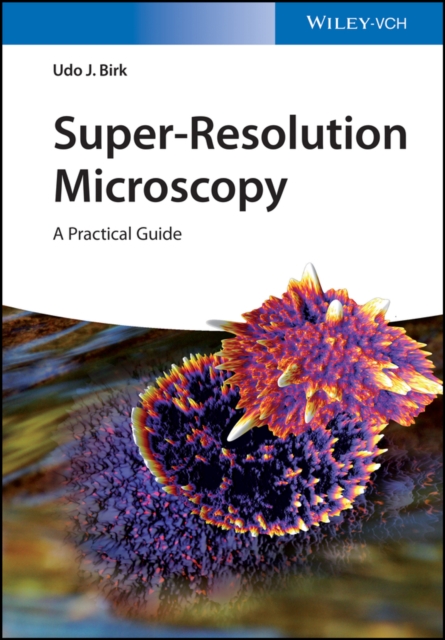
Super-resolution microscopy
This unique book on super-resolution microscopy techniques presents comparative, in-depth analyses of the strengths and weaknesses of the individual approaches. It was written for non-experts who need to understand the principles of super-resolution or who wish to use recently commercialized instruments as well as for professionals who plan to realize novel microscopic devices. Explaining the practical requirements in terms of hardware, software and sample preparation, the book offers a wealth of hands-on tips and practical tricks to get a setup running, provides invaluable help and support for successful data acquisition and specific advice in the context of data analysis and visualization. Furthermore, it addresses a wide array of transdisciplinary fields of applications. The author begins by outlining the joint efforts that have led to achieving super-resolution microscopy combining advances in single-molecule photo-physics, fluorophore design and fluorescent labeling, instrument design and software development. The following chapters depict and compare current main standard techniques such as structured illumination microscopy, single-molecule localization, stimulated emission depletion microscopy and multi-scale imaging including light-sheet and expansion microscopy. For each individual approach the experimental setups are introduced, the imaging protocols are provided and the various applications illustrated. The book concludes with a discussion of future challenges addressing issues of routine applications and further commercialization of the available methods. Guiding users in how to make choices for the design of their own experiments from scratch to promising application, this one-stop resource is intended for researchers in the applied sciences, from chemistry to biology and medicine to physics and engineering..
eBook

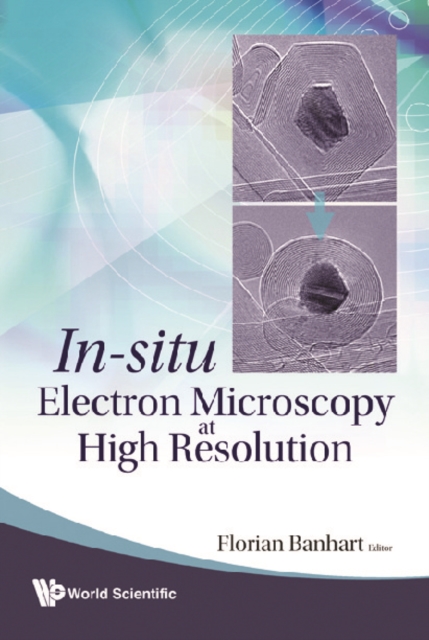
In-situ electron microscopy at high resolution
In-situ high-resolution electron microscopy is a modern and powerful technique in materials research, physics, and chemistry. In-situ techniques are hardly treated in textbooks of electron microscopy. Thus, there is a need to collect the present knowledge about the techniques and achievements of in-situ electron microscopy in one book. Since high-resolution electron microscopes are available in most modern laboratories of materials science, more and more scientists or students are starting to work on this subject.
eBook

High-Resolution Electron Microscopy
This book covers both practical and theoretical aspects of atomic resolution transmission electron microscopy. The discovery of the carbon nanotube, the three-dimensional imaging of the ribosome, and the imaging of a single foreign atom inside a thin crystal by energy-filtered transmission electron microscopy have all demonstrated the immense power of this technique. The recent development of aberration-correction devices has brought the spatial resolution of the method below one Angstrom. The emphasis throughout is on a clear presentation of fundamental concepts, and practical advice. The chapters review simple electron optics, phase contrast theory, coherence theory, and imaging theory for thin crystals. The multiple scattering theory is given in full, and the relationship between the various formulations (Bloch-wave, multislice, scattering matrix, Howie–Whelan equations, phase grating etc) is explained. Applications in biology and materials science are covered, with discussions of radiation damage, sample preparation, image processing and super-resolution, electron holography, and aberration correction. The theory of high-angle annular dark field Z-contrast imaging by scanning transmission electron microscopy is given in full. Additional chapters are devoted to electron sources and detectors, fault diagnosis, experimental methods and associated techniques such as channelling effects in X-ray microanalysis, microdiffraction, cathodoluminescence, environmental microscopy and electron energy-loss spectroscopy.
eBook

Biomedical electron microscopy
This comprehensive reference illustrates optimal preparation methods in biological electron microscopy compared with common methodological problems.Not only will the basic methodologies of transmission electron microscopy like fixation, microtomy, and microscopy be presented, but the authors also endeavor to illustrate more specialized techniques.
eBook
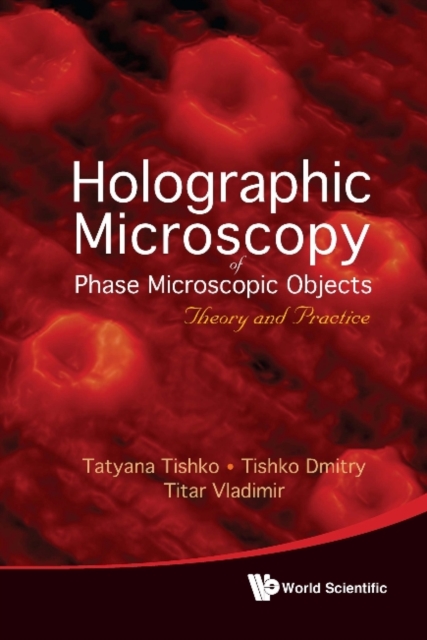
Holographic microscopy of phase microscopic objects
The book presents a clear and comprehensive review of the current status of the holographic microscopy with discussion of the positive and negative features of classical and holographic methods for solving the problem of three-dimesional (3D) imaging of phase microscopic objects. Classical and holographic methods of phase, interference and polarization contrast are discussed. Combination of the developed holographic methods with the methods of digital image processing allowed creating the digital holographic interference microscope (DHIM). The first 3D images of nativephase microscopic objects such as blood cells were obtained using the DHIM. The results of DHIM application for study of blood erythrocytes, thin films, micro-crystals are presented.
eBook

Fluorescence Microscopy—An Outline of Hardware, Biological Handling, and Fluorophore Considerations
Fluorescence microscopy has become a critical tool for researchers to understand biological processes at the cellular level. Micrographs from fixed and live-cell imaging procedures feature in a plethora of scientific articles for the field of cell biology, but the complexities of fluorescence microscopy as an imaging tool can sometimes be overlooked or misunderstood. This review seeks to cover the three fundamental considerations when designing fluorescence microscopy experiments: (1) hardware availability; (2) amenability of biological models to fluorescence microscopy; and (3) suitability of imaging agents for intended applications. This review will help equip the reader to make judicious decisions when designing fluorescence microscopy experiments that deliver high-resolution and informative images for cell biology.
Journal Article