
Catalogue Search | MBRL


Are you sure you want to remove the book from the shelf?

{{itemTitle}}
7
result(s) for
"Middle Ages, 843-1517"
Sort by:
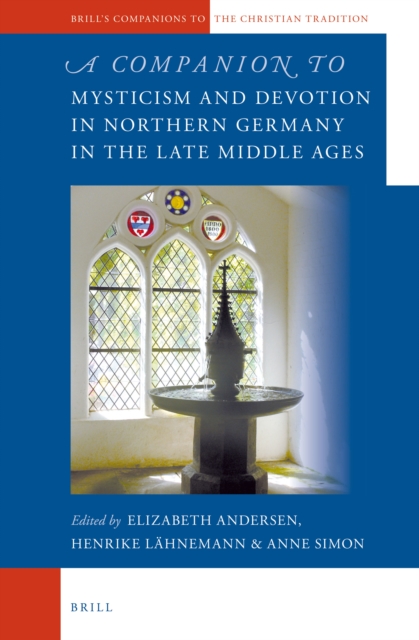
A Companion to Mysticism and Devotion in Northern Germany in the Late Middle Ages
The volume explores the hitherto uncharted late medieval religious landscape of Northern Germany. Through discussion of a rich, varied selection of mystical and devotional texts, also translated into English, a fascinating regional \"mystical culture\" with a far-reaching impact is revealed.
eBook

Unjust Seizure
Most scholarship in English on the political and social order of early medieval Europe concentrates on the Western Frankish regions. Warren Brown shifts the focus to the East, concentrating on conflicts and their resolutions to learn how a central authority could affect local societies in the Middle Ages. Brown delves into the rich archival materials of eighth- and ninth-century Bavaria, exploring how Bavarians handled conflicts both before and after the absorption of their duchy into the empire of Charlemagne. The ability to follow specific cases in remarkable detail allows Brown to depict the ways the conquered population reacted to the imposition of a new central authority; how that authority and its institutions were able to function in this far-flung outpost of Charlemagne's realm; and how the relationship between royal authority and local processes developed as the Frankish empire unraveled under Charlemagne's heirs. By drawing on the recent work of anthropologists and political scientists on topics such as dispute resolution and the dynamics of conquest and colonization, Brown considers issues larger than the procedures for handling conflict in the early Middle Ages: How could a ruler exercise power without the coercive resources available to the modern state? In what ways can a people respond to military conquest?
eBook
State and Society in the Early Middle Ages
This book, first published in 2000, is a pioneering study of politics and society in the early Middle Ages. Whereas it is widely believed that the source materials for early medieval Europe are too sparse to allow sustained study of the workings of social and political relationships on the ground, this book focuses on a uniquely well-documented area to investigate the basis of power. Topics covered include the foundation of monasteries, their relationship with the laity, and their role as social centres; the significance of urbanism; the control of land, the development of property rights and the organization of states; community, kinship and lordship; justice and dispute settlement; the uses of the written word; violence and the feud; and the development of political structures from the Roman empire to the high Middle Ages.
eBook

The Garden of Delights
In The Garden of Delights, Fiona J. Griffiths offers the first major study of the Hortus deliciarum, a magnificently illuminated manuscript of theology, biblical history, and canon law written both by and explicitly for women at the end of the twelfth century. In so doing she provides a brilliantly persuasive new reading of female monastic culture. Through careful analysis of the contents, structure, and organization of the Hortus, Griffiths argues for women's profound engagement with the spiritual and intellectual vitality of the period on a level previously thought unimaginable, overturning the assumption that women were largely excluded from the \"renaissance\" and \"reform\" of this period. As a work of scholarship that drew from a wide range of sources, both monastic and scholastic, the Hortus provides a witness to the richness of women's reading practices within the cloister, demonstrating that it was possible, even late into the twelfth century, for communities of religious women to pursue an educational program that rivaled that available to men. At the same time, the manuscript's reformist agenda reveals how women engaged the pressing spiritual questions of the day, even going so far as to criticize priests and other churchmen who fell short of their reformist ideals.Through her wide-ranging examination of the texts and images of the Hortus, their sources, composition, and function, Griffiths offers an integrated understanding of the whole manuscript, one which highlights women's Latin learning and orthodox spirituality. The Garden of Delights contributes to some of the most urgent questions concerning medieval religious women, the interplay of gender, spirituality, and intellectual engagement, to discussions concerning women scribes and writers, women readers, female authorship and authority, and the visual culture of female communities. It will be of interest to art historians, scholars of women's and gender studies, historians of medieval religion, education, and theology, and literary scholars studying questions of female authorship and models of women's reading.
eBook
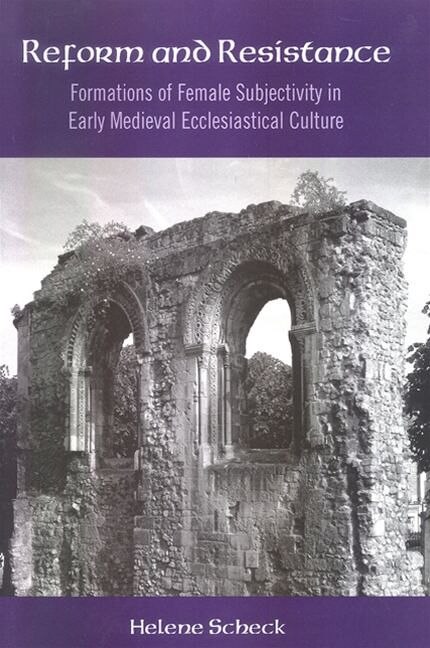
Reform and Resistance
Honorable Mention, 2010 First Book Prize presented by the
Society for Medieval Feminist Scholarship The early Middle
Ages were a vibrant period rich with possibility for both men and
women. Reform and Resistance explores the relationship between
gender and identity in early medieval Germanic societies, centering
mostly on competing perceptions of female subject formation in
times of conversion, reform, and resistance. While women played an
active role in the spread of Christianity during the Middle Ages,
their freedoms were often restricted by the Church during periods
of reform, when uniformity and conformity were important. Helene
Scheck's inquiry extends beyond one specific region or historical
moment through two centuries and three diverse Germanic regions:
Carolingian France, late Anglo-Saxon England, and Ottonian Saxony.
Each of these moments exhibits distinct yet interconnected stages
of conversion and reform, different stages of cultural amalgamation
out of which various possibilities for female subject formation
emerge. The book also connects with current conversations about the
interrelatedness of power, knowledge, and subjectivity, opening new
possibilities for the study of women in early ecclesiastical
cultures.
eBook

Kings, politics, and the right order of the world in German historiography c. 950-1150
The volume presents a new understanding of medieval historiography by examining the representation of society, politics and human behaviour in six historical writings from imperial Germany, one of the leading political and intellectual centres during the period c. 950-1150.
eBook
