
Catalogue Search | MBRL


Are you sure you want to remove the book from the shelf?

{{itemTitle}}
155
result(s) for
"Middle East -- Colonization"
Sort by:

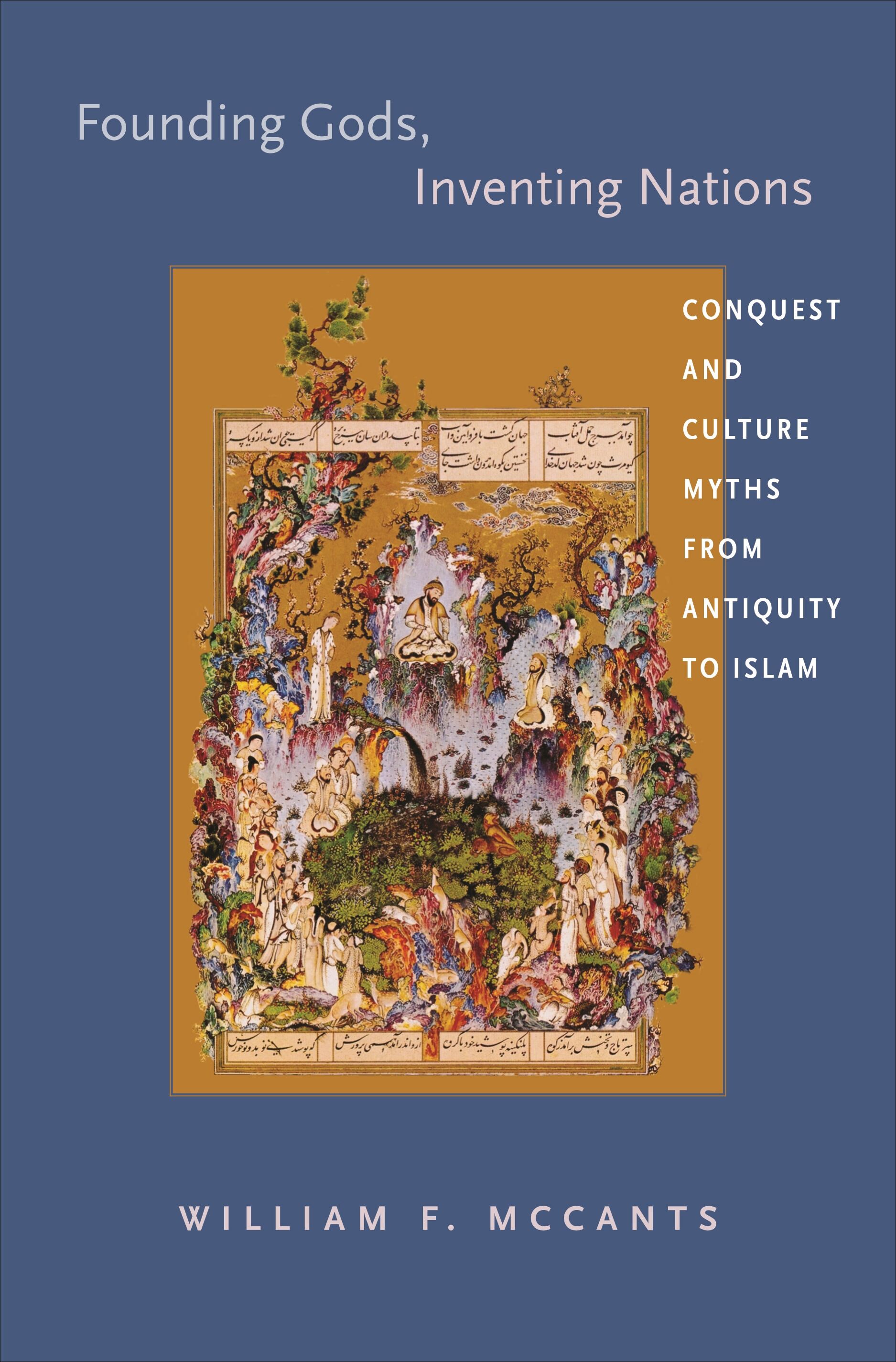
Founding gods, inventing nations
From the dawn of writing in Sumer to the sunset of the Islamic empire, Founding Gods, Inventing Nations traces four thousand years of speculation on the origins of civilization. Investigating a vast range of primary sources, some of which are translated here for the first time, and focusing on the dynamic influence of the Greek, Roman, and Arab conquests of the Near East, William McCants looks at the ways the conquerors and those they conquered reshaped their myths of civilization's origins in response to the social and political consequences of empire.
eBook


Debunking the myths of colonization
Debunking the Myths of Colonization. examines Salman Rushdie's thesis on the paradoxical nature of colonialism and its horrific impact on the psyche of the colonized. It probes Frantz Fanon's theories concerning the relationship between colonizers and colonized, and attempts to apply these theories to modern Arabic literature. Like Rushdi and Fanon, many Arab writers have embarked on a journey to the metropolis of their ex-colonial masters. Due to their encounter with English or French culture, they have written memoirs, poems, or fictions in which they have represented themselves and the 'other.' Their representations differ markedly according to their own make up as human beings, their class, education, experiences, and gender. Yet what brings them together is their love-hate relationship with the ex-colonizer. In the case of the Palestinian writers, however, there is only bitterness and bewilderment at Israel as a colonizing power in the 21st century and its Jewish citizens, who were once victims in Europe but now have turned into victimizers.
eBook

Apartheid in Palestine : hard laws and harder experiences
\"There are more than two sides in the conflict between Palestine and Israel. There are millions. Millions of lives, voices, stories behind the enduring struggle in Israel and Palestine. Yet, the easy binary of Palestine vs. Israel so often relied upon for context in media reports effectively silences the multitudinous lived experiences at the heart of this strife. Ghada Ageel sought leading experts from the margins--Palestinian and Israeli, academic and activist--to gather stories that humanize the historic processes of occupation, displacement, colonization, and, most controversially, apartheid. Historians, scholars and students of colonialism and Israel-Palestine studies, and anyone interested in more nuanced debate, will want to read this book.\"-- Provided by publisher.
Book

THE HISTORICAL STATE, LOCAL COLLECTIVE ACTION, AND ECONOMIC DEVELOPMENT IN VIETNAM
This study examines how the historical state conditions long-run development, using Vietnam as a laboratory. Northern Vietnam (Dai Viet) was ruled by a strong, centralized state in which the village was the fundamental administrative unit. Southern Vietnam was a peripheral tributary of the Khmer (Cambodian) Empire, which followed a patron-client model with more informal, personalized power relations and no village intermediation. Using a regression discontinuity design, the study shows that areas exposed to Dai Viet administrative institutions for a longer period prior to French colonization have experienced better economic outcomes over the past 150 years. Rich historical data document that in Dai Viet villages, citizens have been better able to organize for public goods and redistribution through civil society and local government. We argue that institutionalized village governance crowded in local cooperation and that these norms persisted long after the original institutions disappeared.
Journal Article

The black hole of empire
When Siraj, the ruler of Bengal, overran the British settlement of Calcutta in 1756, he allegedly jailed 146 European prisoners overnight in a cramped prison. Of the group, 123 died of suffocation. While this episode was never independently confirmed, the story of \"the black hole of Calcutta\" was widely circulated and seen by the British public as an atrocity committed by savage colonial subjects.The Black Hole of Empirefollows the ever-changing representations of this historical event and founding myth of the British Empire in India, from the eighteenth century to the present. Partha Chatterjee explores how a supposed tragedy paved the ideological foundations for the \"civilizing\" force of British imperial rule and territorial control in India.
Chatterjee takes a close look at the justifications of modern empire by liberal thinkers, international lawyers, and conservative traditionalists, and examines the intellectual and political responses of the colonized, including those of Bengali nationalists. The two sides of empire's entwined history are brought together in the story of the Black Hole memorial: set up in Calcutta in 1760, demolished in 1821, restored by Lord Curzon in 1902, and removed in 1940 to a neglected churchyard. Challenging conventional truisms of imperial history, nationalist scholarship, and liberal visions of globalization, Chatterjee argues that empire is a necessary and continuing part of the history of the modern state.
Some images inside the book are unavailable due to digital copyright restrictions.
eBook

Mitogenomes illuminate the origin and migration patterns of the indigenous people of the Canary Islands
The Canary Islands' indigenous people have been the subject of substantial archaeological, anthropological, linguistic and genetic research pointing to a most probable North African Berber source. However, neither agreement about the exact point of origin nor a model for the indigenous colonization of the islands has been established. To shed light on these questions, we analyzed 48 ancient mitogenomes from 25 archaeological sites from the seven main islands. Most lineages observed in the ancient samples have a Mediterranean distribution, and belong to lineages associated with the Neolithic expansion in the Near East and Europe (T2c, J2a, X3a…). This phylogeographic analysis of Canarian ancient mitogenomes, the first of its kind, shows that some lineages are restricted to Central North Africa (H1cf, J2a2d and T2c1d3), while others have a wider distribution, including both West and Central North Africa, and, in some cases, Europe and the Near East (U6a1a1, U6a7a1, U6b, X3a, U6c1). In addition, we identify four new Canarian-specific lineages (H1e1a9, H4a1e, J2a2d1a and L3b1a12) whose coalescence dates correlate with the estimated time for the colonization of the islands (1st millennia CE). Additionally, we observe an asymmetrical distribution of mtDNA haplogroups in the ancient population, with certain haplogroups appearing more frequently in the islands closer to the continent. This reinforces results based on modern mtDNA and Y-chromosome data, and archaeological evidence suggesting the existence of two distinct migrations. Comparisons between insular populations show that some populations had high genetic diversity, while others were probably affected by genetic drift and/or bottlenecks. In spite of observing interinsular differences in the survival of indigenous lineages, modern populations, with the sole exception of La Gomera, are homogenous across the islands, supporting the theory of extensive human mobility after the European conquest.
Journal Article

Fecal carriage of extended-spectrum β-lactamase-producing, and carbapenem-resistant gram-negative bacteria among hemodialysis patients in a palestinian tertiary care hospital
The study explores the presence of extended-spectrum β-lactamase-producing Gram-negative bacteria (ESBL-GNB) and carbapenem-resistant Gram-negative bacteria (CR-GNB) in the stool of hemodialysis patients, reflecting a significant concern amid rising antibiotic resistance. This cross-sectional study included 137 outpatients conducted from October to December 2023 at An-Najah National University Hospital. Samples were incubated on appropriate MacConkey-based agar for bacterial analysis, and potential risk factors were evaluated using logistic regression. Out of 137 stool samples, 116 (84.7%) were positive for ESBL-producing bacteria, and 8 (5.8%) for carbapenem-resistant bacteria. Age of the patients (aOR: 1.068; p: 0.012), hypertension (aOR: 15.582; p: 0.0107), ischemic heart disease (aOR: 5.381; p: 0.040), the timing of the dialysis shift (aOR: 8.864; p: 0,005), and the level of blood urea nitrogen (aOR: 1.049; p: 0.045) were independently associated with ESBL-GNB colonization. Carbapenem-resistant bacteria colonization presented an inverse association with ischemic heart disease (aOR: 0.052; p: 0.041). This study highlights a significant prevalence of ESBL-GNB colonization linked with age and comorbidities such as hypertension. An inverse association of CR-GNB colonization with ischemic heart disease was observed, suggesting a complex interplay between patient health status and antibiotic-resistant bacterial colonization.
Journal Article

From yellow deserts to white mountains: confirmed occurrence and genetic affiliation of Psammophis schokari (Forskål, 1775) (Serpentes, Psammophiidae) in Lebanon
The ecological and biogeographic limits of arid-adapted reptiles in the Eastern Mediterranean remain poorly understood. Here, we document the first confirmed occurrence and genetic affiliation of the desert racer, Psammophis schokari (Forskål, 1775), in Lebanon, representing the northern limit of its confirmed distribution in the western Levant, where its presence has long remained uncertain. Seventeen records from 11 localities (17–1,148 m a.s.l.) reveal that the species occupies a wide ecological gradient encompassing lowland agricultural areas, semi-arid foothills, and even seasonally snow-covered sites. Mitochondrial cytochrome b sequences place the Lebanese populations within the widespread “Middle Eastern lineage”, yet their haplotypes show a closer affinity to those from North Africa than to currently sampled populations from the southern Levant. This pattern is consistent with historical Afro–Levantine connectivity and suggests that Lebanon may have been reached during one or more Pleistocene dispersal/colonization episodes from northern Africa. The frequent occurrence of individuals in non-desert habitats and even during winter months demonstrates a high degree of ecological flexibility and tolerance to cooler Mediterranean conditions. Our results thus highlight the ability of P. schokari to persist and expand beyond typical desert environments and thereby shedding light on the northern biogeographic limits of arid-adapted snakes in the Middle East. This study fills a significant distributional gap for the genus Psammophis in the Levant and underscores the need for broader sampling to clarify the species’ past colonization routes and evolutionary history across the region.
Journal Article