
Catalogue Search | MBRL


Are you sure you want to remove the book from the shelf?

{{itemTitle}}
283
result(s) for
"Middle East -- Intellectual life"
Sort by:

Levantine entanglements : cultural productions, long-term changes and globalizations in the eastern Mediterranean
\"This cross-disciplinary volume makes the case for the Levant as a unit of analysis for the study of cultural production and change over the long-term in the Eastern Mediterranean\"-- Provided by publisher.
Book

Modern Middle Eastern Jewish Thought
This volume opens the canon of modern Jewish thought to the all too often overlooked writings of Jews from the Arab East, from the close of the nineteenth century to the middle of the twentieth. Whether they identified as Sephardim, Mizrahim, anticolonialists, or Zionists, these thinkers engaged the challenges and transformations of Middle Eastern Jewry in this decisive period. Moshe Behar and Zvi Ben-Dor Benite present Jewish culture and politics situated within overlapping Arabic, Islamic, and colonial contexts. The editors invite the reader to reconsider contemporary evocations of Levantine, Mizrahi, and Arab Jewish identities against the backdrop of writings by earlier Middle Eastern Jewish intellectuals who critically assessed or contested the implications of Western presence and Western Jewish presence in the Middle East; religion and secularization; and the rise of nationalism, communism, and Zionism, as well as the State of Israel.
eBook


Intellectuals and Civil Society in The Middle East
What is the nature of intellectual activity in the Middle East, and what is its role in politics and society? While much scholarly attention has been given to the intelligentsia in the West, a comprehensive analysis of the social role of intellectuals in the Middle East has until now been lacking. This new book seeks to fill this gap, providing an overview of the role of influential thinkers in public life in the Middle East, and the impact they have had upon social, political and cultural spheres in the region. Covering a diverse range of key thinkers on the Middle East from Edward Said, Mohamed Arkoun and Halim Barakat to Abd al-Rahman al-Kawakibi and Abd al-Ghani al-Nabulusi, the book examines intellectuals' connections to social movements, 'street politics' and civil society, and democracy and its prospects in the region. This is an important new contribution to the literature on Middle Eastern societies and politics.
eBook

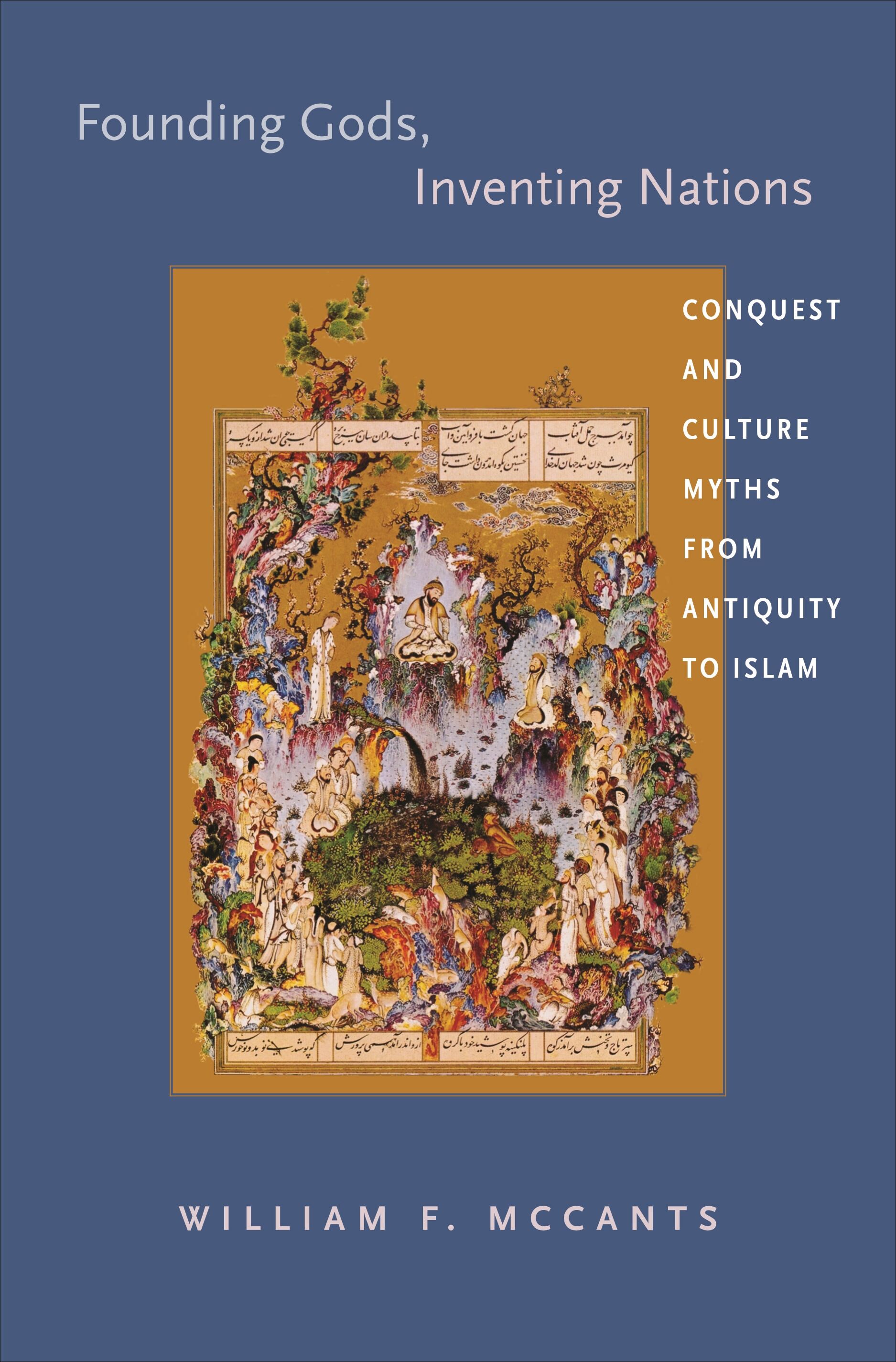
Founding gods, inventing nations
From the dawn of writing in Sumer to the sunset of the Islamic empire, Founding Gods, Inventing Nations traces four thousand years of speculation on the origins of civilization. Investigating a vast range of primary sources, some of which are translated here for the first time, and focusing on the dynamic influence of the Greek, Roman, and Arab conquests of the Near East, William McCants looks at the ways the conquerors and those they conquered reshaped their myths of civilization's origins in response to the social and political consequences of empire.
eBook


Islamic civilization in thirty lives: the first 1,000 years
The religious thinkers, political leaders, law-makers, writers and philosophers of the early Muslim world helped to shape the 1,400-year-long development of today's secondlargest world religion. But who were these people? What do we know of their lives, and the ways in which they influenced their societies? Chase F. Robinson draws on the long tradition in Muslim scholarship of commemorating in writing the biographies of notable figures, but weaves these ambitious lives together to create a rich narrative of early Islamic civilization, from the Prophet Muhammad to fearsome Tamerlane. Beginning in Islam's heartland, Mecca, we move across Arabia to follow Islam's journey across North Africa, as far as Spain in the West, and eastwards through Central and East Asia; we see the rise and fall of Islamic states through the political and military leaders working to secure peace or expand their power, and, within this political climate, the development of Islamic law, scientific thought and literature through the words of the scholars who devoted themselves to these pursuits. Alongside the famous characters who coloured this landscape, including Muhammad's controversial cousin, 'Ali; the first Sultan of Egypt, Saladin; and the poet Rumi, the reader will also meet less wellknown figures, such as Shajar al-Durr, slave-turned-Sultana of Egypt, and Ibn Fadlan, whose travels in Eurasia brought first-hand accounts of the Volka Vikings to the Abbasid Caliph.
eBook


The Barber of Damascus
This book is about a barber, Shihab al-Din Ahmad Ibn Budayr, who shaved and coiffed, and probably circumcised and healed, in Damascus in the 18th century. The barber may have been a \"nobody,\" but he wrote a history book, a record of the events that took place in his city during his lifetime. Dana Sajdi investigates the significance of this book, and in examining the life and work of Ibn Budayr, uncovers the emergence of a larger trend of history writing by unusual authors-people outside the learned establishment-and a new phenomenon: nouveau literacy.
The Barber of Damascus offers the first full-length microhistory of an individual commoner in Ottoman and Islamic history. Contributing to Ottoman popular history, Arabic historiography, and the little-studied cultural history of the 18th century Levant, the volume also examines the reception of the barber's book a century later to explore connections between the 18th and the late 19th centuries and illuminates new paths leading to the Nahda, the Arab Renaissance.
eBook