
Catalogue Search | MBRL


Are you sure you want to remove the book from the shelf?

{{itemTitle}}
24
result(s) for
"Middle East Buildings, structures, etc"
Sort by:

Rum Seljuq Architecture, 1170-1220
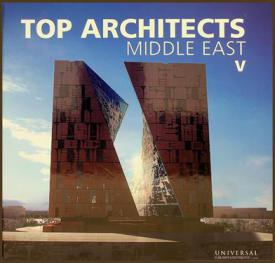
This lavishly illustrated volume presents the major surviving monuments of the early period of the Rum Seljuqs, the first major Muslim dynasty to rule Anatolia. A much-needed overview of the political history of the dynasty provides the context for the study of the built environment which follows. The book addresses the most significant monuments from across the region: a palace, a minaret and a hospital are studied in detail, along with an overview of the decorative portals attached to a wide array of different building types. The case studies are used to demonstrate the key themes and processes of architectural synthesis and development that were under way at the time, and how they reflect the broader society.
eBook

Architecture in context : designing in the Middle East
Architecture in Context: Designing in the Middle East provides a foundation for understanding the critical context of architecture and design in this region. It does this by: presenting a practical overview of architectural know-how in the Middle East, and its potential for cultivating a sense of place introducing local architectural vocabularies and styles, and how they can still be reactivated in contemporary design exploring the cultural and contextual meaning of forms as references that may influence contemporary architecture discussing important discourses and trends in architecture that allow a rethinking of the current global/local dichotomy. Highly illustrated, the book covers architecture and design in North Africa, the Levant, the Gulf, and Turkey, Iran and Iraq. -- Publisher's website.
Book

Persian historic urban landscapes : interpreting and managing Maibud over 6000 years
Persian cities are part of a corridor of civilisation with settlements straddling thousands of years. Taking Maibud as a case study, Eisa Esfanjary traces the evolution of ancient settlements chronologically, thematically and methodologically.
eBook

The House at Ujazdowskie 16
In a turn-of-the-century, once elegant building at 16 Ujazdowskie Avenue in the center of Warsaw, 10 Jewish families began reconstructing their lives after the Holocaust. While most surviving Polish Jews were making their homes in new countries, these families rebuilt on the rubble of the Polish capital and created new communities as they sought to distance themselves from the memory of a painful past. Based on interviews with family members, intensive research in archives, and the families' personal papers and correspondence, Karen Auerbach presents an engrossing story of loss and rebirth, political faith and disillusionment, and the persistence of Jewishness.
eBook

European Women in Persian Houses
During the course of the 19th century, a relatively modern medium entered the private space of Iranian houses of the wealthy and became a popular feature of interior design in Persia. This was print media - lithographed images on paper and postcards - and their subject was European women. These idealised images adorned houses across the country throughout the Qajar period and this trend was particularly fashionable in Isfahan and mural decorations at the entrance gate of the Qaysarieh bazaar. The interest in images of Western women was an unusual bi-product of Iran's early political and cultural encounters with the West. In a world where women were rarely seen in public and, even then, were heavily veiled, the notion of European women dressed in - by Iranian standards - elegant and revealing clothing must have sparked much curiosity and some titillation among well-to-do merchants and aristocrats who felt the need to create some association, however remote, with these alien creatures. The introduction of such images began during the Safavid era in the 17th century with frescoes in royal palaces. This spread to other manifestations in the form of tile work and porcelain in the Qajar era, which became a testament to the popularity of this visual phenomenon among Iran's urban elite in the 19th and early 20th century. Parviz Tanavoli, the prominent Iranian artist and sculptor, here brings together the definitive collection of these unique images. European Women in Persian Houses will be essential for collectors and enthusiasts interested in Iranian art, culture and social history.
eBook

Architecture and the Turkish City
Architecture and urban planning have always been used by political regimes to stamp their ideologies upon cities, and this is especially the case in the modern Turkish Republic. By exploring Istanbul's modern architectural and urban history, Murat Gul highlights the dynamics of political and social change in Turkey from the late-Ottoman period until today. Looking beyond pure architectural styles or the physical manifestations of Istanbul's cultural landscape, he offers critical insight into how Turkish attempts to modernise have affected both the city and its population. Charting the diverse forces evident in Istanbul's urban fabric, the book examines late Ottoman reforms, the Turkish Republic's turn westward for inspiration, Cold War alliances and the AK Party's reaffirmation of cultural ties with the Middle East and the Balkans. Telltale signs of these moments - revivalist architecture drawing on Ottoman and Seljuk styles, 1930s Art Deco, post-war International Style buildings and the proliferation of shopping malls, luxurious gated residences and high-rise towers, for example - are analysed and illustrated in extensive detail.Connecting this rich history to present-day Istanbul, whose urban development is characterised anew by intense social stratification, the book will appeal to researchers of Turkey, its architecture and urban planning.
eBook