
Catalogue Search | MBRL


Are you sure you want to remove the book from the shelf?

{{itemTitle}}
865
result(s) for
"Middle East Persian Gulf States."
Sort by:


Sustainable Development
With growing evidence of unsustainable use of the world's resources, such as hydrocarbon reserves, and related environmental pollution, as in alarming climate change predictions, sustainable development is arguablytheprominent issue of the 21st century. This volume gives a wide ranging introduction focusing on the arid Gulf region, where the challenges of sustainable development are starkly evident. The Gulf relies on non-renewable oil and gas exports to supply the world's insatiable CO2 emitting energy demands, and has built unsustainable conurbations with water supplies dependent on energy hungry desalination plants and deep aquifers pumped beyond natural replenishment rates.Sustainable Developmenthas an interdisciplinary focus, bringing together university faculty and government personnel from the Gulf, Europe, and North America -- including social and natural scientists, environmentalists and economists, architects and planners -- to discuss topics such as sustainable natural resource use and urbanization, industrial and technological development, economy and politics, history and geography.
eBook
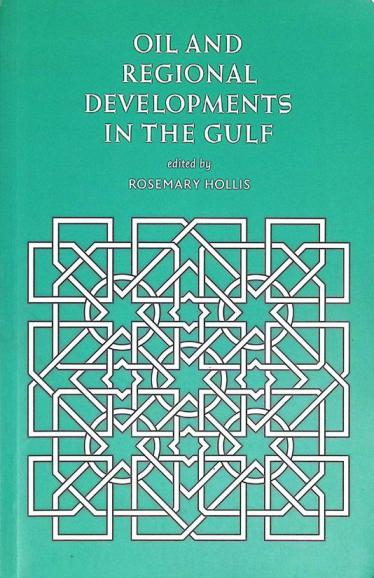
Oil and regional developments in the Gulf
\"Oil and Regional Developments in the Gulf\" is a critical examination of the symbiotic relationship between hydrocarbon wealth and political stability in the Persian Gulf. Edited by Dr. Rosemary Hollis, a leading authority on Middle East projects at Chatham House, the volume brings together experts to analyze how the fluctuation of oil prices dictates the domestic and foreign policies of the Gulf monarchies. The work focuses on the period of rapid transformation in the late 20th and early 21st centuries, exploring whether the \"rentier state\" model can survive the dual pressures of global market volatility and internal demands for social and political reform.
BOOK

The future of labour market reform in the Gulf region
As governments across the GCC strive to implement labour policies which accelerate the transition to \"post oil\" knowledge-based economies, this volume provides insights into the size of this challenge, along with analysis of progress to date. With a comprehensive coverage of the region (each GCC member is included in some respect), this new work provides unique insights into how the domestic policy agenda is shifting the region's moribund labour markets inexorably towards greater productivity, positivity, sustainability and efficiency.
eBook

China and the gulf cooperation council countries
This book examines China's relations with member states of the Gulf Cooperation Council.It highlights the depth of China's ties with the region bilaterally and multilaterally on a five-dimensional approach: political relations, trade relations, energy security, security cooperation, and cultural relations.
eBook


Human capital and the future of the Gulf
Extensive efforts to develop human capital are under way in the United Arab Emirates, Saudi Arabia, and elsewhere in the Gulf, and they are increasingly setting expectations for how people ought to behave socially and economically that are in tension with how they are expected to behave politically.
eBook

The foreign policy of smaller Gulf states : size, power, and regime stability in the Middle East
\"This book studies how smaller Gulf states managed to increase their influence in the Middle East, often times capitalising on their smallness as a foreign policy tool. By establishing a novel theoretical framework (the complex model of size), this study identifies specific ways in which material and perceptual smallness affect power, identity, regime stability and leverage in international politics. The small states of the Gulf (Bahrain, Kuwait, Oman, Qatar, and the United Arab Emirates) managed to build up considerable influence in regional politics in the last decade, although their size is still considered an essential, irresolvable weakness, which makes them secondary actors to great powers like Saudi Arabia or Iran. Breaking down explicit and implicit biases towards largeness, the book examines specific case studies related to foreign and security policy behaviour, including the Gulf wars, the Arab Uprisings, the Gulf rift, and the Abraham Accords. Analysing the often neglected small Gulf states, the volume is an important contribution to international relations theory making it a key resource for students and academics interested in small state studies, Gulf studies and political science of the Middle East\"-- Provided by publisher.
Book
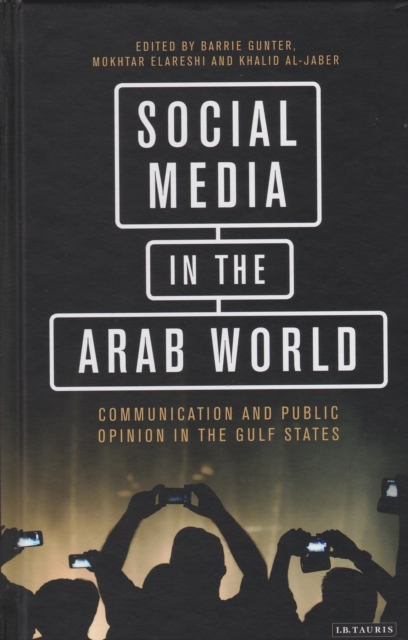
Social Media in the Arab World
Following the Arab Spring, the use of social media has become instrumental in organising activist movements and spreading political dissent in the Middle East. New online behaviours have transformed traditional communication channels, enabling young people of all backgrounds to feel politically empowered. But now that spring has turned to winter, what are the long-term implications of internet activism in the region? Social Media in the Arab World provides a unique insight into the role of online communications as a force for change in the Gulf States. Featuring examples as diverse as neo-patrimonial politics in Saudi Arabia and the ways an online presence affects the status of women in Kuwait, the chapters examine shifts in the political, social and religious identities of citizens as a result of increased digital activism. With contributions from a variety of inter-disciplinary experts, this wide-ranging study examines the consequences of changing power dynamics brought about by popular social media. In doing so, this book offers an original perspective on the long-term implications of internet usage in the Arab world and is essential reading for students and researchers working across the region.
eBook