
Catalogue Search | MBRL


Are you sure you want to remove the book from the shelf?

{{itemTitle}}
2,046
result(s) for
"Middle East Relations Egypt."
Sort by:

Peripheral concerns : urban development in the Bronze Age southern Levant
\"Peripheral Concerns examines the influence of one 'core' region of the ancient Near Eastern world--Egypt--on urban development in the southern Levant in the Early and Middle Bronze Ages, with emphasis on the relative stability and sustainability of this development in each era. The study utilizes a very broad scale 'macro' approach to examine urban development using core-periphery theories, specifically in regard to southern Levantine-Egyptian interactions. While many studies examine urban development in both the Early Bronze Age and the Middle Bronze Age, few compare this phenomenon in the two periods. Likewise, there are few studies of urban development in the southern Levant that compare contemporary Egyptian policies in that region to those in Nubia, despite the fact that Egyptian activities linked the eastern Mediterranean, the Nile Valley, and Nubia into one interactive system. The broad chronological and geographic framework utilized in this study therefore allows for a new approach to urban development in the southern Levant\"--Provided by publisher.
Book
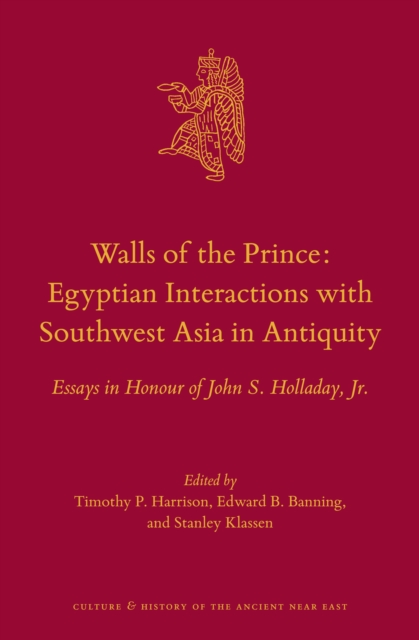
Walls of the prince : Egyptian interactions with Southwest Asia in antiquity : essays in honour of John S. Holladay, Jr
Walls of the Prince offers a series of articles that explore Egyptian interactions with Southwest Asia during the second and first millennium BCE, including long-distance trade in the Middle Kingdom, the itinerary of Thutmose III's great Syrian campaign, the Amman Airport structure, anthropoid coffins at Tell el-Yahudiya, Egypt's relations with Israel in the age of Solomon, Nile perch and other trade with the southern Levant and Transjordan in the Iron Age, Saite strategy at Mezad Hashavyahu, and the concept of resident alien in Late Period Egypt. These are complemented by methodological and typological studies of data from the archaeological investigations at Tell al-Maskhuta, the Wadi Tumilat, and Mendes in the eastern Nile delta. Together, they reflect the diverse range of Professor Holladay's long and distinguished scholarly career.
eBook


Walls of the Prince
Walls of the Prince offers a series of articles that explore Egyptian interactions with Southwest Asia during the second and first millennium BCE, reflecting the diverse range of Professor Holladay's long and distinguished scholarly career.
eBook


Berenike and the ancient maritime spice route
The legendary overland silk road was not the only way to reach Asia for ancient travelers from the Mediterranean. During the Roman Empire’s heyday, equally important maritime routes reached from the Egyptian Red Sea across the Indian Ocean. The ancient city of Berenike, located approximately 500 miles south of today’s Suez Canal, was a significant port among these conduits. In this book, Steven E. Sidebotham, the archaeologist who excavated Berenike, uncovers the role the city played in the regional, local, and “global” economies during the eight centuries of its existence. Sidebotham analyzes many of the artifacts, botanical and faunal remains, and hundreds of the texts he and his team found in excavations, providing a profoundly intimate glimpse of the people who lived, worked, and died in this emporium between the classical Mediterranean world and Asia.
eBook


The international politics of the middle east
The international politics of the Middle East fills a major gap in the field of middle eastern political studies by combining international relations theory with concrete case studies. It will be of immense benefit to students of middle eastern politics, international relations and comparative politics. The book begins with an overview of the rules and features of the middle east regional system - the arena in which the local states, including Egypt, Turkey, Israrel and Arab states od Syria, Jordan and Iraq, operate. It goes on to analyse foreign policy-making in key states, illustrating how systematic determinants contrain this policy-making, and how these contraints are dealt with in distinctive ways depending on particular domsetic features of the individual states. Finally, the book goes on to look at the outcomes of state policies by examining several major conflicts including the Arab-Israeli conflict and the Gulf War, and the system of regional alignment. The book assesses the impact of international pentrartion in the region, including the hsitorica reasons behind the formation of the regional state system. It also analyses the continued role of the external great powers, such as the United States and the former Soviet Union and explains the process by which the region has besome incorporated into the global capitalist market.
eBook

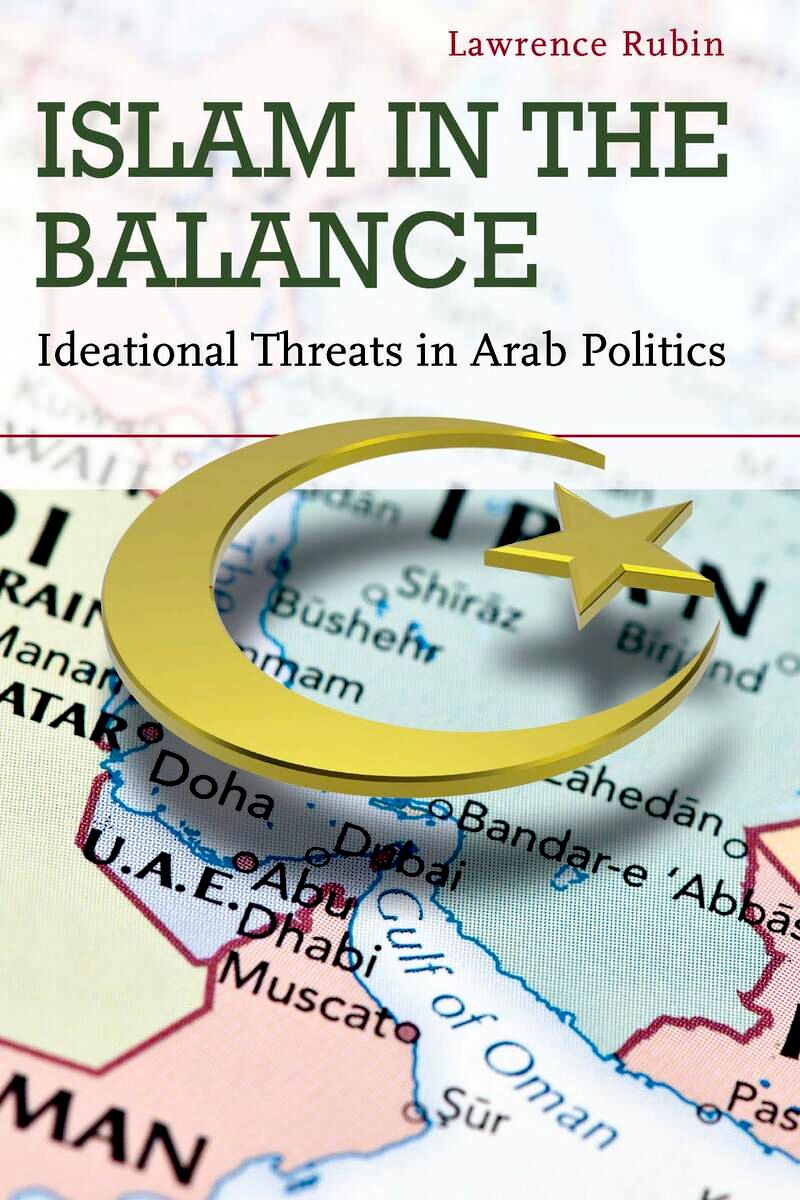
Islam in the Balance
Islam in the Balance: Ideational Threats in Arab Politics is an analysis of how ideas, or political ideology, can threaten states and how states react to ideational threats. It examines the threat perception and policies of two Arab Muslim majority states, Egypt and Saudi Arabia, in response to the rise and activities of two revolutionary \"Islamic states,\" established in Iran (1979) and Sudan (1989). Using these comparative case studies, the book provides important insight about the role of religious ideology for the international and domestic politics of the Middle East and, in doing so, advances our understanding of how, why, and when ideology affects threat perception and state policy. Rubin makes clear that transnational ideologies may present a greater and more immediate national security threat than shifts in the military balance of power: first because ideology, or ideational power, triggers threat perception and affects state policy; second because states engage in ideational balancing in response to an ideological threat. The book has significant implications for international relations theory and engages important debates in comparative politics about authoritarianism and Islamic activism. Its findings about how an Islamist regime or state behaves will provide vital insight for policy creation by the US and its Middle East allies should another such regime or state emerge.
eBook