
Catalogue Search | MBRL


Are you sure you want to remove the book from the shelf?

{{itemTitle}}
126,307
result(s) for
"Midwifery"
Sort by:

Empowering decision-making in midwifery : a global perspective
Decision-making pervades all aspects of midwifery practice across the world. Midwifery is informed by a number of decision-making theories, but it is sometimes difficult to marry these theories with practice. This book provides a comprehensive exploration of decision-making for midwives irrespective of where in the world you practice or in which model of care.
Book

Cutting through the noise : why whānau-centred midwifery is not erasing women
Concerns the Te Tatau o Te Whare Kahu — Midwifery Council of NZ (MCNZ) revised midwifery scope of practice currently awaiting sign-off from the Minister of Health. Emphasises its new focus on whānau, including transgender and non-binary people, rather than individual women/mothers and babies as the key relationship in care provision. Responds to the reaction of some trans-exclusionary groups who have branded the changes as an attempt to erase women from midwifery practice. Source: National Library of New Zealand Te Puna Matauranga o Aotearoa, licensed by the Department of Internal Affairs for re-use under the Creative Commons Attribution 3.0 New Zealand Licence.
Journal Article


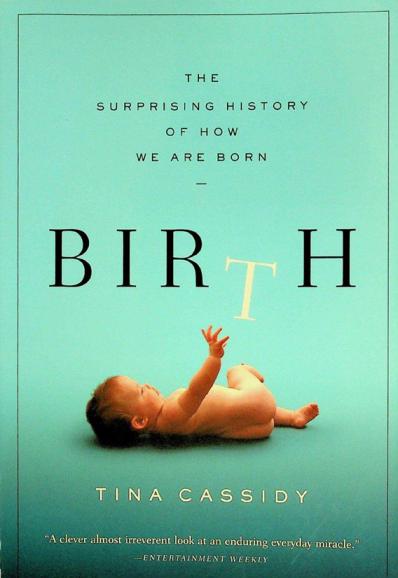
Birth : the surprising history of how we are born
Tina Cassidy describes her grandmother's, her mother's, and her own experiences giving birth, highlighting how the birthing process has changed throughout history and exploring the cultural history of how and why people are born the way they are.
Book

Mrs Stone & Dr Smellie : eighteenth-century midwives and their patients
How did midwives deliver women in the past? How did they cope with problems such as unnatural presentations, haemorrhage, miscarriage, and stillbirths? Were lives being prolonged and risks diminished? Midwifery case notes offer a considerable source of evidence, which, when used with care and imagination, help answer these questions. 'Mrs Stone & Dr Smellie' demonstrates this in a fascinating way by analysing the work of two well-known midwives together with 22 of their contemporaries. Sarah Stone's 'A Complete Practice of Midwifery' is probably unique in providing a female midwife's perspective on childbirth in provincial England during the eighteenth century. It provides a detailed, albeit selective, account of the problems faced by midwives, what they could do for their patients, and how likely they were to succeed. William Smellie (1697-1763) occupies a pivotal position in the history of midwifery. His case notes detail the problems he faced, the people he dealt with, how he combined domiciliary clinical practice with advanced instruction, and the way in which he presented his work to a wider community for their enlightenment. -- Publisher's description.
Book


Midwifery, childbirth and the media
Bringing together international scholars and practitioners, this succinct volume offers a cross-disciplinary discussion regarding the role of media in childbirth, midwifery and pregnancy representation. One chapter critiques the provision and dissemination of health information and promotional materials in a suburban antenatal clinic, while others are devoted to specific forms of media - television, the press, social media - looking at how each contribute to women's perceptions and anxieties with regard to childbirth.
Book

P6.13 Midwives in schools: a strategy for increasing sti knowledge and awareness among young people in chile
IntroductionIn Chile, sexually transmitted infections (STIs) are a public health problem and require a comprehensive approach for effective control. Although the provision of clinical services has improved; the incidence and prevalence of STIs such as HIV, syphilis and gonorrhoea have remained stable over the last decade. In this study, we investigated healthcare providers’ (HCP) understanding of patients’ perceptions of STIs and explored which strategies might improve STI control locally.Methods48 semi-structured face-to-face interviews were conducted with HCP. A third of the interviews were transcribed verbatim and translated from Spanish to English for thematic analysis, which followed an inductive approach based on grounded theory. Following the identification of themes, remaining interviews were coded utilising a method of constant comparison to highlight concordance and dissonance of participant views.ResultsParticipants perceived that the majority of patients were not concerned about STIs other than HIV, as campaigns are regularly launched in Chile principally focused on improving HIV awareness. Participants also recognised that symptoms are the primary impetus for patients attending health services and they are less likely to attend for STI prevention. However, HCP in this study also highlighted their work in schools which focuses on primary prevention by improving the sexual health knowledge of young people. There was strong agreement by participants that this was the most appropriate strategy to disseminate STI information to this cohort. Participants proposed that midwives could play a key role by working closely with young people at schools as part of a comprehensive sexual health educational program.ConclusionWe recommend strengthening STI control through continuation of existing activities at PHC centres and enhancing current interventions in schools through a greater investment of resources focused on improving the sexual health literacy of Chilean young people.
Journal Article