
Catalogue Search | MBRL


Are you sure you want to remove the book from the shelf?

{{itemTitle}}
10
result(s) for
"Migration, Internal -- Southern States -- History -- 20th century"
Sort by:

Leaving the South : border crossing narratives and the remaking of Southern identity
\"Millions of southerners left the South in the twentieth century in a mass migration that has, in many ways, rewoven the fabric of American society on cultural, political, and economic levels. Because the movements of southerners--and people in general--are controlled not only by physical boundaries marked on a map but also by narratives that define movement, narrative is central in building and sustaining borders and in breaking them down. In Leaving the South: Border Crossing Narratives and the Remaking of Southern Identity, author Mary Weaks-Baxter analyzes narratives by and about those who left the South and how those narratives have remade what it means to be southern. Drawing from a broad range of narratives, including literature, newspaper articles, art, and music, Weaks-Baxter outlines how these displacement narratives challenged concepts of southern nationhood and redefined southern identity. Close attention is paid to how depictions of the South, particularly in the media and popular culture, prompted southerners to leave the region and changed perceptions of southerners to outsiders as well as how southerners saw themselves. Through an examination of narrative, Weaks-Baxter reveals the profound effect gender, race, and class have on the nature of the migrant's journey, the adjustment of the migrant, and the ultimate decision of the migrant either to stay put or return home, and connects the history of border crossings to the issues being considered in today's national landscape.\" -- Provided by publisher.
Book

The southern diaspora : how the great migrations of Black and White Southerners transformed America
Talks about the southern exodus and its impact on American life. Between 1900 and the 1970s, twenty million southerners migrated north and west. Weaving together for the first time the histories of black and white migrants, James N. Gregory traces their paths and experiences in a comprehensive new study that demonstrates how this regional diaspora reshaped America by \"\"southernizing\"\" communities and transforming important cultural and political institutions. Challenging the image of the migrants as helpless and poor, Gregory shows how both black and white southerners used their new surroundings to become agents of change. Combining personal stories with cultural, political, and demographic analysis, he argues that the migrants helped create both the modern civil rights movement and modern conservatism. They spurred changes in American religion, notably modern evangelical Protestantism, and in popular culture, including the development of blues, jazz, and country music. In a sweeping account that pioneers new understandings of the impact of mass migrations, Gregory recasts the history of twentieth-century America. He demonstrates that the southern diaspora was crucial to transformations in the relationship between American regions, in the politics of race and class, and in the roles of religion, the media, and culture.
eBook

Way Up North in Louisville
Luther Adams demonstrates that in the wake of World War II, when roughly half the black population left the South seeking greater opportunity and freedom in the North and West, the same desire often anchored African Americans to the South.Way Up North in Louisvilleexplores the forces that led blacks to move to urban centers in the South to make their homes. Adams defines \"home\" as a commitment to life in the South that fueled the emergence of a more cohesive sense of urban community and enabled southern blacks to maintain their ties to the South as a place of personal identity, family, and community. This commitment to the South energized the rise of a more militant movement for full citizenship rights and respect for the humanity of black people.Way Up North in Louisvilleoffers a powerful reinterpretation of the modern civil rights movement and of the transformations in black urban life within the interrelated contexts of migration, work, and urban renewal, which spurred the fight against residential segregation and economic inequality. While acknowledging the destructive downside of emerging postindustrialism for African Americans in the Jim Crow South, Adams concludes that persistent patterns of economic and racial inequality did not rob black people of their capacity to act in their own interests.
eBook
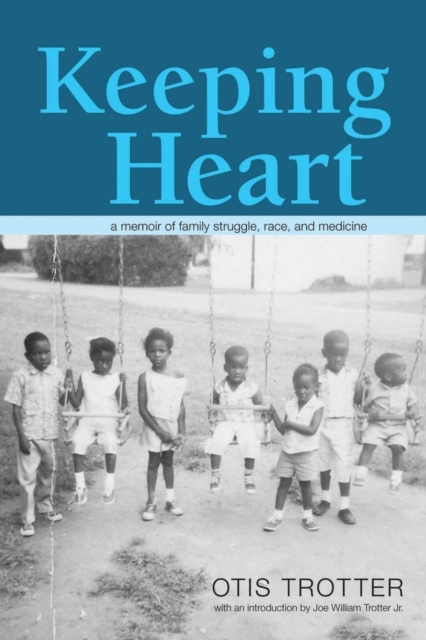
Keeping Heart
Organized around the life histories, medical struggles, and recollections of Otis Trotter and his thirteen siblings, Keeping Heart is a personal account of an African American family's journey north during the second Great Migration.
eBook
Land of hope
Grossman’s rich, detailed analysis of black migration to Chicago during World War I and its aftermath brilliantly captures the cultural meaning of the movement.
eBook

Black Exodus
What were the causes that motivated legions of black southerners to immigrate to the North? What was the impact upon the land they left and upon the communities they chose for their new homes? Perhaps no pattern of migration has changed America's socioeconomic structure more than this mass exodus of African Americans in the first half of the twentieth century.
Because of this exodus, the South lost not only a huge percentage of its inhabitants to northern cities like Chicago, New York, Detroit, and Philadelphia but also its supply of cheap labor. Fleeing from racial injustice and poverty, southern blacks took their culture north with them and transformed northern urban centers with their churches, social institutions, and ways of life.
InBlack Exoduseight noted scholars consider the causes that stimulated the migration and examine the far-reaching results.
eBook
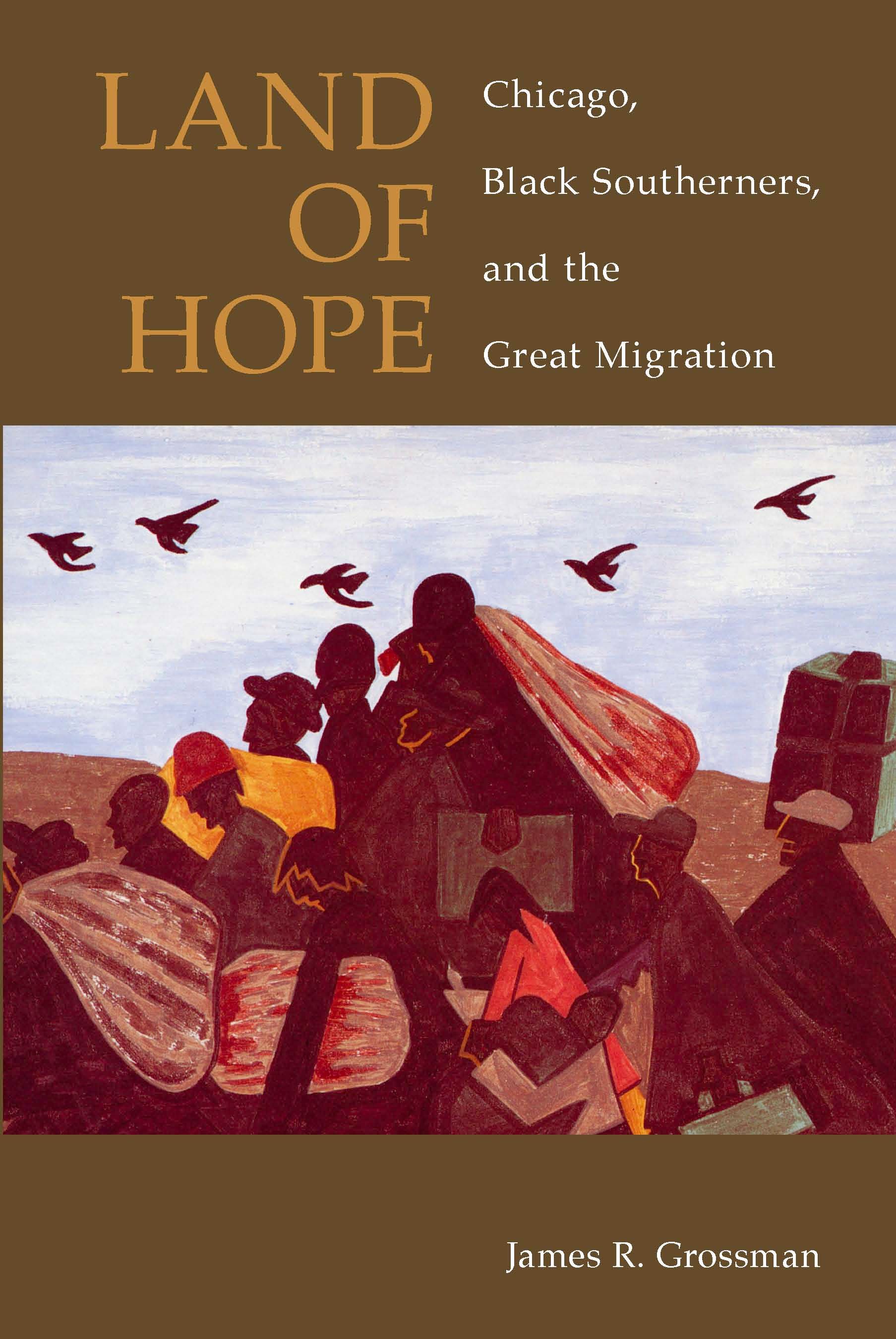
Land of Hope
Grossman's rich, detailed analysis of black migration to Chicago during World War I and its aftermath brilliantly captures the cultural meaning of the movement.
eBook

Educational Selection in the Migration of Southern Blacks, 1880–1990
During the twentieth century millions of African Americans have migrated from the South to northern cities. Contrasting descriptions of this migration stream have been presented in the literature—some emphasizing the rural origins and lack of schooling of migrants, others claiming that migrants were positively selected from the southern black population. This study uses the newly available Integrated Public Use Microdata Series to compare the educational characteristics of southern migrants with (1) the southern population they left behind and (2) the northern population they joined. Consistent with the expectations of migration theory, and previous evidence for specific time periods, the findings show that between 1880 and 1990 black migrants had significantly higher levels of education than the sedentary southern population and significantly lower levels of education than the northern-born population. Both differentials grew smaller as the century progressed.
Journal Article

“They're never here more than a year”: Return Migration in the Southern Exodus, 1940–1970
This article considers the incidence and meaning of return migration that took place during the twentieth-century \"Great Migration\" of southern whites and African-Americans to the U.S. North and West. Southern whites in particular had an unusually high rate of return, though this pattern varied significantly from one northern city to another. After presenting an overview of return movement in the Great Migration, this article compares migrants' experiences in two northern cities that had very different histories of return migration. Southern migrants to Indianapolis, Indiana, came mainly from a relatively prosperous southern region to which they returned with great frequency. Southern migrants to Cincinnati, Ohio, on the other hand, moved from one of the most impoverished subregions of the Appalachian South and were much more likely to choose life in the North over a questionable future at home. Ultimately, Cincinnati's migrants drew on their common sense of exile to build a vocal migrant community in the North, while Indianapolis's migrants showed no similar efforts. The two cases together demonstrate the importance of understanding the tight relationship between patterns in return migration and migrant community development.
Journal Article