
Catalogue Search | MBRL


Are you sure you want to remove the book from the shelf?

{{itemTitle}}
568
result(s) for
"Migration, Internal Europe."
Sort by:

Internal migration as a life-course trajectory : concepts, methods and empirical applications
This book responds to growing calls to conceptualise and analyse internal migration as a trajectory that unfolds over the life course of individuals rather than a series of discrete events. It combines macro and micro modes of analysis into a cohort framework to explore how individuals transition from one migration to the next. The book presents new methodological developments in longitudinal analysis and applies them to internal migration in 27 European countries. It demonstrates that the traditional dichotomy between migrants and non-migrants conceals a wide range of migration behaviour and heterogeneity among repeat migrants. It also reveals a continuity of migration behaviour: being exposed to the challenges and benefits of migration early in life predisposes individuals toward migration in adulthood. By adopting a cohort approach to migration coupled with state-of-the-art methods and novel concepts, this book provides new insights into internal migration for graduate students, academics and policymakers interested in understanding migration behaviour in Europe and beyond.
BOOK

Migrations in the German lands, 1500–2000
Migration to, from, and within German-speaking lands has been a dynamic force in Central European history for centuries. Exemplifying some of the most exciting recent research on historical mobility, the essays collected here reconstruct the experiences of vagrants, laborers, religious exiles, refugees, and other migrants during the last five hundred years of German history. With diverse contributions ranging from early modern martyrdom to post-Cold War commemoration efforts, this volume identifies revealing commonalities shared by different eras while also placing the German case within the broader contexts of European and global migration.
eBook


Identity, Belonging and Migration
This volume addresses the question of migration in Europe. It is concerned with the extent to which racism and anti-immigration discourse has been to some extent normalised and 'democratised' in European and national political discourses. Mainstream political parties are espousing increasingly coercive policies and frequently attempting to legitimate such approaches via nationalist-populist slogans and coded forms of racism. Identity, Belonging and Migration shows that that liberalism is not enough to oppose the disparate and diffuse xenophobia and racism faced by many migrants today and calls for new conceptions of anti-racism within and beyond the state. The book is divided into three parts and organised around a theoretical framework for understanding migration, belonging, and exclusion, which is subsequently developed through discussions of state and structural discrimination as well as a series of thematic case studies. In drawing on a range of rich and original data, this timely volume makes an important contribution to discussions on migration in Europe.
eBook

Migrations in the German lands, 1500-2000
\"Migration to, from, and within German-speaking lands has been a dynamic force in Central European history for centuries. Exemplifying some of the most exciting recent research on historical mobility, the essays collected here reconstruct the experiences of vagrants, laborers, religious exiles, refugees, and other migrants during the last five hundred years of German history. With diverse contributions ranging from early modern martyrdom to post-Cold War commemoration efforts, this volume identifies revealing commonalities shared by different eras while also placing the German case within the broader contexts of European and global migration; 'This well-edited, well-written volume represents an important contribution to migration history. Its distinctiveness lies both in its focus on immigration to and within Germany--as opposed to German emigration to other lands--and its unusually broad chronological range, including a welcome emphasis on the early modern period'--James Melton, Emory University\"--From publisher's website.
Book

Internal labor mobility in Central Europe and the Baltic region
Large regional disparities in labor market indicators exist in Central Europe and the Baltic region. Such disparities appear to be persistent over time indicating, in part, a lack of flexibility in the prevailing adjustment mechanisms. Internal labor mobility is often seen as an important instrument to reduce adjustment costs when other mechanisms fail. Drawing from a variety of data sources and utilizing a common empirical framework and estimation strategy, this study identifies patterns and statistical profiles of geographical mobility. It finds internal migration to be generalily low and highly concentrated among better-educated, young, and single workers. This suggests that migration is more likely to reinforce existing inequalities than to act as an equalizing phenomenon. By way of contrast, commuting flows have grown over time and are more responsive to regional economic differentials. The findings suggest the need for appropriate and country-tailored policy measures designed to increase the responsiveness of labor flows to market conditions.
eBook
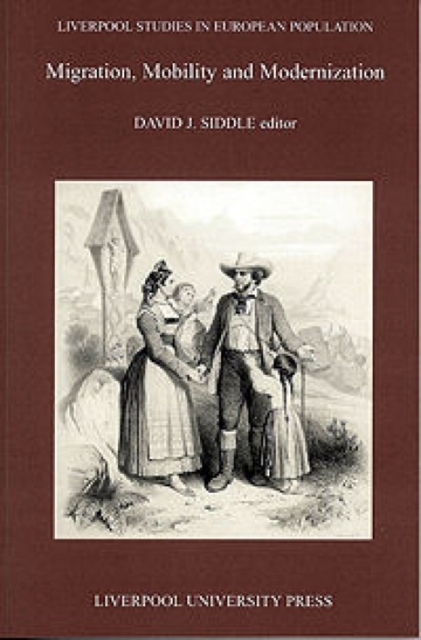
Migration, mobility and modernization
For almost a hundred years the academic study of migration concentrated on evolving standardised models of migration behaviour based on data from censuses or the registration of births, marriages and deaths. More recently, it has been realised that such models fail to take into account the decision-making behind migration and that better understanding will come from study of the behaviour of individuals as well as aggregate numbers. In this book the imaginative use of alternative sources – for example, apprentice books, guild and craft records, legal and court documents, diaries and biographies – gives fresh insights into the processes of movement to reveal much more complex circulatory behaviour than the standard models derived from census and registration sources alone have suggested.The first chapter confronts the issue of rural mobility in post-famine Ireland and is followed by a study centred on Alpine rural families which built impressive networks across pre-industrial Western Europe. Two chapters focus on the particular characteristics of worker groups: mining families of south Lancashire during the period of rapid increase in coal production in the eighteenth century; and the organised mobility of skilled labour in nineteenth-century central Europe. Next, an imaginative and rigorous deployment of the techniques of family reconstruction and record linkage embracing a variety of sources (vital event registers, wills, port books, apprentice records) teases out the migration histories of those who settled in eighteenth-century Liverpool. There are two chapters on female migrant behaviour, drawing attention in the case of eighteenth-century Rheims to the opportunities and restrictions on the life of migrant women at different points in their lifecycles; and showing how poor women struggled to survive in nineteenth-century Dublin. The final chapter uses family histories assembled by numerous genealogists and family historians to challenge the orthodox view of direct stepwise migration from a smaller to a larger town in the urban hierarchy.
eBook

Writing new identities : gender, nation, and immigration in contemporary Europe
The essays in Writing New Identities address the changing notions of community that the New Europe faces as a result of the large numbers of immigrants and migrant workers seeking work and refuge within its borders.
eBook

Migrants in Europe
Migrants in Europe was first published in 1969. In post-World War II years a move toward political and economic integration of Europe, exemplified in the formation of such organizations as the European Common Market and the European Free Trade Association, was initiated by high-level policy-makers. It was in no sense a popular movement with broad support. However, the European man in the street did gain economic benefits as a result of these arrangements and therefore did come to approve of them. But the political and social integration that goes along with economic integration calls for the international exchange of people and, ultimately, for a willingness on the part of national groups to allow all other national groups to participate in common elections or, alternatively, to grant political power to a supranational agency. Some interchange of people is now taking place, and the purpose of this study is to determine the extent of integration, suggest related problems, and draw generalizations to provide clues concerning the probable reaction to expanded forms of such integration in the future. The author stresses that without increased integration of people, the effectiveness of statesmen’s agreements would be limited, and if large-scale rejection of such integration develops, progress toward European unity will be nullified.
eBook

On Many Routes
On Many Routes is about the history of human migration. With a focus on the Habsburg Empire, this innovative work presents an integrated and creative study of spatial mobilities: from short to long term, and intranational and inter-European to transatlantic. Migration was not just relegated to city folk, but likewise was the reality for rural dwellers, and we gain a better understanding of how sending and receiving states and shipping companies worked together to regulate migration and shape populations.
Bringing historical census data, governmental statistics, and ship manifests into conversation with centuries-old migration patterns of servants, agricultural workers, seasonal laborers, peddlers, and artisans—both male and female—this research argues that Central Europeans have long been mobile, that this mobility has been driven by diverse motivations, and that post-1850 transatlantic migration was an obvious extension of earlier spatial mobility patterns. Demonstrating the complexity of human mobility via an exploration of the links between overseas, continental, and internal migrations, On Many Routes shows that migrations to the United States, to the nearest coalfield, and to the urban capitals are embedded within complicated patterns of movement. There is no good reason to study internal apart from transnational moves, and combining these fields brings ample possibility to make migration research more relevant for the much broader field of social and economic history. This work poses an invaluable resource to the understudied area of Habsburg Empire migration studies, which it relocates within its wider European context and provides a major methodological contribution to the history of human migration more broadly. The ubiquity and functionality of human movement sheds light on the relationship between human nature and society, and challenges simplistic notions of human mobility then and now.
eBook