
Catalogue Search | MBRL


Are you sure you want to remove the book from the shelf?

{{itemTitle}}
35
result(s) for
"Migration, Internal United States History 20th century."
Sort by:

Leaving the South : border crossing narratives and the remaking of Southern identity
\"Millions of southerners left the South in the twentieth century in a mass migration that has, in many ways, rewoven the fabric of American society on cultural, political, and economic levels. Because the movements of southerners--and people in general--are controlled not only by physical boundaries marked on a map but also by narratives that define movement, narrative is central in building and sustaining borders and in breaking them down. In Leaving the South: Border Crossing Narratives and the Remaking of Southern Identity, author Mary Weaks-Baxter analyzes narratives by and about those who left the South and how those narratives have remade what it means to be southern. Drawing from a broad range of narratives, including literature, newspaper articles, art, and music, Weaks-Baxter outlines how these displacement narratives challenged concepts of southern nationhood and redefined southern identity. Close attention is paid to how depictions of the South, particularly in the media and popular culture, prompted southerners to leave the region and changed perceptions of southerners to outsiders as well as how southerners saw themselves. Through an examination of narrative, Weaks-Baxter reveals the profound effect gender, race, and class have on the nature of the migrant's journey, the adjustment of the migrant, and the ultimate decision of the migrant either to stay put or return home, and connects the history of border crossings to the issues being considered in today's national landscape.\" -- Provided by publisher.
Book

The southern diaspora : how the great migrations of Black and White Southerners transformed America
Talks about the southern exodus and its impact on American life. Between 1900 and the 1970s, twenty million southerners migrated north and west. Weaving together for the first time the histories of black and white migrants, James N. Gregory traces their paths and experiences in a comprehensive new study that demonstrates how this regional diaspora reshaped America by \"\"southernizing\"\" communities and transforming important cultural and political institutions. Challenging the image of the migrants as helpless and poor, Gregory shows how both black and white southerners used their new surroundings to become agents of change. Combining personal stories with cultural, political, and demographic analysis, he argues that the migrants helped create both the modern civil rights movement and modern conservatism. They spurred changes in American religion, notably modern evangelical Protestantism, and in popular culture, including the development of blues, jazz, and country music. In a sweeping account that pioneers new understandings of the impact of mass migrations, Gregory recasts the history of twentieth-century America. He demonstrates that the southern diaspora was crucial to transformations in the relationship between American regions, in the politics of race and class, and in the roles of religion, the media, and culture.
eBook

The warmth of other suns : the epic story of America's great migration
In this epic, beautifully written masterwork, Pulitzer Prize-winning author Isabel Wilkerson chronicles one of the great untold stories of American history: the decades-long migration of black citizens who fled the South for northern and western cities, in search of a better life. From 1915 to 1970, this exodus of almost six million people changed the face of America.
Book

Chicago's New Negroes
As early-twentieth-century Chicago swelled with an influx of at least 250,000 new black urban migrants, the city became a center of consumer capitalism, flourishing with professional sports, beauty shops, film production companies, recording studios, and other black cultural and communal institutions. Davarian Baldwin argues that this mass consumer marketplace generated a vibrant intellectual life and planted seeds of political dissent against the dehumanizing effects of white capitalism. Pushing the traditional boundaries of the Harlem Renaissance to new frontiers, Baldwin identifies a fresh model of urban culture rich with politics, ingenuity, and entrepreneurship.Baldwin explores an abundant archive of cultural formations where an array of white observers, black cultural producers, critics, activists, reformers, and black migrant consumers converged in what he terms a \"marketplace intellectual life.\" Here the thoughts and lives of Madam C. J. Walker, Oscar Micheaux, Andrew \"Rube\" Foster, Elder Lucy Smith, Jack Johnson, and Thomas Dorsey emerge as individual expressions of a much wider spectrum of black political and intellectual possibilities. By placing consumer-based amusements alongside the more formal arenas of church and academe, Baldwin suggests important new directions for both the historical study and the constructive future of ideas and politics in American life.
eBook

Growing up with the country family, race, and nation after the Civil War
The masterful and poignant story of three African-American families who journeyed west after emancipation, by an award-winning scholar and descendant of the migrants. Following the lead of her own ancestors, Kendra Field's epic family history chronicles the westward migration of freedom's first generation in the fifty years after emancipation. Drawing on decades of archival research and family lore within and beyond the United States, Field traces their journey out of the South to Indian Territory, where they participated in the development of black and black Indian towns and settlements. When statehood, oil speculation, and Jim Crow segregation imperiled their lives and livelihoods, these formerly enslaved men and women again chose emigration. Some migrants launched a powerful back-to-Africa movement, while others moved on to Canada and Mexico. Their lives and choices deepen and widen the roots of the Great Migration. Interweaving black, white, and Indian histories, Field's beautifully wrought narrative explores how ideas about race and color powerfully shaped the pursuit of freedom.
Book

Knock at the Door of Opportunity
Disputing the so-called ghetto studies that depicted the early part of the twentieth century as the nadir of African American society, this thoughtful volume by Christopher Robert Reed investigates black life in turn-of-the-century Chicago, revealing a vibrant community that grew and developed on Chicago’s South Side in the early 1900s. Reed also explores the impact of the fifty thousand black southerners who streamed into the city during the Great Migration of 1916–1918, effectively doubling Chicago’s African American population. Those already residing in Chicago’s black neighborhoods had a lot in common with those who migrated, Reed demonstrates, and the two groups became unified, building a broad community base able to face discrimination and prejudice while contributing to Chicago’s growth and development. Reed not only explains how Chicago’s African Americans openly competed with white people for jobs, housing and an independent political voice but also examines the structure of the society migrants entered and helped shame. Other topics include South Side housing, black politics and protest, the role of institutionalized religion, the economic aspects of African American life, the push for citizenship rights and political power for African Americans, and the impact of World War I and the race riot of 1919. The first comprehensive exploration of black life in turn-of-the-century Chicago beyond the mold of a ghetto perspective, this revealing work demonstrates how the melding of migrants and residents allowed for the building of a Black Metropolis in the 1920s.
eBook

Competition in the Promised Land : black migrants in northern cities and labor markets
\" From 1940 to 1970, nearly four million black migrants left the American rural South to settle in the industrial cities of the North and West. Competition in the Promised Land provides a comprehensive account of the long-lasting effects of the influx of black workers on labor markets and urban space in receiving areas. Traditionally, the Great Black Migration has been lauded as a path to general black economic progress. Leah Boustan challenges this view, arguing instead that the migration produced winners and losers within the black community. Boustan shows that migrants themselves gained tremendously, more than doubling their earnings by moving North. But these new arrivals competed with existing black workers, limiting black-white wage convergence in Northern labor markets and slowing black economic growth. Furthermore, many white households responded to the black migration by relocating to the suburbs. White flight was motivated not only by neighborhood racial change but also by the desire on the part of white residents to avoid local public services and fiscal obligations in increasingly diverse cities. Employing historical census data and state-of-the-art econometric methods, Competition in the Promised Land revises our understanding of the Great Black Migration and its role in the transformation of American society. \"-- Provided by publisher.
Book
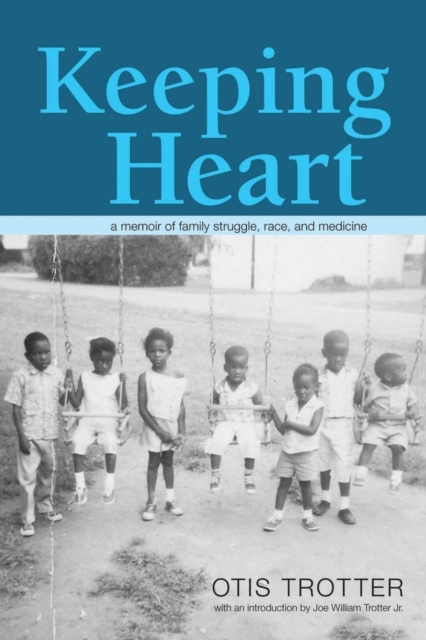
Keeping Heart
Organized around the life histories, medical struggles, and recollections of Otis Trotter and his thirteen siblings, Keeping Heart is a personal account of an African American family's journey north during the second Great Migration.
eBook

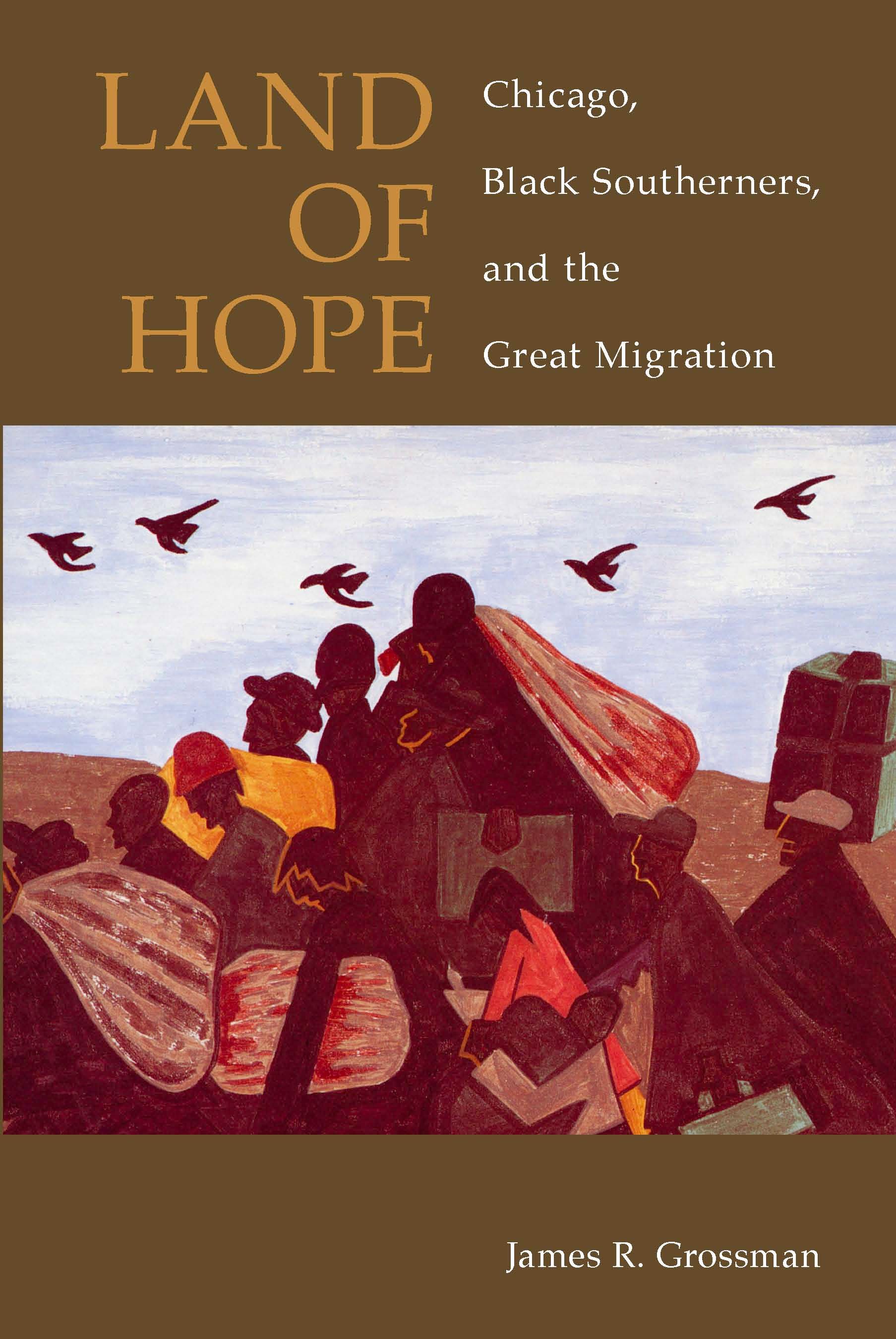
Land of Hope
Grossman's rich, detailed analysis of black migration to Chicago during World War I and its aftermath brilliantly captures the cultural meaning of the movement.
eBook