
Catalogue Search | MBRL


Are you sure you want to remove the book from the shelf?

{{itemTitle}}
54,096
result(s) for
"Mikhail Gorbachev"
Sort by:
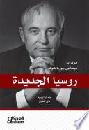
روسيا الجديدة : مذكرات ميخائيل جورباتشوف /
ولد كتابي الأخير ولادة عسيرة، وأعيدت كتابة صفحاته عدة مرات ؛ فقد أردت أن أتجاوز وصف الأحداث السياسية لأقدم للقارئ عرضا للتجارب والآمال والخيبات التي يخلفها الناس وراءهم، وبينها ما يخصني ويخص عائلتي وأصدقائي، وأن أنقل الأجواء التي عشناها خلال تلك السنوات، وقد توقعت بيقين أن يكون كتابي ذاك هو الأخير. يدور هذا الكتاب حول أهمية الماضي ؛ فإذا تأملت فيما حدث في روسيا في نهاية القرن الماضي وأوائل القرن الحالي، وما ينتظر روسيا في المستقبل، فلا مناص من أن تعود إلى سنوات البيريسترويكا، وإذ يفصلنا اليوم عقدان من الزمن عن تلك المرحلة، فقد يكون من المبكر إعطاء تقييم نهائي، ويقال : إن شو إن لاي ردَّ ذات يوم على الرئيس ريتشارد نيكسون الذي سأله عن تقييمه للثورة الفرنسية بقوله : \"ما زال الوقت مبكرا جدا لإطلاق حكم عليها\"، وربما كان محقا في ذلك، غير أن بوسعنا أن نشهد أمورا كثيرة بمزيد من الوضوح. العبيكان.
Book

A Slow Reckoning
A Slow Reckoning examines the
Soviet Union's and the Afghan communists' views of and policies
toward Islam and Islamism during the Soviet-Afghan War
(1979-1989). As Vassily Klimentov demonstrates, the Soviet
and communist Afghan disregard for Islam was telling of the overall
communist approach to reforming Afghanistan and helps explain the
failure of their modernization project.
A Slow Reckoning reveals how during most of the
conflict Babrak Karmal, the ruler installed by the Soviets,
instrumentalized Islam in support of his rule while retaining a
Marxist-Leninist platform. Similarly, the Soviets at all levels
failed to give Islam its due importance as communist ideology and
military considerations dominated their decision making. This
approach to Islam only changed after Mikhail Gorbachev replaced
Karmal by Mohammad Najibullah and prepared to withdraw Soviet
forces. Discarding Marxism-Leninism for Islam proved the correct
approach, but it came too late to salvage the Soviet
nation-building project.
A Slow Reckoning also shows how Soviet leaders only
started seriously paying attention to an Islamist threat from
Afghanistan to Central Asia after 1986. While the Soviets had
concerns related to Islamism in 1979, only the KGB believed the
threat to be potent. The Soviet elites never fully conceptualized
Islamism, continuing to see it as an ideology the United States,
Iran, or Pakistan could instrumentalize at will. They believed the
Islamists had little agency and that their retrograde ideology
could not find massive appeal among progressive Soviet Muslims. In
this, they were only partly right.
eBook


Remembering Mikhail Gorbachev and the 1991 Coup
Through the open window, I heard a strange, rumbling noise coming from the direction of the Ostankino TV tower, located just a few minutes from my apartment complex. Despite some encouraging signs, however, many reforms to the Soviet system of government and economy introduced by Mikhail Gorbachev after he became General Secretary of the Communist Party of the Soviet Union in 1985 had not produced the hoped-for economic results, especially for the average Soviet citizen. Most grocery shelves stood empty, including at Moscow's largest department store GUM, where a large display window featured only a handful of cans of condensed milk enveloped in cobwebs. About the Author Renee M. Earle is a retired Public Diplomacy Foreign Service with the rank of MinisterCounselor.
Journal Article

جورباتشوف يتذكر كيف ولماذا سقط الاتحاد السوفيتي ؟
في هذا الكتاب يتحدث جورباتشوف-كما لم يتحدث من قبل-عن تجربة حياته كاملة، فقد أعطى مساحة لحياته مع زوجته التي أحبها بجنون، ولكن نظرا لأن جورباتشوف شخصية ظهرت للحياة من خلال السياسة وعبر قيادته لإحدى القوتيين العظميين في عالم ما بعد الحرب العالمية الثانية وعصر الحرب الباردة : فقد أعطى المساحة الأكبر لحياته السياسية.
Book


Gorbachev's export of Perestroika to Eastern Europe : democratisation reconsidered
This book looks at the liberalisation process in Central and Eastern Europe (CEE) during th period of 1987-1989, focusing on Gorbachev's initiative to encourage perestroika in all the fraternal regimes of CEE outside the Soviet Union.
Book

Correspondence: NATO Non-expansion and German Reunification
In \"Deal or No Deal,\" Joshua Itzkowitz Shifrinson sheds new light on an important case. At the article's core is a clear historical question: Did U.S. leaders offer to limit NATO expansion in 1990? Shifrinson provides substantial evidence that they did, proposing a quid pro quo that convinced Soviet leader Mikhail Gorbachev to accept German reunification within NATO. The article frames its modern relevance by conflict that historical question with distinct causal and moral questions, however, distorting its contribution and undermining its policy recommendations.
Journal Article


The Last Superpower Summits
This book publishes for the first time in print every word the American and Soviet leaders – Ronald Reagan, Mikhail Gorbachev, and George H.W. Bush – said to each other in their superpower summits from 1985 to 1991. Obtained by the authors through the Freedom of Information Act in the U.S., from the Gorbachev Foundation and the State Archive of the Russian Federation in Moscow, and from the personal donation of Anatoly Chernyaev, these previously Top Secret verbatim transcripts combine with key declassified preparatory and after-action documents from both sides to create a unique interactive documentary record of these historic highest-level talks – the conversations that ended the Cold War. The summits fueled a process of learning on both sides, as the authors argue in contextual essays on each summit and detailed headnotes on each document. Geneva 1985 and Reykjavik 1986 reduced Moscow’s sense of threat and unleashed Reagan’s inner abolitionist. Malta 1989 and Washington 1990 helped dampen any superpower sparks that might have flown in a time of revolutionary change in Eastern Europe, set off by Gorbachev and by Eastern Europeans (Solidarity, dissidents, reform Communists). The high level and scope of the dialogue between these world leaders was unprecedented, and is likely never to be repeated. Key words: Diplomatic History; Great Powers; Foreign Relations; Cold War; USA diplomacy; Soviet Union; Gorbachev; Bush; Reagan; 1989-1993
eBook