
Catalogue Search | MBRL


Are you sure you want to remove the book from the shelf?

{{itemTitle}}
15,469
result(s) for
"Militarism"
Sort by:


Militarism in a global age : naval ambitions in Germany and the United States before World War I
At the turn of the twentieth century, the United States and Germany emerged as the two most rapidly developing industrial nation-states of the Atlantic world. The elites and intelligentsias of both countries staked out claims to dominance in the twentieth century. In Militarism in a Global Age, Dirk Bönker explores the far-reaching ambitions of naval officers before World War I as they advanced navalism, a particular brand of modern militarism that stressed the paramount importance of sea power as a historical determinant. Aspiring to make their own countries into self-reliant world powers in an age of global empire and commerce, officers viewed the causes of the industrial nation, global influence, elite rule, and naval power as inseparable. Characterized by both transnational exchanges and national competition, the new maritime militarism was technocratic in its impulses; its makers cast themselves as members of a professional elite that served the nation with its expert knowledge of maritime and global affairs. American and German navalist projects differed less in their principal features than in their eventual trajectories. Over time, the pursuits of these projects channeled the two naval elites in different directions as they developed contrasting outlooks on their bids for world power and maritime force. Combining comparative history with transnational and global history, Militarism in a Global Age challenges traditional, exceptionalist assumptions about militarism and national identity in Germany and the United States in its exploration of empire and geopolitics, warfare and military-operational imaginations, state formation and national governance, and expertise and professionalism.
eBook


Military masculinity and postwar recovery in the Soviet Union
\"Catastrophic wartime casualties and postwar discomfort with the successes of women who had served in combat roles combined to shatter prewar ideals about what service meant for Soviet masculine identity. The soldier had to be re-imagined and resold to a public that had just emerged from the Second World War, and a younger generation suspicious of state control. In doing so, Soviet military culture wrote women out and attempted to re-establish soldiering as the premier form of masculinity in society. Military Masculinity combines textual and visual analysis, as well as archival research to highlight the multiple narratives that contributed to rebuilding military identities. Each chapter visits a particular site of this reconstruction, including debates about conscription and evasion, appropriate role models for cadets, misogynist military imagery in cartoons, the fraught militarized workplaces of nuclear physicists, and the first cohort of cosmonauts, who represented the completion of the project to rebuild militarized masculinity.\"-- Provided by publisher.
Book


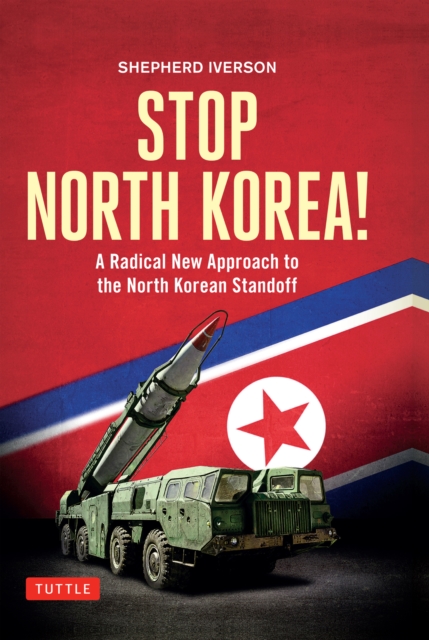
Stop North Korea!: a radical new approach to solving the North Korea standoff
This radical new approach to dealing with North Korea offers a refreshing perspective on an intransigent and deadly situation. Imagine you control a multi-billion dollar capital fund, and North Korea is an underperforming corporation. You see it is undervalued and want to take it over, but it is controlled by an old-fashioned board of directorsthe Kim family and a small number of ultra eliteswho will not negotiate a deal. In this regressive situation it is logical to offer its shareholdersthe political and military elites, government managers and bureaucrats, and the general populationa higher price for their shares to convince them to overrule their board of directors. Stop North Korea! A Radical New Approach to the North Korea Standoff applies this basic scenario to a situation that has become dire, and for which a strong positive solution is crucial. This book shows how investment rather than constraintthe carrot rather than the stickwill not only deter the North Korea threat, but enhance the global community in ways perhaps unimagined in the past.
eBook