
Catalogue Search | MBRL


Are you sure you want to remove the book from the shelf?

{{itemTitle}}
16,803
result(s) for
"Military engineers"
Sort by:


MILITARY ENGINEER CAPABILITIES PARTICIPATING TO OPERATIONS IN SUPPORT OF THE LOCAL AND CENTRAL AUTHORITIES IN EMERGENCY SITUATIONS. PRESENT AND FUTURE
Climate change over the last two decades, coupled with the health crisis caused by the SARS COV-2 virus, requires central and local public authorities to involve all resources are available to preserve the health and life of the population, as well as for the protection of their material and cultural values.In addition to the fact that the Romanian Army performs support functions, it has unique capabilities whose use becomes indispensable for the management of civil emergencies.Compared to the tasks to be performed, in order to limit and eliminate the consequences caused by disasters, the military engineer structures in the Romanian Army represent the most adequate capability, by the fact that they are able to intervene in most situations. However, the military engineer capabilities must be constantly perfected and adapted so that they are able to respond to the new types of risks that may arise.
Journal Article

The untold story of everything digital : Bright boys revisited
\"The Untold Story of Everything Digital: Bright Boys, Revisited celebrates the 70th anniversary (1949-2019) of the world \"going digital\" for the very first time-real-time digital computing's genesis story. That genesis story is taken from the 2010 edition of Bright Boys: The Making of Information Technology-1938-1958, and substantially expanded upon for this special, anniversary edition. Please join us for the incredible adventure that is The Untold Story of Everything Digital, when a band of misfit engineers, led by MIT's Jay Forrester and Bob Everett, birthed the digital revolution. The bright boys were the first to imagine an electronic landscape of computing machines and digital networks, and the first to blaze its high-tech trails\"-- Provided by publisher.
Book
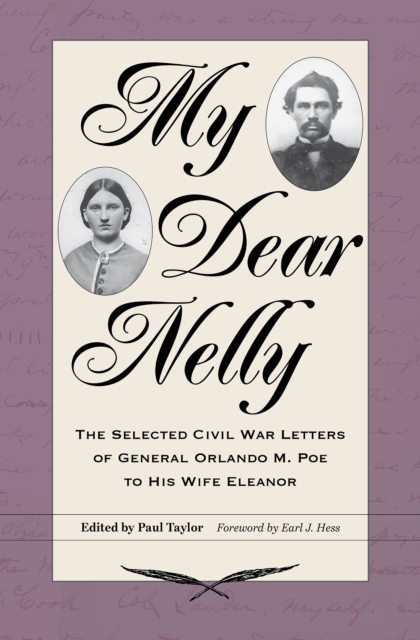
My Dear Nelly
An epistolary chronicle of love and reflection from the Civil War front More than 150 years after the end of the Civil War, West Point engineer and Brevet Brigadier General Orlando M.Poe (1832-1895) remains one of the Union's most unsung heroes.
eBook


Engineering Victory
On May 25, 1863, after driving the Confederate army into defensive lines surrounding Vicksburg, Mississippi, Union major general Ulysses S. Grant and his Army of the Tennessee laid siege to the fortress city. With no reinforcements and dwindling supplies, the Army of Vicksburg finally surrendered on July 4, yielding command of the Mississippi River to Union forces and effectively severing the Confederacy. In this illuminating volume, Justin S. Solonick offers the first detailed study of how Grant’s midwesterners serving in the Army of the Tennessee engineered the siege of Vicksburg, placing the event within the broader context of U.S. and European military history and nineteenth-century applied science in trench warfare and field fortifications. In doing so, he shatters the Lost Cause myth that Vicksburg’s Confederate garrison surrendered due to lack of provisions. Instead of being starved out, Solonick explains, the Confederates were dug out.
After opening with a sophisticated examination of nineteenth-century military engineering and the history of siege craft, Solonick discusses the stages of the Vicksburg siege and the implements and tactics Grant’s soldiers used to achieve victory. As Solonick shows, though Grant lacked sufficient professional engineers to organize a traditional siege—an offensive tactic characterized by cutting the enemy’s communication lines and digging forward-moving approach trenches—the few engineers available, when possible, gave Union troops a crash course in military engineering. Ingenious midwestern soldiers, in turn, creatively applied engineering maxims to the situation at Vicksburg, demonstrating a remarkable ability to adapt in the face of adversity. When instruction and oversight were not possible, the common soldiers improvised. Solonick concludes with a description of the surrender of Vicksburg, an analysis of the siege’s effect on the outcome of the Civil War, and a discussion of its significance in western military history.
Solonick’s study of the Vicksburg siege focuses on how the American Civil War was a transitional one with its own distinct nature, not the last Napoleonic war or the herald of modern warfare. At Vicksburg, he reveals, a melding of traditional siege craft with the soldiers’ own inventiveness resulted in Union victory during the largest, most successful siege in American history.
eBook


Gothic Vaulting in Spanish Military Architecture from the Eighteenth Century
The construction of gunpowder magazines, undertaken by military engineers in Spain throughout the eighteenth century bears testament to the Enlightenment’s construction ethos in the different domains forming the Hispanic Monarchy. In the study on the typological classification that we have performed on 271 projects involving these magazines, 31 designed using gothic vaults have been unearthed. The geometric study into this constructive system unveils that 68.97% of these pointed arches feature centres placed below the impost, suggesting that the angle of incidence on the vertical faces is below 90º, thus sharing this property with catenary vaults. Viewing the appraisals given in
La théorie et la pratique de la coupe de pierres
(1738) by Frézier on the structural coherence of these figures, it can be concluded that this pointed system employed by Hispanic military engineers is a simplified attempt to standardise the gothic vault in line with the catenary model.
Journal Article