
Catalogue Search | MBRL


Are you sure you want to remove the book from the shelf?

{{itemTitle}}
496
result(s) for
"Military intelligence Pakistan."
Sort by:

Directorate S : the C.I.A. and America's secret wars in Afghanistan and Pakistan
Examines \"America's intelligence, military, and diplomatic efforts to defeat Al Qaeda and the Taliban in Afghanistan and Pakistan since 9/11\"--Amazon.com.
Book
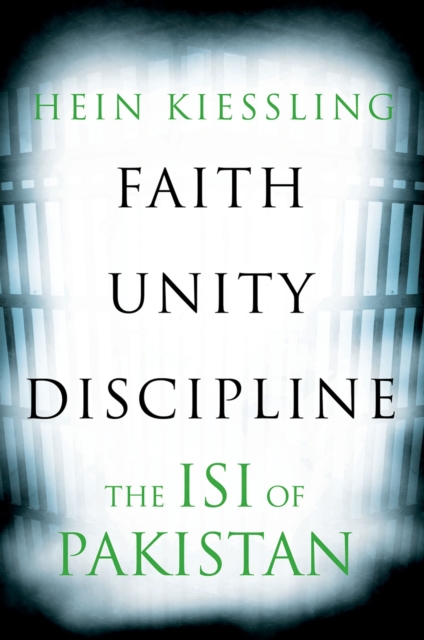
Faith, unity, discipline : the Inter-Service-Intelligence (ISI) of Pakistan
Established in the wake of the Indo-Pakistani War of 1947-8 by British officer Major General Robert Cawthorne, then Deputy Chief of Staff in the Pakistan Army, Pakistan's Inter-Services Intelligence (ISI) for years remained an under-developed and obscure agency. In 1979, the organisation's growing importance was felt during the Soviet war in Afghanistan , as it worked hand in glove with the CIA to support the mujahideen resistance, but its activities received little coverage in news media.Since that time, the ISI has projected its influence across the region -- in 1988 its involvement in Indian Kashmir came under increasing scrutiny, and by 1995 its mentoring of what became the Afghan Taliban was well attested. But it was the organisation's alleged links with Al Qaeda and the discovery of Osama bin Laden in Abbottabad, at the heart of Pakistan's military zone, that really threw it under the spotlight. These controversies and many more have dogged the ISI, including its role in Pakistan's testing of a nuclear weapon in 1998 and its links with A.Q. Khan.Offering fresh insights into the ISI as a domestic and international actor based on intimate knowledge of its inner workings and key individuals, this startlingly original book uncovers the hitherto shady world of Pakistan's secret service.
eBook

Foxtrot in Kandahar : a memoir of a CIA Officer in Afghanistan at the inception of America's longest war
\"Veteran CIA officer Duane Evans is dispatched to Pakistan to \"get something going in the South,\" still under the Taliban's sway and al-Qa'ida. With no \"Southern Alliance\" for the U.S. to support, a new strategy is called for. This is the true story of Evans's unexpected journey from the pristine halls of Langley to the badlands of southern Afghanistan. Within hours after he watched the horrors of 9/11 unfold during a chance visit to FBI Headquarters, Evans begins a personal and relentless quest to become part of the U.S. response against al-Qa'ida. This memoir tracks his efforts to join one of CIA's elite teams bound for Afghanistan, a journey that eventually takes him to the front lines in Pakistan, first as part of the advanced element of CIA's Echo team supporting Hamid Karzai, and finally as leader of the under-resourced and often overlooked Foxtrot team. Relying on rusty military skills from Evans's days as a Green Beret and brandishing a traded-for rifle, he moves toward Kandahar, one of only a handful of Americans pushing forward across the desert in the company of Pashtun warriors into some of the most dangerous, yet mesmerizingly beautiful, landscape on earth. The ultimate triumph of the CIA and Special Forces teams, when absolutely everything was on the line, is tempered by the US tragedy that catalyzed what is now America's longest war. Evans's very personal adventure that unfolds within the pages of Foxtrot in Kandahar: A Memoir of a CIA Officer in Afghanistan at the Inception of America's Longest War, which concludes with an analysis of opportunities lost in the years since his time in Afghanistan, should be required reading for everyone interested in modern warfare.\"--Provided by publisher.
BOOK

Artificial Intelligence in Pakistan's Cyberspace: Governance Gaps, Dual-Use Dilemmas, and Strategic Vulnerabilities
This article examines Pakistan's evolving cyber governance as a critical case of how artificial intelligence (AI) intersects with dual-use security and fragile institutional design. Despite policy commitments, Pakistan's civilian-led cyber architecture remains fragmented, under-resourced and politically volatile, resulting in dependence on military-linked expertise and donor-driven technologies. Drawing on sixteen elite interviews with policymakers, technical experts, and defence strategists, the study identifies five structural vulnerabilities: institutional fragmentation, politicised leadership, underutilised AI infrastructure, civil-military disconnects, and exposure to state-sponsored cyber threats. Framed within dual-use governance and civil-military cyber relations theories, the findings show that Pakistan's insecurity arises less from technological scarcity than from governance dysfunction. The study concludes with policy recommendations for embedding AI within a coherent national doctrine, fostering civil-military integration, and enhancing cyber resilience under the emerging logic of Fifth-Generation Warfare. Keywords Artificial intelligence; cybersecurity; dual-use governance; civil-military relations; institutional asymmetry; Pakistan; fifth-generation warfare.
Journal Article

Proceed to Peshawar: the story of a U.S. Navy intelligence mission on the Afghan border, 1943
Proceed to Peshawar is a story of adventure in the Hindu Kush Mountains and of a previously untold military and naval intelligence mission during World War II by two American officers along 800 miles of the Durand Line, the porous border between Afghanistan and Pakistan. They passed through the tribal areas and the princely states of the North-West Frontier Province, and into Baluchistan. This appears to be the first time that any American officials were permitted to travel for any distance along either side of the Durand Line. Many British political and military officers believed that India would soon be free, and that the Great Game between Russia and Britain in the nineteenth and early twentieth centuries would then come to an end. Some of them thought that the United States should, and would, assume Britain's role in Central Asia, and they wanted to introduce America to this ancient contest.
eBook

Possibilities, Challenges, and Future Opportunities of Microgrids: A Review
Microgrids are an emerging technology that offers many benefits compared with traditional power grids, including increased reliability, reduced energy costs, improved energy security, environmental benefits, and increased flexibility. However, several challenges are associated with microgrid technology, including high capital costs, technical complexity, regulatory challenges, interconnection issues, maintenance, and operation requirements. Through an in-depth analysis of various research areas and technical aspects of microgrid development, this study aims to provide valuable insights into the strategies and technologies required to overcome these challenges. By assessing the current state of microgrid development in Pakistan and drawing lessons from international best practices, our research highlights the unique opportunities microgrids present for tackling energy poverty, reducing greenhouse gas emissions, and promoting sustainable economic growth. Ultimately, this research article contributes to the growing knowledge of microgrids and their role in addressing global sustainability issues. It offers practical recommendations for policymakers, industry stakeholders, and local communities in Pakistan and beyond.
Journal Article

Nuclear Strategy in the Modern Era
The world is in a second nuclear age in which regional powers play an increasingly prominent role. These states have small nuclear arsenals, often face multiple active conflicts, and sometimes have weak institutions. How do these nuclear states-and potential future ones-manage their nuclear forces and influence international conflict? Examining the reasoning and deterrence consequences of regional power nuclear strategies, this book demonstrates that these strategies matter greatly to international stability and it provides new insights into conflict dynamics across important areas of the world such as the Middle East, East Asia, and South Asia.
Vipin Narang identifies the diversity of regional power nuclear strategies and describes in detail the posture each regional power has adopted over time. Developing a theory for the sources of regional power nuclear strategies, he offers the first systematic explanation of why states choose the postures they do and under what conditions they might shift strategies. Narang then analyzes the effects of these choices on a state's ability to deter conflict. Using both quantitative and qualitative analysis, he shows that, contrary to a bedrock article of faith in the canon of nuclear deterrence, the acquisition of nuclear weapons does not produce a uniform deterrent effect against opponents. Rather, some postures deter conflict more successfully than others.
Nuclear Strategy in the Modern Eraconsiders the range of nuclear choices made by regional powers and the critical challenges they pose to modern international security.
eBook

The Soldier and the Changing State
The Soldier and the Changing State is the first book to systematically explore, on a global scale, civil-military relations in democratizing and changing states. Looking at how armies supportive of democracy are built, Zoltan Barany argues that the military is the most important institution that states maintain, for without military elites who support democratic governance, democracy cannot be consolidated. Barany also demonstrates that building democratic armies is the quintessential task of newly democratizing regimes. But how do democratic armies come about? What conditions encourage or impede democratic civil-military relations? And how can the state ensure the allegiance of its soldiers?
Barany examines the experiences of developing countries and the armed forces in the context of major political change in six specific settings: in the wake of war and civil war, after military and communist regimes, and following colonialism and unification/apartheid. He evaluates the army-building and democratization experiences of twenty-seven countries and explains which predemocratic settings are most conducive to creating a military that will support democracy. Highlighting important factors and suggesting which reforms can be expected to work and fail in different environments, he offers practical policy recommendations to state-builders and democratizers.
eBook

THE ROLE OF RUSSIA IN PAKISTAN’S COUNTER-TERRORISM EFFORTS: A CRITICAL EVALUATION
Addressing growing security threats in South and Central Asia makes Russiaâs intensifying cooperation with Pakistanâs counterterrorism programs in the 2020s more plausible, and an analytical evaluation of this cooperation is the focus of this paper. Extremist groups such as the Turkistan Islamic Party (TIP), Islamic Movement of Uzbekistan (IMU), and the Islamic State Khorasan Province (ISKP) in Afghanistan, emerging after the U.S. withdrawal, are direct threats to Russiaâs interests. Both countries work through programs involving mutual intelligence-sharing, military alliance, and diplomatic defence arrangements to fight against threats. The paper introduces an overview of Pakistan-Russia diplomatic history and examines modern practical cooperation, which overcame their earlier Cold War animosities. Using a geopolitical angle, this evaluation considers Russiaâs importance in Pakistanâs counterterrorism efforts, conditions that affect regional stability and peace, US-Pakistan historical relations, and Russia-India connections. The research demonstrates that Russiaâs growing alliance with Pakistan against terrorism creates impacts across South Asia.
Journal Article

Pakistan, India and the War of Narratives
Although a fragile ceasefire agreement ended the four-day military confrontation between India and Pakistan in early May, the conflict continues to be waged on the diplomatic front. On May 7, New Delhi launched \"Operation Sindoor\" after blaming Islamabad for the massacre of 26 civilians by The Resistance Front insurgency at a tourist site in India-occupied Kashmir. While Pakistan's Inter-Services Intelligence (ISI) has supported militants in Kashmir, New Delhi has not substantiated its claim that the agency orchestrated the attack and has denied Pakistan's requests for an independent investigation. Prior to the outbreak of hostilities, India suspended the Indus Waters Treaty, a landmark water-sharing agreement that divides the six branches of the Indus River between India and Pakistan. Federal Minister for Climate Change Musadik Malik stridently denounced India's aggression while commending Pakistan's military performance. After calling India's preemptive strike doctrine \"bizarre and very dangerous,\" Malik warned that it treats international relations as \"a Wild West where the fastest gun prevails.
Journal Article