
Catalogue Search | MBRL


Are you sure you want to remove the book from the shelf?

{{itemTitle}}
495
result(s) for
"Military intelligence Social aspects."
Sort by:

Changing Sociocultural Dynamics and Implications for National Security
Beginning in October 2017, the National Academies of Sciences, Engineering, and Medicine organized a set of workshops designed to gather information for the Decadal Survey of Social and Behavioral Sciences for Applications to National Security . The first workshop focused on changing sociocultural dynamics and implications for national security, and this publication summarizes the presentations and discussions from this workshop.
eBook


Moral Responsibility in Twenty-First-Century Warfare
2021 CHOICE Outstanding Academic Title
Moral Responsibility in Twenty-First-Century Warfare
explores the complex relationship between just war theory and the
ethics of autonomous weapons systems (AWS). One of the challenges
facing ethicists of war, particularly just war theorists, is that
AWS is an applicative concept that seems, in many ways, to lie
beyond the human(ist) scope of the just war theory tradition. The
book examines the various ethical gaps between just war theory and
the legal and moral status of AWS, addresses the limits of both
traditional and revisionist just war theory, and proposes ways of
bridging some of these gaps. It adopts a dualistic notion of moral
responsibility-or differing, related notions of moral
responsibility and legitimate authority-to study the conflicts and
contradictions of legitimizing the autonomous weapons that are
designed to secure peace and neutralize the effects of violence.
Focusing on the changing conditions and dynamics of accountability,
responsibility, autonomy, and rights in twenty-first-century
warfare, the volume sheds light on the effects of violence and the
future ethics of modern warfare.
eBook

Small wars, big data : the information revolution in modern conflict
\"How a new understanding of warfare can help the military fight today's conflicts more effectively. The way wars are fought has changed starkly over the past sixty years. International military campaigns used to play out between large armies at central fronts. Today's conflicts find major powers facing rebel insurgencies that deploy elusive methods, from improvised explosives to terrorist attacks. Small Wars, Big Data presents a transformative understanding of these contemporary confrontations and how they should be fought. The authors show that a revolution in the study of conflict--enabled by vast data, rich qualitative evidence, and modern methods--yields new insights into terrorism, civil wars, and foreign interventions. Modern warfare is not about struggles over territory but over people; civilians--and the information they might choose to provide--can turn the tide at critical junctures. The authors draw practical lessons from the past two decades of conflict in locations ranging from Latin America and the Middle East to Central and Southeast Asia. Building an information-centric understanding of insurgencies, the authors examine the relationships between rebels, the government, and civilians. This approach serves as a springboard for exploring other aspects of modern conflict, including the suppression of rebel activity, the role of mobile communications networks, the links between aid and violence, and why conventional military methods might provide short-term success but undermine lasting peace. Ultimately the authors show how the stronger side can almost always win the villages, but why that does not guarantee winning the war. Small Wars, Big Data provides groundbreaking perspectives for how small wars can be better strategized and favorably won to the benefit of the local population.\"-- Provided by publisher.
Book

Artificial Intelligence and Global Security
Artificial Intelligence and Global Security: Future Trends, Threats and Considerations brings a much-needed perspective on the impact of the integration of Artificial Intelligence (AI) technologies in military affairs. Experts forecast that AI will shape future military operations in ways that will revolutionize warfare.
eBook

Social media and South Korean national security
\"South Korea offers a timely illustration of the relationship between social media and national security. The author describes the effects of trade-offs between security and civil liberties and how narratives advanced through social media differ from those reported by traditional news outlets\"-- Provided by publisher.
Book

Autonomous Weapons Systems and International Norms
In Autonomous Weapons Systems and International Norms Ingvild Bode and Hendrik Huelss present an innovative analysis of how testing, developing, and using weapons systems with autonomous features shapes ethical and legal norms, arguing that they have already established standards for what counts as meaningful human control.
eBook
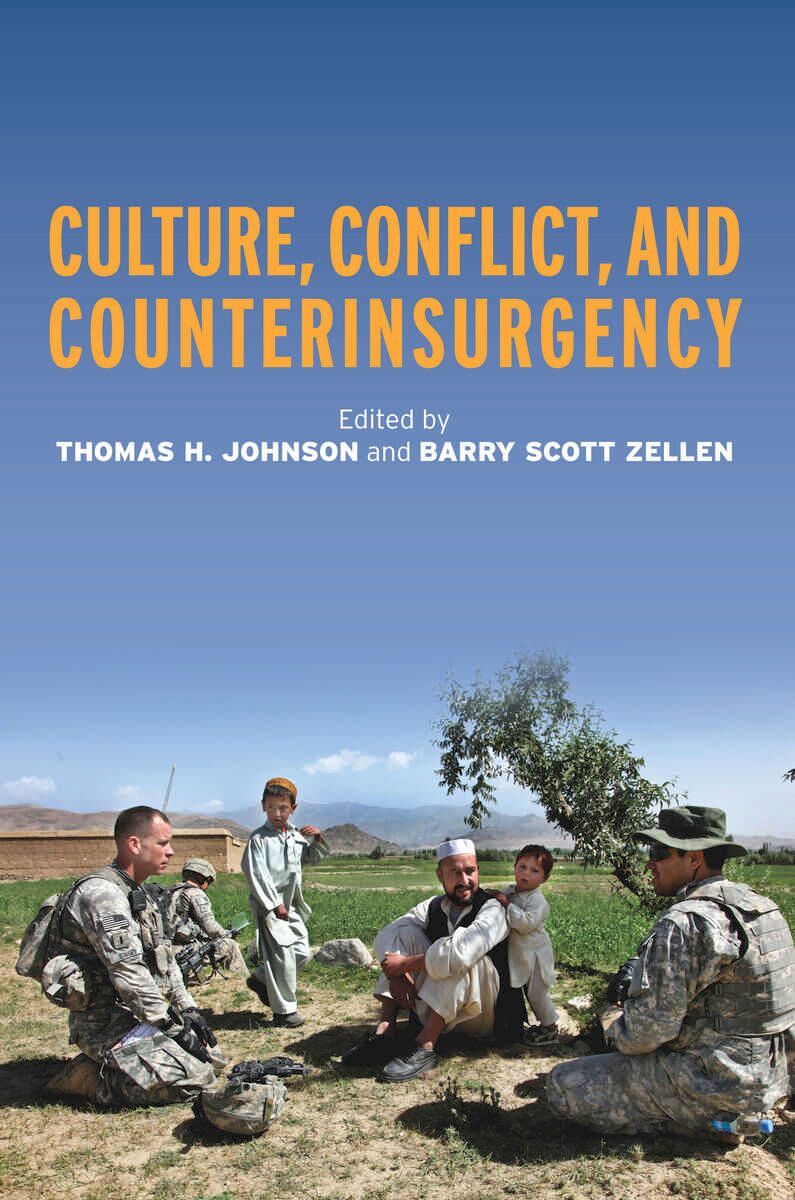
Culture, Conflict, and Counterinsurgency
The authors of Culture, Conflict and Counterinsurgency contend that an enduring victory can still be achieved in Afghanistan. However, to secure it we must better understand the cultural foundations of the continuing conflicts that rage across Afghanistan and neighboring Pakistan, and shift our strategy from an attritional engagement to a smarter war plan that embraces these cultural dimensions.
They examine the nexus of culture, conflict, and strategic intervention, and attempt to establish if culture is important in a national security and foreign policy context, and to explore how cultural phenomena and information can best be used by the military. In the process they address just how intimate cultural knowledge needs to be to counter an insurgency effectively.
Finally, they establish exactly how good we've been at building and utilizing cultural understanding in Afghanistan, what the operational impact of that understanding has been, and where we must improve to maximize our use of cultural knowledge in preparing for and engaging in future conflicts.
eBook

The secular trend of intelligence test scores: The Danish experience for young men born between 1940 and 2000
The present study investigated the Danish secular trend of intelligence test scores among young men born between 1940 and 2000, as well as the possible associations of birth cohort changes in family size, nutrition, education, and intelligence test score variability with the increasing secular trend. The study population included all men born from 1940 to 2000 who appeared before a draft board before 2020 ( N = 1,556,770). At the mandatory draft board examination, the approximately 19-year-old men underwent a medical examination and an intelligence test. In the statistical analyses, the IQ mean and standard deviation (SD) were estimated separately for each of the included annual birth cohorts based on information from birth cohorts with available total intelligence test scores for all tested individuals (i.e. 1940–1958 and 1987–2000; the mean and SD were interpolated for the intermediate birth cohorts). Moreover, the possible associations with birth cohort changes in family size, height as a proxy for nutritional status, education, and IQ variability were investigated among those birth cohorts for whom a secular increase in intelligence test scores was found. The results showed that the estimated mean IQ score increased from a baseline set to 100 (SD: 15) among individuals born in 1940 to 108.9 (SD: 12.2) among individuals born in 1980, since when it has decreased. Focusing on the birth cohorts of 1940–1980, for whom a secular increase in intelligence test scores was found, birth cohort changes in family size, height, and education explained large proportions of the birth cohort variance in mean intelligence test scores, suggesting that these factors may be important contributors to the observed Flynn effect in Denmark.
Journal Article